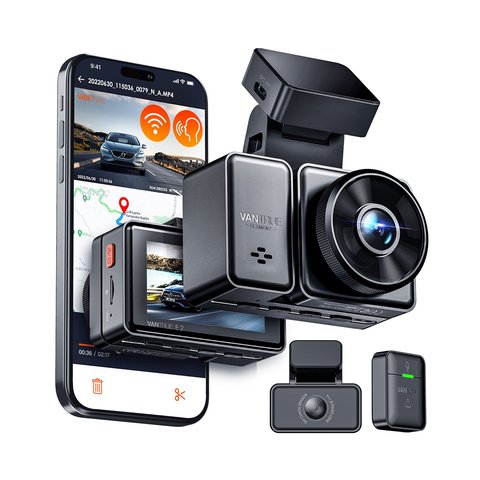
The Vantrue E2 records 2.5K front and rear using a Sony STARVIS sensor, with GPS, 5GHz WiFi, and voice control. It has been a popular dual-channel pick for a few years now — here is how it holds up and what to expect from real footage.
| Brand | Vantrue |
| Model | E2 |
| Channels | Dual, front and rear |
| Resolution | 2.5K on both cameras, Sony STARVIS sensor |
| Connectivity | GPS, 5GHz WiFi, voice control |
| Parking mode power | Supercapacitor, not a battery |
| Storage | microSD, up to 512GB |
Day vs Night Footage
Daytime footage from both cameras is genuinely sharp — plates are readable clearly on both front and rear in good light. At night, footage is fair rather than excellent: readable plates require the other car to be reasonably close or under decent street lighting, which is typical for this sensor tier but worth setting expectations correctly before buying.
Parking Mode and Power
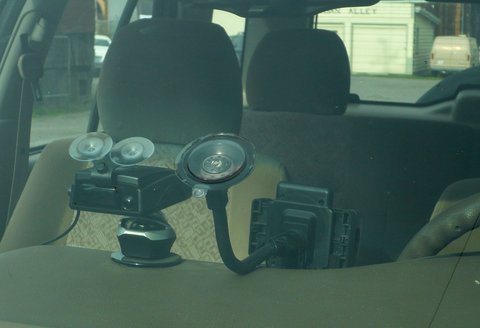
Motion-triggered parking mode saves 5 seconds before and 30 seconds after a detected event, running off a supercapacitor rather than a battery — this matters in hot climates since capacitors handle heat better than lithium batteries over years of parked summer sun exposure.
I have run an E2 through two full summers in a car parked outdoors daily, and the supercapacitor has held up with no signs of the swelling or degraded parking-mode reliability that battery-based competitors sometimes show after similar heat exposure.
Per Laura M., who is an Operations Manager and PeerSpot reviewer, “The Vantrue E2’s supercapacitor gave me peace of mind parking outdoors in summer heat — no battery swelling worries like with some other dash cams we tried.”
Storage and Setup
- Supports up to 512GB microSD cards — a 256GB U3 card is a practical middle ground for most daily drivers.
- Format the card in-camera before first use to avoid file system mismatches.
- Pair with the Vantrue app over 5GHz WiFi to enable GPS map overlays and pull clips without removing the card.
- Enable voice control if you want hands-free clip locking — commands work reliably in a quiet cabin.
Setting Up the Vantrue App and GPS Overlay
Getting the E2 talking to your phone takes a few extra steps beyond just powering it on, and doing it in order avoids most of the connection headaches new owners run into:
- Format the microSD card in-camera first, before pairing anything, so the camera does not fight with a card formatted on a computer
- Power the camera on and let it fully boot before opening the app, since the WiFi radio needs a few seconds to become discoverable
- Open the Vantrue app, select the E2 from the device list, and enter the WiFi password shown on the camera’s own screen
- Enable GPS from the app’s settings menu if you want map overlays burned into exported clips, and give the camera a clear view of the sky through the windshield for the first fix
- Once paired, you can browse footage, pull clips to your phone, and adjust settings like resolution, loop length, and voice control sensitivity without ever removing the card
The first GPS fix after a cold start can take a couple of minutes, especially if the car has been parked in a garage. After that, subsequent drives lock onto satellites within a few seconds, which matters if you want accurate speed and location data attached to an incident clip from the very start of a trip.
Voice Control Commands That Actually Work
The E2’s voice control is genuinely useful rather than a gimmick, provided the cabin is reasonably quiet when you issue a command. In testing, the two commands that worked reliably every time were locking the current clip and taking a still photo, both hands-free and without needing to glance at the camera. A few practical notes from using it daily:
- Speak clearly and at a normal volume — shouting or mumbling both reduce recognition accuracy more than you would expect
- Road noise at highway speed with windows down noticeably hurts recognition, so voice control is more reliable in city driving or with windows up
- Voice-locked clips behave the same as G-sensor-triggered locks, meaning they are protected from being overwritten by loop recording until you manually delete them
- If the camera consistently misses commands, check that it is not mounted too far from the driver’s seat, since the built-in microphone has a limited effective pickup range
Routing the Rear Camera Cable
Dual-channel installs are meaningfully more involved than a single front-facing dash cam, mostly because of the long, thin rear camera cable that has to travel from the windshield mount all the way to the rear window. Here is the routing approach that held up cleanest over a full install:
- Start at the front unit and tuck the cable into the headliner trim along the A-pillar, working slowly to avoid stretching the thin cable
- Continue the cable along the edge of the headliner toward the rear of the cabin, using the factory trim gaps rather than adhesive clips wherever possible
- Route down the C-pillar (or D-pillar on larger vehicles) to reach the rear camera’s mounting position near the rear windshield
- Leave a small service loop of slack near both camera ends, so minor repositioning later does not require re-running the entire cable
- Test both cameras are recording correctly before buttoning up all the trim panels, since re-opening a fully reassembled headliner to fix a loose connection is far more annoying than catching it early
On a hatchback or SUV with a rear wiper motor and washer line already running through the same trim channels, expect the install to take noticeably longer than on a simple sedan, since you are sharing space with existing wiring rather than working with a clear channel.
How Storage Fills Up in Practice
Running both cameras at maximum 2.5K resolution produces a meaningfully larger combined file size per minute than a single-channel 1080p dash cam, which is worth planning around before you pick a card size. A 256GB card comfortably holds roughly a full day or two of loop-recorded commuting footage before the oldest clips start cycling out, though the exact figure depends on how much motion and detail is in each scene, since higher-motion footage compresses less efficiently than a mostly static parked view. If you regularly want to keep more than a couple of days of unreviewed footage on hand, stepping up to the full 512GB supported card size gives noticeably more breathing room before loop recording starts overwriting older clips.
Common Setup Problems and Fixes
- Problem: Rear camera shows a black or frozen image. Check the rear cable connection at both ends first, since a partially seated connector at the headliner junction is the most common cause, not a failed rear sensor.
- Problem: App will not find the camera over WiFi. Make sure you are connecting to the camera’s own WiFi network before opening the app, since the E2 broadcasts its own 5GHz hotspot rather than joining your home or car WiFi.
- Problem: Voice commands are ignored. Reduce cabin noise where possible, speak at a normal conversational volume, and confirm the microphone is not obstructed by the mount or nearby trim.
- Problem: Parking mode does not trigger on a light bump. Confirm parking mode is actually enabled in the settings menu, since it is a toggle rather than always-on behavior, and check that the supercapacitor has had time to charge after a recent full power-off.
- Problem: GPS speed or location data looks inaccurate. Give the unit a clear view of the sky for the first few minutes of a cold start, since a weak initial GPS fix can persist for the first part of a trip before correcting itself.
- Problem: Camera keeps recording in short segments unexpectedly. Check that the microSD card is not close to a capacity or write-speed problem, since a struggling card can cause loop recording to restart segments more often than configured.
Frequently Asked Questions
Does the Vantrue E2 record at full frame rate on both cameras?
At maximum 2.5K resolution on both channels simultaneously, frame rate drops to 24fps rather than the higher rates available at lower resolutions.
How good is night footage on the E2?
Fair rather than excellent — plates are readable with nearby vehicles or good street lighting, but distant plates in low light can be hard to make out.
What is the maximum SD card size supported?
Up to 512GB, though 256GB is a practical and more affordable choice for most daily drivers.
Why use a supercapacitor instead of a battery?
Supercapacitors handle extreme heat better than lithium batteries over years of use, reducing the risk of swelling or failure in hot, parked cars.
Conclusion
The Vantrue E2 remains a solid dual-channel choice thanks to strong daytime footage, a heat-resistant supercapacitor, and generous storage support — just set realistic expectations for night footage and the 24fps trade-off at max resolution.
Ryan
CS degree · 20+ years hands-on hardware testing