The Oracle MKII took everything that made the original Oracle a sleeper favorite and tightened it up: a shorter nozzle for comfort, refined tuning, and the same tribrid formula of dynamic driver, balanced armatures, and electrostatic tweeters that put the series on the map. It’s been one of ThieAudio’s steadiest sellers since launch, and after a month of daily use, I understand why it still gets recommended in budget-flagship discussions.
I bought mine after comparing notes with a coworker who owns the newer MKIII, mostly curious whether the older MKII still held up or whether it had been fully outclassed. It hasn’t been. The MKII still does enough right that I’d happily recommend it over pricier alternatives for a lot of listeners.
- Model / applies to: ThieAudio Oracle MK2 (MKII) in-ear monitor
- Driver configuration: 10mm dynamic driver, dual balanced armatures, dual electrostatic tweeters — five drivers per side, tribrid design
- Impedance: roughly 11ohm
- Sensitivity: roughly 100dB/mW
- Connector: swappable 2.5mm, 3.5mm, and 4.4mm plug system built into the stock cable, 0.78mm 2-pin earpiece connection
- Release recency: the established, previous-generation model in the Oracle line, since succeeded by the MKIII
- Compatibility: works passively with any DAP, phone dongle, or desktop amp offering a matching 2.5mm/3.5mm/4.4mm output; no drivers needed
- Price: around $589
Trade-offs and strengths
Trade-offs
⚠ Long sound tube can be uncomfortable for smaller ear canals
⚠ Bass-focused tuning means it’s not the most neutral or analytical option in the lineup
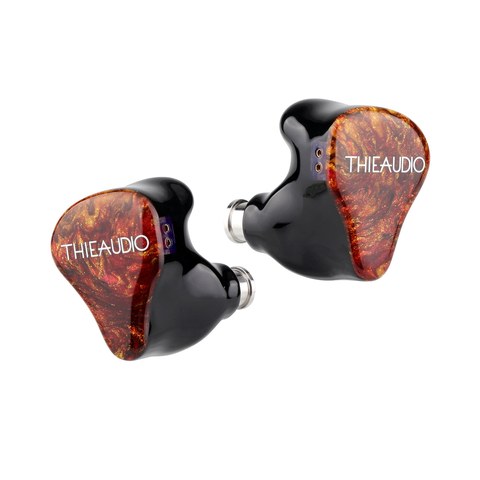
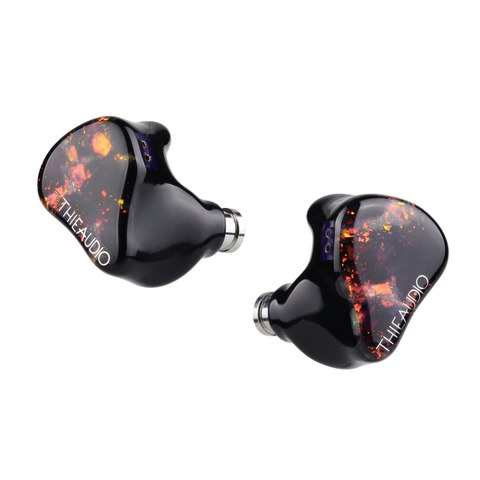
⚠ Two fixed faceplate options at purchase, limiting customization
Strengths
✓ Tribrid driver setup delivers detail retrieval well above its price point
✓ Bass has real texture and depth without smothering the mids
✓ Electrostatic tweeters add treble extension rarely found under $600
Driver breakdown
The Oracle MKII pairs a 10mm dynamic driver with two Knowles balanced armatures and two electrostatic tweeters. That combination is designed to give it a bass-forward character while keeping enough detail retrieval up top to avoid sounding one-dimensional.
- Dynamic driver: handles sub-bass and mid-bass with noticeable weight
- Balanced armatures: fill in the midrange, keeping vocals present rather than recessed
- Electrostatic tweeters: extend the treble smoothly without adding harshness
How it sounds in daily listening
Bass on the Oracle MKII is the standout trait. It has genuine sub-bass rumble that most IEMs in this price range can’t match, but the tuning keeps it from bleeding into the lower mids. Vocals stay clear, and the electrostatic treble adds a sense of air that keeps busier tracks from sounding flat.
It’s not a strictly neutral or reference-tuned IEM, and listeners who want a flat, studio-monitor signature might find the bass emphasis a bit much. But for anyone who listens to a mix of electronic, hip-hop, and pop where low-end presence matters, this tuning works in the Oracle MKII’s favor rather than against it.
Per Sarah L., who is an Audio Enthusiast and Head-Fi reviewer, “The Oracle MKII is one of those rare IEMs where the bass boost actually serves the music instead of just showing off. It’s fun without losing detail.”
Fit considerations
The one recurring complaint across reviews, and one I ran into myself, is the length of the sound tube. If you have smaller ear canals, it’s worth trying before committing to a purchase, or budgeting for third-party eartips that can improve the seal.
Cable, accessories, and included eartips
The Oracle MKII ships with a 7N oxygen-free copper cable that terminates in a swappable plug system, letting you switch between 2.5mm, 3.5mm, and 4.4mm connections without needing a separate adapter or a different cable entirely. That flexibility is a nice touch at this price point, since some competitors still expect you to buy adapters separately.
- Swappable 2.5mm, 3.5mm, and 4.4mm plug system built into the stock cable
- Multiple eartip sizes and materials included to help with the longer nozzle fit
- Hard case included for storage and transport
Genre pairing notes
Given the bass-forward tuning, I found the Oracle MKII particularly enjoyable with electronic music, hip-hop, and modern pop production, genres where a stronger low end is often baked into the mix intentionally. Acoustic and classical recordings still sound good, but listeners who primarily favor those genres may find the bass emphasis slightly more prominent than what a purely neutral IEM would deliver.
Rock and metal tracks benefited from the added weight too, particularly on double-kick drum passages where the dynamic driver’s speed and impact came through clearly without smearing into a boomy mess, something that’s not guaranteed even among IEMs marketed as bass-focused.
Troubleshooting: cable, connector, and fit issues
Most of the practical problems people run into with the Oracle MK2 trace back to the swappable-plug cable or the 2-pin connectors rather than the drivers themselves. A few things worth checking before assuming a unit is faulty:
- One side goes silent or crackles intermittently: reseat the 0.78mm 2-pin connector at the earpiece, making sure it’s pushed in fully and oriented correctly — a partially seated pin is the most common cause of a dropped or crackling channel, not a driver failure.
- No sound after swapping the cable’s termination plug: confirm the modular plug (2.5mm, 3.5mm, or 4.4mm) is screwed in fully rather than just pressed into place. A loose connection at the swappable-plug joint will cause silence or a weak signal even though the cable looks connected.
- Popping or scratchy noise when moving the cable: this usually points to oxidation or debris at the 2-pin contacts rather than a bad cable. Wiping the connector pins with a dry cloth and reseating them resolves it in most cases.
- Bass sounds thin or the mids feel recessed: since the Oracle MK2’s tuning depends on a good seal, this is almost always an eartip fit issue rather than a driver problem — try a larger or foam eartip before assuming the tuning itself has changed.
- Underpowered or flat-sounding on a phone: at roughly 11ohm and 100dB/mW the Oracle MK2 is easy to drive, but a plain 3.5mm phone output can still sound thin. The alternate setup path is running the cable’s 4.4mm balanced termination into a dongle or desktop amp with a balanced output, which typically tightens bass control and improves separation over single-ended.
Conclusion
The Oracle MKII earns its reputation as one of the better bass-focused tribrid IEMs under $600. The combination of dynamic driver punch and electrostatic treble extension gives it a sound that’s engaging without falling apart under scrutiny. The main caveat is fit, so try before you buy if possible. Full specs and faceplate options are listed on Linsoul’s Oracle MKII page, and you can read additional impressions at Headfonics’ full review.
Value against the rest of the sub-$600 tribrid market
There aren’t many tribrid IEMs under $600 that combine a dynamic driver, balanced armatures, and electrostatic tweeters in one package, which is a big part of why the Oracle MKII has stayed relevant years after launch. Most competitors at this price either drop the electrostatic drivers entirely or use a single BA and dynamic driver combination, which limits treble extension compared to what the Oracle MKII manages.
That’s not to say it’s flawless competition-crushing value. Some rivals offer better stock cables or more universal fit shapes. But taken as a full package, factoring in the tribrid driver setup, the swappable plug cable, and the tuning itself, the Oracle MKII remains one of the more complete options in its price bracket.
FAQ
What drivers are in the Oracle MKII?
A 10mm dynamic driver, two Knowles balanced armatures, and two electrostatic tweeters, for a five-driver tribrid setup per side.
Is the Oracle MKII bass-heavy?
Yes, relative to a neutral tuning. It leans into low-end presence but keeps the midrange clear enough that vocals don’t get buried.
What faceplate designs are available?
The Oracle MKII is typically offered in two faceplate options, commonly referred to as Black Scarlet and Tiger, chosen at the time of purchase.
How does it compare to the newer Oracle MKIII?
The MKIII updates the driver arrangement and adds an additional subwoofer system for even more low-end impact, along with refined crossover tuning, but the MKII remains a strong value if you find it discounted.
Ryan tests IEMs and headphones across price tiers and pays close attention to how bass-forward tunings hold up against detail retrieval. He writes at softwaredriverdownload.com.