The DDPAI Mini5 and 70mai M500 are both compact single-channel dash cams built for drivers who want strong image quality in a low-profile body, but they take different approaches to get there. Here’s how they actually compare.
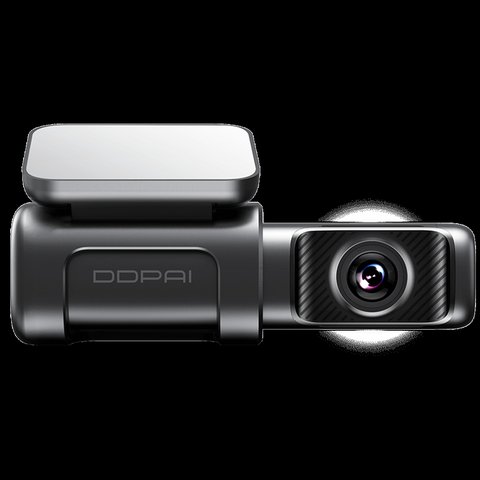
Spec Comparison
| Spec | DDPAI Mini5 | 70mai M500 |
|---|---|---|
| Resolution | 4K (3840×2160) | 2.7K QHD (2592×1944) |
| Field of view | 140° | 170° |
| Storage | 64GB built-in eMMC | 32/64/128GB built-in eMMC |
| Power backup | Supercapacitor | Supercapacitor |
| Sensor | Sony IMX415, 8MP | Not disclosed |
| WiFi | 5GHz | 2.4GHz |
Resolution vs Field of View: The Real Tradeoff
This comparison really comes down to one core tradeoff. The Mini5’s 4K resolution captures noticeably more fine detail — license plates, road signs, small text — within its narrower 140° view. The M500’s wider 170° field of view covers more of the scene side to side, useful for catching vehicles merging from the periphery, but at 2.7K it captures less fine detail per square inch of frame than true 4K.
Neither approach is objectively better; it depends on what kind of incidents you’re most likely to need footage for. If you’re mostly worried about rear-end collisions and following distance, the Mini5’s sharper detail matters more. If you drive in dense urban traffic with frequent side encroachment, the M500’s wider coverage is the more practical choice.
Built-In Storage: Both Skip the SD Card Entirely
Both cameras rely on built-in eMMC storage rather than a removable microSD card, which eliminates the most common point of dash cam failure — a cheap or worn-out SD card corrupting footage. The tradeoff is that once the built-in storage fills its lifecycle of write cycles, you’re looking at replacing the whole unit rather than just swapping a card, so factor that into long-term cost expectations for either camera.
Don’t assume built-in storage is strictly safer just because it avoids SD card corruption — it does remove one failure point, but it also means you can’t simply upgrade capacity later, so pick the storage tier that comfortably covers your loop recording needs from the start.
Connectivity and App Experience
The Mini5’s 5GHz WiFi transfers footage to your phone meaningfully faster than the M500’s 2.4GHz connection, which matters if you regularly pull clips to review or share. Both use dedicated companion apps with similar core functionality — live preview, playback, and settings management — though DDPAI’s app has generally received more consistent update support in recent years.
For full specs, see DDPAI’s official Mini5 product page and 70mai’s official M500 product page.
Price and Long-Term Value
The Mini5 typically sits at a slightly higher price point, reflecting its 4K sensor and 5GHz WiFi module. The M500 tends to undercut it while still delivering genuinely usable 2.7K footage, making it the more budget-conscious pick for drivers who don’t need maximum resolution. Since both use fixed built-in storage rather than swappable cards, the initial capacity tier you choose at purchase time is effectively permanent, so it’s worth buying the largest storage option your budget allows rather than the base tier.
Which One Should You Actually Buy
If you mostly want the sharpest possible footage for insurance and legal purposes and don’t mind a narrower view, go with the Mini5. If you value catching more of what’s happening at the edges of the frame — useful in dense city traffic or frequent lane-splitting motorcyclists — the M500’s wider angle is worth the resolution tradeoff. Neither is a bad choice; this is genuinely a case of matching the spec tradeoff to your actual driving environment rather than one camera being objectively superior.
Physical Size and Discretion
Both cameras are designed to tuck neatly behind the rearview mirror with a minimal visual footprint, avoiding the bulkier look of a full mirror-replacement dash cam. Neither is likely to draw unwanted attention parked in view of a would-be thief, which matters for anyone concerned about a dash cam itself becoming a target for break-ins.
Troubleshooting Common Issues
Since both cameras rely on built-in storage and companion apps rather than a simpler removable-card setup, a few issues come up more often than with basic dash cams. Here’s how to handle them:
- Built-in storage fills up faster than expected: check the loop recording segment length and event-recording file-lock settings in the app, since locked event clips don’t get overwritten by the loop and can quietly eat into your usable capacity over time.
- App can’t find the camera during setup: move your phone closer to the camera during initial pairing, since the first connection is more range-sensitive than reconnecting later, and restart the camera if it isn’t broadcasting its own network.
- Footage looks washed out or hazy in bright sunlight: check the lens cover for smudges or a light film of residue first, since this is a more common cause than a sensor issue, and clean it with a proper microfiber cloth rather than a sleeve or paper towel.
- Camera shuts off in a hot parked car: both units use supercapacitors, which tolerate heat far better than lithium batteries, but extreme cabin temperatures can still trigger a thermal shutdown as a safety measure. Parking in shade or using a windshield sunshade reduces how often this happens.
- Recorded timestamp is wrong: confirm GPS or time sync is enabled and that the camera had a clear view of the sky, or connect through the app once to sync time from your phone if GPS sync alone isn’t working.
Frequently Asked Questions
Which one is better for night driving?
The Mini5’s higher resolution generally holds up better in low light, though both use supercapacitors rather than lithium batteries for reliable operation in extreme temperatures.
Can either be upgraded with a rear camera later?
Check current DDPAI and 70mai accessory compatibility lists, as rear camera add-on support can vary by specific model revision.
Is the M500’s wider field of view distorted at the edges?
Wide-angle lenses generally show some edge distortion; this is a normal tradeoff for wider coverage rather than a specific flaw of this model.
Does either support voice control?
Feature availability varies by firmware version; check the current spec sheet for both before assuming voice control is included.
Which is easier to install discreetly?
Both are compact single-unit designs that tuck behind the rearview mirror with minimal visual footprint.
Is GPS included on both models?
Check the current listing for each, as GPS availability can vary between regional versions of both cameras.
Which one handles heat better in a parked car?
Both use supercapacitors rather than lithium batteries specifically to avoid heat-related risk during hot parking conditions, so neither has a meaningful advantage here.
Can I still buy the larger storage version of either camera?
Availability varies by retailer and region; check current listings to confirm which storage tiers are in stock before ordering.
Does either camera support voice control?
Check the current spec sheet for each, as voice control availability can vary between firmware revisions.
Audio Quality: A Known Weak Point
Independent reviews of the Mini5 have specifically flagged weaker built-in microphone audio quality as a downside, which is worth knowing if in-cabin audio matters to you for documenting verbal exchanges during an incident. The M500’s audio performance hasn’t drawn the same specific criticism, though neither camera is designed as a primary audio recording device, and both prioritize video quality in their engineering tradeoffs.
Conclusion
Choose the DDPAI Mini5 if maximum resolution and detail matter most to you, or the 70mai M500 if wider side coverage is the priority. Both avoid the SD card reliability issues common in cheaper dash cams, so the decision really comes down to which specific tradeoff fits your driving environment.
Ryan T. is a PC hardware enthusiast with 15+ years of experience fixing drivers and testing consumer tech. He writes for softwaredriverdownload.com.