Most desktop tube amps at this price ask you to pick one voicing and live with it. The Cayin HA-1A MK2 takes a different approach: it gives you two headphone outputs tuned to sound noticeably different from each other, plus five output impedance settings, so the amp adapts to your headphones instead of the other way around.
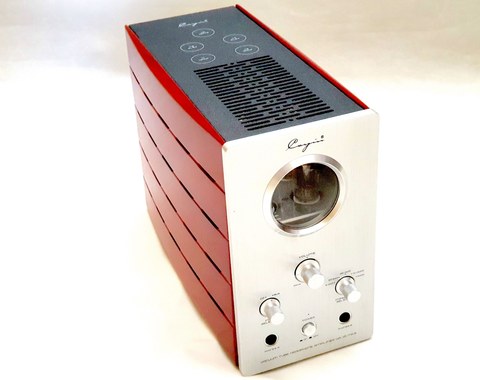
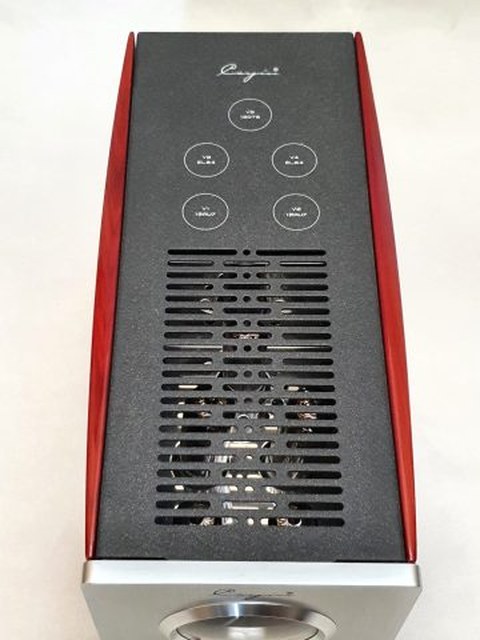
| Tubes | 2x EL84EH output, 2x 12AU7 driver, 1x 12DT5 rectifier |
| Output power | 2000mW/ch @300ohm, 2200mW/ch @600ohm |
| Circuit type | Single-ended amplifier |
| Headphone outputs | Two 6.3mm jacks (A and B, different voicing) |
| Impedance settings | Five selectable levels |
| Other modes | Line-stage preamp; low-power integrated amp (1.2W/ch SET, 2.2W ultralinear) |
Two headphone jacks, two different personalities
The most distinctive thing about the HA-1A MK2 in daily use is that outputs A and B aren’t just redundant jacks — they’re voiced differently. Output A is more energetic and forward, pushing vocals and upper mids a little closer to the listener. Output B is softer and more laid-back, pulling the presentation back into a more relaxed, rounder shape. That’s a genuinely practical feature rather than a marketing footnote: it means you can match the amp’s character to different headphones, or even different genres, just by moving a cable between the two jacks instead of buying a second amp.
Tube complement and why it matters
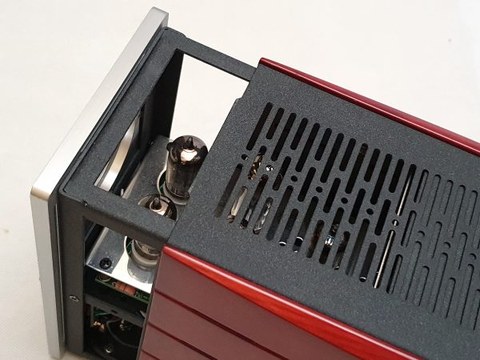
The amplifier runs a fairly classic single-ended triode-adjacent lineup: two EL84EH tubes handle output duties, two 12AU7 tubes act as drivers, and a single 12DT5 handles rectification. This is a single-ended amplifier circuit, which tends to favor even-order harmonics and a smoother, more forgiving presentation over the more clinical precision of push-pull or solid-state designs. Reviewers at Head-Fi and pt.audio describe the resulting sound as warm, relaxed, and musical — the kind of tuning that makes recordings feel a little more forgiving without smearing detail into mush.
Power output and headphone compatibility
Rated output is 2000mW per channel at 300 ohms, rising to 2200mW per channel at 600 ohms — healthy numbers for a tube amp in this price range, and enough to properly drive high-impedance dynamic headphones that many budget solid-state amps struggle with. The five-position output impedance selector is what makes that flexible in practice, letting you dial the amp’s output impedance closer to what a specific pair of headphones actually wants to see, rather than running everything through one fixed setting and hoping for the best.
More than just a headphone amp
Two features push the HA-1A MK2 past being a single-purpose headphone amp. It has a single input pair that lets it function as a line-stage preamp feeding a separate power amp, and it can also run as a very-low-power integrated amp in its own right — 1.2W per channel in single-ended triode mode, or 2.2W per channel in ultralinear mode. That’s not enough power for most speakers in a normal-sized room, but it’s a genuinely useful option for high-sensitivity bookshelf speakers or a small nearfield desktop setup, and it means the amp doesn’t become dead weight if your headphone habits change down the line.
Living with a tube amp day to day
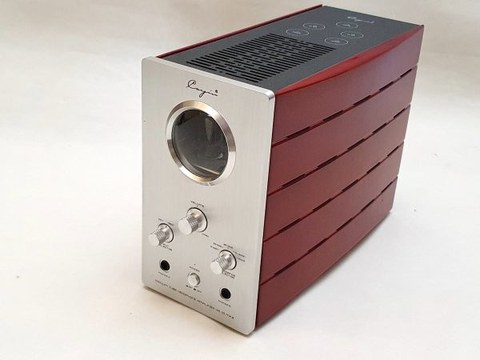
- Give the tubes a couple of minutes to warm up before critical listening — this is normal for any tube design and part of what gives the amp its character
- Expect to eventually replace the tubes as they age; this is routine maintenance for tube gear, not a defect
- Keep the amp away from surfaces prone to vibration, since tube amps are somewhat more sensitive to microphonics than solid-state designs
- Use the five-step impedance selector rather than ignoring it — matching it to your headphones measurably affects damping and bass control
Who the HA-1A MK2 actually suits
This amp is aimed squarely at listeners who already know they like a warmer, more forgiving tonal balance and want that character built into the hardware rather than applied through software EQ. If your headphone collection leans toward higher-impedance dynamic drivers — the kind that sound thin and underpowered out of a phone or laptop — the combination of real power headroom and five-step impedance matching makes this a genuinely well-suited match rather than a compromise. It’s less of a fit if your priority is the most neutral, analytical presentation possible, or if your headphones are power-hungry planar designs that really want a high-current solid-state amp instead.
The dual-personality headphone outputs are also worth considering from a practical household angle: if two people share a listening setup with different taste in tonal balance, or if you simply want one relaxed-listening output and one more engaged, detail-forward output without buying two amps, the A/B jack arrangement solves that directly rather than forcing a single compromise voicing on everyone.
It’s also worth factoring in desk space and heat. Tube amps run warmer than solid-state gear and need a little clearance around the vents for airflow, so it’s worth planning a spot with a few inches of breathing room on every side rather than tucking it into a closed shelf. None of this is unusual for the category, but it’s easy to overlook if this is someone’s first tube amplifier.
Fixing Common Problems With the HA-1A MK2
- Problem: No sound from one of the two headphone jacks. Confirm which output (A or B) your source is actually routed to, since the two jacks are independently voiced and it’s easy to assume both are always live at once.
- Problem: Bass sounds loose or boomy on high-impedance headphones. Step through the five output impedance settings rather than leaving it on the default; matching impedance to your headphones directly affects damping and low-end control.
- Problem: A faint hum appears only when the amp is connected to a laptop. This is typically a ground loop introduced by the laptop’s power supply; try running the laptop on battery power or adding a ground loop isolator between source and amp.
- Problem: Tubes take a while to sound their best after power-on. This is normal tube warm-up behavior, not a fault — give the amp a couple of minutes before doing any critical listening or comparisons.
- Problem: Integrated-amp mode sounds underpowered with your speakers. Remember this mode is genuinely low power (1.2-2.2W per channel), so it’s only realistic with high-sensitivity bookshelf speakers at close range, not standard living room speakers.
- Problem: Noticeable tonal drift or a dull character develops after months of use. This is often simply aging tubes; since tube replacement is routine maintenance for this category of amp, swapping in a fresh set of EL84EH and 12AU7 tubes typically restores the original character.
Frequently asked questions
What’s the practical difference between headphone outputs A and B?
Output A is tuned to sound more energetic and forward, while Output B is softer and more relaxed. Both are 6.3mm jacks, so switching between them is just a matter of moving your headphone cable.
Can the HA-1A MK2 drive planar magnetic headphones?
It can drive some easier-to-power planar headphones reasonably well, but its real strength is high-impedance dynamic headphones, where the 2000-2200mW output and five-step impedance matching shine. Very demanding planar loads are better served by a dedicated high-current solid-state amp.
Does the amp need a subwoofer or speakers to use its integrated-amp mode?
No, but the integrated-amp mode is genuinely low power (1.2W to 2.2W per channel), so it’s realistically only suited to high-sensitivity bookshelf speakers at close range, not a full-size living room setup.
How long do the tubes typically last before needing replacement?
Tube lifespan varies with usage, but like any tube amplifier, expect gradual changes in sound over time as the tubes age, with replacement being routine maintenance rather than a sign something’s wrong.