DDPAI’s Mini Pro 2K and MINI2X are both compact single-lens dash cams sharing the same 2K QHD resolution, but they’re built for slightly different priorities. Here’s a full breakdown of where they diverge and which one fits your setup.
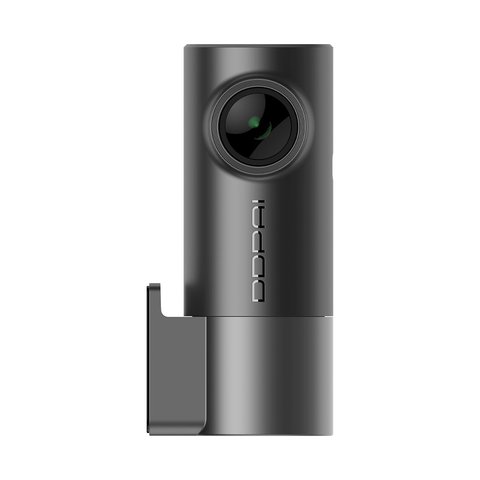
Spec Comparison
| Spec | Mini Pro 2K | MINI2X |
|---|---|---|
| Resolution | 2304x1296P | 2560x1440P |
| Aperture | F/1.8 | F/1.55 |
| Field of view | 140° | Rotatable, wide-angle |
| WiFi | 2.4GHz | 5GHz |
| Parking monitoring | 1fps time-lapse | Up to 20 days AOV sleep mode |
| 3-channel expansion | No | Yes, pairs with Z60 via πLink |
Design Philosophy: Standalone vs Modular
The Mini Pro 2K is designed as a self-contained, standalone dash cam meant to be your only camera in the vehicle. The MINI2X, by contrast, is built with DDPAI’s πLink wireless technology specifically so it can pair with a Z60 or Z60 Pro as an interior or secondary camera, turning a 2-channel setup into a 3-channel one without running a physical cable. If you already own a Z-series mirror cam and want to add cabin coverage, the MINI2X is purpose-built for that; the Mini Pro 2K isn’t designed with that expansion path in mind.
This distinction matters more than the resolution numbers alone. Buying the MINI2X as a standalone camera works fine, but you’re paying for wireless pairing capability you may never use if you don’t also own a compatible Z-series unit.
Low-Light Performance: The Aperture Difference
The MINI2X’s larger F/1.55 aperture lets in more light than the Mini Pro 2K’s F/1.8, which translates to a real advantage in low-light and nighttime conditions. Combined with its higher native resolution and NightVIS 2.0 processing, the MINI2X generally produces cleaner, less noisy footage after dark, which matters if you frequently drive at night or park in dimly lit areas.
The 5GHz WiFi on the MINI2X is a genuinely practical upgrade over the Mini Pro 2K’s 2.4GHz connection — footage transfer speed differences add up quickly if you regularly pull large 2K clips to review or share, and slower WiFi becomes a real daily annoyance rather than just a spec sheet number.
Parking Monitoring: A Meaningful Gap
The Mini Pro 2K’s parking mode uses basic 1fps time-lapse recording, which works but consumes more power over extended parking than the MINI2X’s AOV (Always On Vision) sleep mode, rated for up to 20 days of monitoring. If long-term parking security is a priority — leaving your car at an airport for a week, for example — the MINI2X’s power efficiency is a meaningful practical advantage.
For full specs, see DDPAI’s official Mini Pro 2K product page and DDPAI’s official MINI2X product page.
Long-Term Reliability Considerations
Both cameras rely on a supercapacitor rather than a lithium battery for backup power, which is the right design choice for something that lives on a hot windshield year-round. Supercapacitors handle repeated heat cycling far better than lithium cells, avoiding the swelling and degradation issues that eventually affect battery-powered dash cams left in a car through multiple summers. Neither model has an advantage here since both use the same underlying approach, but it’s worth knowing this is one area where DDPAI’s engineering choices benefit you regardless of which model you pick.
Cost of Ownership Over Time
If you’re buying just one of these as a standalone camera, the Mini Pro 2K’s typically lower price makes it the more budget-friendly choice without sacrificing much for a driver who doesn’t need the extras. If you already own or plan to own a Z-series camera, the MINI2X’s added cost pays for itself through the 3-channel expansion it enables, making the total system value calculation different than comparing the two cameras in isolation.
Frequently Asked Questions
Can the Mini Pro 2K also pair with a Z60?
The πLink 3-channel expansion feature is specific to the MINI2X; check current DDPAI compatibility documentation before assuming cross-compatibility.
Is the resolution difference noticeable in daily use?
The gap between 1296P and 1440P is fairly modest in daylight; the bigger practical difference is the MINI2X’s low-light aperture advantage.
Does either support a rear camera add-on?
Both are primarily single-channel front cameras; check current accessory listings for rear camera compatibility options.
Which one is more discreet when installed?
Both are compact designs that tuck behind the mirror with a small visual footprint, so discretion is similar between the two.
Is the MINI2X significantly more expensive?
Pricing varies by retailer and promotions; check current listings for both models before deciding based on price alone.
Does the rotatable lens on the MINI2X affect mounting flexibility?
Yes, the rotatable design makes it easier to fine-tune framing after mounting compared to a fixed-angle lens.
Which one has a longer warranty?
Warranty terms are generally consistent across DDPAI’s current dash cam lineup; check the specific listing for exact current coverage.
Is either one waterproof for exterior use?
Neither is designed for exterior exposed mounting; both are intended for interior windshield installation only.
Can I add GPS to either camera as an accessory?
Check DDPAI’s current accessory list, as GPS module compatibility can vary between these compact single-lens models.
Does either support external microphone input?
Neither is designed with an external mic input; both rely on their built-in microphone for audio capture.
Which one is better suited to a motorcycle installation?
Neither is designed specifically for motorcycle mounting out of the box; both are intended for standard car windshield installation.
Firmware Update Frequency for Both Models
As newer additions to DDPAI’s lineup, both the Mini Pro 2K and MINI2X have generally received active firmware support, with updates addressing pairing stability and image processing refinements since launch. Check the DDPAI app periodically for updates regardless of which model you buy, since both benefit from staying current on firmware for the best recording reliability.
Conclusion
Choose the MINI2X if you want better low-light performance, faster WiFi, and the option to later expand into a 3-channel setup with a Z-series camera. The Mini Pro 2K remains a solid standalone choice if you don’t need those extras and want a simpler, slightly cheaper single-channel camera.
Ryan
Computer Science graduate · longtime smart home and PC hardware tester