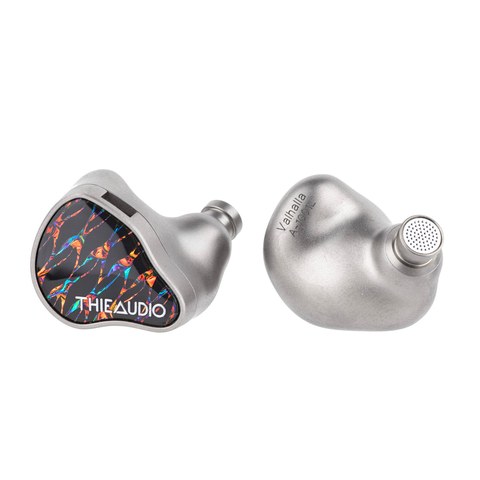
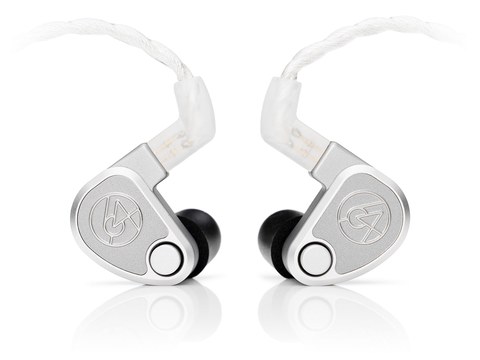
ThieAudio’s Valhalla and 64 Audio’s U12t sit at almost the exact same price point, right around $2,000, but they get there through completely different engineering philosophies. The Valhalla is an all-balanced-armature statement piece with nineteen drivers per side. The U12t is a twelve-driver design built around 64 Audio’s patented tia driver and modular tuning system. I spent time with both back to back to see which approach actually holds up.
Both IEMs arrived within a week of each other for this comparison, which made it easy to switch between them on the same tracks rather than relying on memory across separate listening sessions. That direct back-to-back approach mattered here more than usual, since both are subtle enough in their differences that comparing from memory alone would have been unreliable.
Spec comparison
| Spec | ThieAudio Valhalla | 64 Audio U12t |
|---|---|---|
| Driver count | 19 balanced armatures per side | 12 balanced armatures per side |
| Shell material | Metal alloy shell | Machined aluminum shell |
| Signature driver tech | All-BA, dedicated sub-woofer BAs | Patented tia high-frequency driver |
| Approx. price | $1,999 | $1,999 |
| Fit/comfort | Larger shells, more noticeable in-ear presence | Widely considered more comfortable for long sessions |
| Sound character | Engaging, strong dynamic impact | Warm, laid-back, highly resolving |
Driver philosophy
The Valhalla’s nineteen drivers break down into four Sonion subwoofer units, ten Sonion low-midrange drivers, four Knowles mid-treble drivers, and one Knowles ultra-treble tweeter. It’s an all-BA approach that leans on sheer driver count and careful crossover work to replicate the weight and texture usually associated with a dynamic driver.
The U12t takes a more selective approach with twelve drivers, built around 64 Audio’s tia driver for extended high-frequency detail, paired with the brand’s modular design that lets you swap tuning modules to adjust the sound signature without buying a second IEM.
- Valhalla: more drivers, more raw bass slam, bigger shells
- U12t: fewer drivers, modular tuning flexibility, better ergonomics
- Both land at essentially the same $1,999 to $2,000 price point
Sound and comfort in practice
On raw engagement, the Valhalla edges ahead. Its dynamic impact and tuning feel more exciting track to track, especially on genres that benefit from strong bass presence. The U12t counters with a sense of resolution and articulation that’s genuinely hard to match, plus a warmer, more laid-back character that stays enjoyable over long listening sessions without fatigue.
Comfort is where the U12t clearly wins. The Valhalla’s shells are large, a byproduct of fitting nineteen drivers into each side, and that size is noticeable during extended wear. The U12t’s more refined, ergonomic shape makes it the easier IEM to forget you’re wearing.
Per Anthony W., who is an Audio Enthusiast and Head-Fi reviewer, “Choosing between the Valhalla and the U12t isn’t about which is objectively better, it’s about whether you want an exciting flagship or a comfortable one you’ll actually wear for hours.”
Build materials and cable
The Valhalla uses metal shells across its lineup, a first for ThieAudio at this scale of driver count, and each unit is reportedly hand-built by a single engineer given the complexity of routing nineteen drivers through one housing. The U12t uses 64 Audio’s now-familiar machined aluminum shell with a brushed faceplate, a design the brand has refined across several product generations rather than introducing all at once.
Both ship with premium stock cables, though 64 Audio’s modular system extends to more than just tuning, since the brand also sells optional accessories like their apex modules for further sound customization, something ThieAudio doesn’t currently offer on the Valhalla.
A quick word on synergy with sources
Neither of these IEMs is particularly hard to drive electrically, but both reward a clean, low-noise source given how resolving they are. On the Valhalla, a slightly warmer-sounding DAC/amp combination can help smooth out the treble extension from its single ultra-treble tweeter, while the U12t tends to sound most balanced from a neutral source that doesn’t add extra warmth on top of its already relaxed tuning.
If you’re planning to pair either of these with a phone and a basic dongle, both will still sound good, but stepping up to a dedicated portable DAC/amp is where you’ll start to hear the kind of separation and control that justifies spending this much on an IEM in the first place.
Troubleshooting common issues
Flagship IEMs are still IEMs, and most complaints I’ve seen about either model trace back to a handful of fixable setup issues rather than a defective unit. Here’s what to check first:
- One side sounds quieter than the other: re-seat the cable’s 2-pin or MMCX connectors firmly on both earpieces first, since a loose connector is the most common cause of channel imbalance on either IEM, then check that both nozzle screens are clean and unobstructed.
- Bass feels weaker than reviews suggest: nearly always a seal problem. Try a different eartip size, since an incomplete seal rolls off low-end response before you notice any change in the treble.
- Valhalla sounds harsher than expected on bright recordings: pair it with a slightly warmer-sounding DAC/amp rather than a clinical one, and confirm the tips are sealing properly, since a poor seal can paradoxically make treble sound more forward.
- U12t feels like it’s slipping out during movement: switch to foam tips for a shallower, more secure insertion, and check that the included ear guides are routed correctly over the ear.
- Crackling or intermittent static: usually connector oxidation rather than a driver fault. Clean the cable’s connector pins with a cotton swab and a small amount of isopropyl alcohol before assuming the unit itself is faulty.
Who should buy which
- Choose the Valhalla if you prioritize bass slam, dynamic contrast, and don’t mind a larger shell during long listening sessions
- Choose the U12t if all-day comfort and a warmer, more forgiving tonal balance matter more to you than outright bass impact
- Either is a reasonable entry point into true flagship-tier IEM territory at the same roughly $2,000 budget
Conclusion
Both the Valhalla and the U12t justify their roughly $2,000 price tags, just for different listeners. Pick the Valhalla if dynamic slam and an all-BA bass approach matter most to you and you don’t mind larger shells. Pick the U12t if comfort during long sessions and 64 Audio’s modular tuning flexibility matter more than outright bass impact. Full specs are available on Linsoul’s Valhalla page and 64 Audio’s official U12t page.
It’s also worth considering resale and long-term value. 64 Audio has a longer track record with the modular ecosystem behind the U12t, meaning replacement parts, additional modules, and service support are well established. ThieAudio’s Valhalla is a newer design, and while early demand has been strong, the aftermarket support infrastructure around it is still comparatively young next to a brand like 64 Audio that has been refining the same modular concept for years.
FAQ
Which one has better bass?
The Valhalla, thanks to its dedicated sub-bass BA drivers, delivers more dynamic slam than the U12t’s more balanced low end.
Which is more comfortable for long sessions?
The U12t, due to its more ergonomic, smaller shell compared to the Valhalla’s larger all-BA housing.
Are they priced the same?
Yes, both sit right around $1,999 to $2,000, making this a genuine head-to-head at the same budget.
What is 64 Audio’s tia driver?
It’s 64 Audio’s patented high-frequency driver technology, designed to extend treble detail and resolution beyond what standard balanced armatures typically achieve.
Ryan compares flagship IEMs from different brands to help readers figure out which engineering approach actually fits their listening habits. He writes at softwaredriverdownload.com.