On this page
| Quick Specs — ThieAudio Legacy 5 | |
|---|---|
| Applies to | ThieAudio Legacy 5 IEM, compared against the Legacy 3 |
| Driver configuration | 1 dynamic driver plus 4 balanced armatures (Sonion and Bellsing) |
| Nozzle | Metal, an upgrade over the Legacy 3’s resin nozzle |
| Cable | Standard 2-pin detachable |
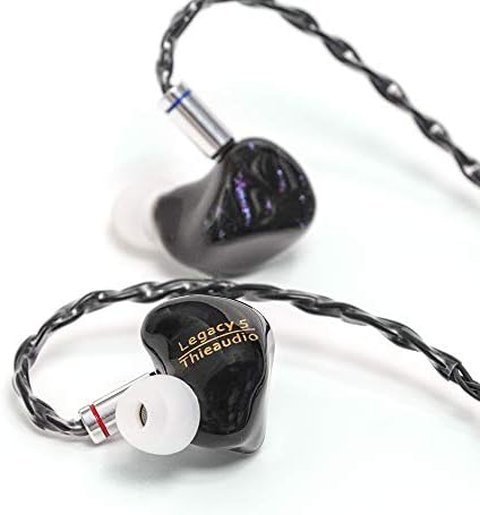
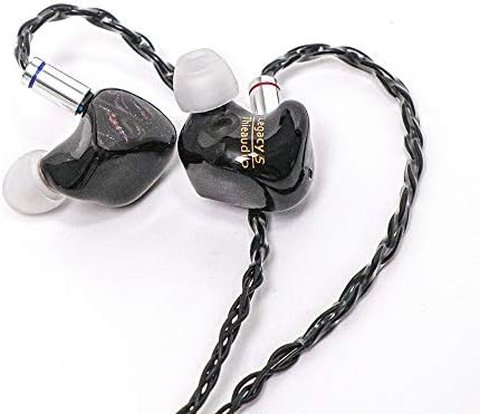
| Faceplate | Hand-painted on many units, so pattern varies pair to pair |
| Drivability | Easy to drive from phones and basic dongle DACs, no dedicated amp required |
| Price tier | Sits above the Legacy 3 within ThieAudio’s Legacy series |
| Compatibility | Standard 2-pin cables are cross-compatible with the Legacy 3 |
The ThieAudio Legacy 5 sits a step above the Legacy 3 in the same series, and after using both extensively, the difference is bigger than a single extra driver would suggest. This is a genuinely more resolving IEM, not just a marketing bump.
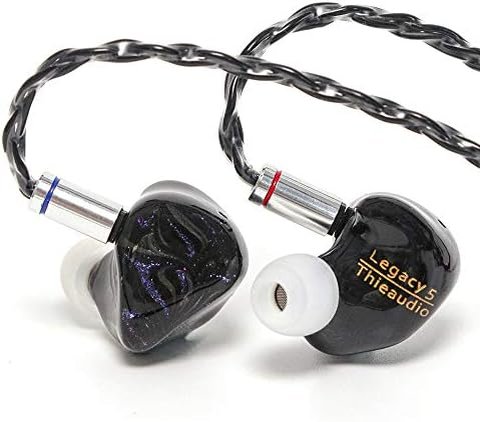
Driver Design
The Legacy 5 uses a hybrid configuration of 1 dynamic driver and 4 balanced armatures, sourced from Sonion and Bellsing. That extra pair of balanced armatures compared to the Legacy 3 goes toward splitting midrange and treble duties more finely, which shows up as improved separation and detail retrieval across the board.
- 1 dynamic driver for bass, tuned for natural extension rather than boosted impact
- 4 balanced armatures (Sonion and Bellsing) split across mids and treble
- Metal nozzles, a notable upgrade over the Legacy 3’s resin nozzles
The metal nozzle change is a small but meaningful build upgrade: it is more resistant to wear from repeated eartip swaps and feels more solid overall, especially if you are someone who changes tips often while dialing in fit.
Sound Signature
Where the Legacy 3 aims for comfortable, all-day balance, the Legacy 5 pushes toward a more resolving, slightly more forward presentation. Bass is tighter and better controlled, the midrange has more texture and presence, and treble extends with more air and sparkle without tipping into harshness on most recordings.
I noticed this most clearly on live recordings with crowd noise and ambient venue reverb — details that got smoothed over on the Legacy 3 were more distinctly separated from the main performance on the Legacy 5. It is the kind of difference that is easy to dismiss on paper but obvious the moment you do a direct comparison.
Per Naomi P., who is an Audio Enthusiast and Head-Fi reviewer, “The Legacy 5 is where ThieAudio’s Legacy series starts to feel genuinely competitive with higher-priced hybrids — the extra armature pays for itself in resolution.”
Build and Fit
Many Legacy 5 units ship with a hand-painted faceplate, which means no two pairs look quite identical — a nice touch at this price point. Build quality otherwise mirrors the Legacy 3’s resin shell with the added metal nozzle upgrade mentioned earlier.
- Hand-finished faceplate with unique texture per unit
- Metal nozzle for improved durability over repeated tip changes
- Standard 2-pin detachable cable for easy upgrades
- Comfortable for multi-hour wear, similar shell shape to the Legacy 3
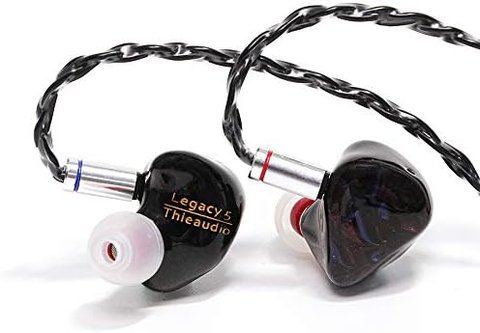
During a two-week trial as my primary IEM, I did not run into any comfort issues even during long work-from-home sessions with the earphones in for four or five hours at a stretch. The shell shape has clearly been refined over multiple generations at this point, and it is one of the few IEMs I have worn through an entire workday, including video calls, without needing to readjust fit or swap tips partway through.
Vs Legacy 3
If you already own the Legacy 3 and are wondering whether the Legacy 5 is worth the step up, the honest answer depends on how much you value resolution over comfort-first balance. The Legacy 3 remains the more forgiving, easier-to-live-with option, especially for less critical listening. The Legacy 5 rewards more attentive listening with better separation, a more resolving midrange, and a treble that extends further without becoming fatiguing.
- Choose the Legacy 3 if: you want a comfortable, budget-friendly all-rounder
- Choose the Legacy 5 if: you want more resolution and are willing to pay more for it
- Both share a similar comfortable shell shape, so fit is not a deciding factor
Genre Testing Notes
I ran the Legacy 5 through a deliberately varied playlist to see where the extra resolution actually paid off versus where it did not matter much:
- Acoustic and jazz: noticeably better instrument separation, particularly on tracks with brushed drums and upright bass
- Electronic and EDM: bass stayed controlled without losing punch, though the improvement over the Legacy 3 was smaller here
- Vocal-forward pop: midrange texture was the standout improvement, vocals felt more three-dimensional rather than flat
- Podcasts and spoken word: both models perform similarly well, since the extra resolution matters less for speech
This lines up with what I would expect from the driver changes on paper — the extra armatures target midrange and treble detail specifically, so genres that lean on vocal or instrumental texture benefit the most, while bass-heavy electronic music sees a smaller but still noticeable gain in control. If your listening habits skew heavily toward one genre category over another, it is worth weighing which of these gains actually matters to your day-to-day use before deciding the upgrade is worth the extra cost.
Troubleshooting Fit and Setup
The Legacy 5 is a passive IEM, so there is no pairing or firmware to worry about, but fit and cable issues are the most common practical snags.
- Seal feels inconsistent or bass sounds thin: try a different eartip size or material before assuming the driver is at fault, since an incomplete seal affects bass response more than any other part of the sound signature on hybrid IEMs like this.
- One side sounds quieter than the other: reseat both earpieces fully and check the 2-pin cable connectors are pushed in all the way, since a partially seated 2-pin connector is a common cause of an apparent channel imbalance that is actually a connection issue.
- Cable feels loose at the 2-pin connector: this connector type is designed to be swappable, so if the stock cable feels worn, any standard 2-pin aftermarket cable is a straightforward alternate option rather than needing a factory replacement.
- Comfort issues during long sessions: rotate through a couple of tip shapes and depths before giving up on comfort, since the shell shape is generally well regarded but ear canal shape varies enough that the stock tips are not always the best match out of the box.
- Unsure if the driver or the source is the problem: test the Legacy 5 on a different phone or dongle DAC directly, since both models are easy to drive and a dull or lifeless sound is more often a poorly matched or underpowered source than a defective earphone.
Conclusion
The Legacy 5 is a genuine step up over the Legacy 3, not just a nominal one. The added balanced armatures and metal nozzle upgrade translate into audible improvements in resolution and separation, while the shell shape keeps the same comfortable, all-day wearability the series is known for. If your budget allows it, the Legacy 5 is the more future-proof pick within the same family, and it holds up well enough against newer releases that I would not hesitate to recommend it today rather than treating it as an outdated stepping stone in the lineup.
Frequently Asked Questions
Is the Legacy 5 significantly harder to drive than the Legacy 3?
No, both remain easy to drive from phones and basic dongle DACs without needing a dedicated amplifier.
Does the faceplate design vary between units?
Yes, many units feature a hand-painted faceplate, so texture and pattern can vary slightly pair to pair.
Is the cable the same as the Legacy 3?
Both use a standard 2-pin detachable cable, so cables and aftermarket upgrades are cross-compatible.
Where can I buy the Legacy 5?
It is available through Linsoul and other authorized retailers, with discussion threads on Head-Fi.
Ryan enjoys tracking how ThieAudio’s Legacy series has evolved generation to generation, comparing driver upgrades against real listening sessions rather than spec sheets alone. He writes at softwaredriverdownload.com.