The TFZ Balance 2 is one of those IEMs that gets mixed up with a similarly named sibling more often than it should. If you search around, you’ll run into the TFZ Balance 2M almost as often as the original Balance 2, and the two get talked about interchangeably in forum threads even though they’re genuinely different products at different price points. This post is specifically about the original Balance 2, and I’ll spend a little time up front making sure the distinction is clear before getting into what the earphone actually sounds like and who it’s for.
Balance 2 vs Balance 2M: the difference that actually matters
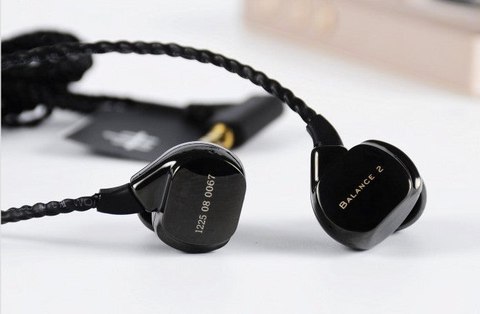
Both models come from TFZ (The Fragrant Zither), a manufacturer with a long track record of budget and mid-range dynamic-driver IEMs. Both use a single dynamic driver per side. Where they diverge is the cable: the original Balance 2 has a fixed, non-detachable cable that’s built directly into the earpieces, while the Balance 2M — a later, separate product in the same family — added a detachable MMCX cable and sells for roughly $70 more. The 2M was also part of a newer “reference” lineup that TFZ positioned as chasing a flatter response curve.
If you’re comparing listings and trying to figure out which one you’re looking at, the cable is the fastest tell. No MMCX connector housing where the cable meets the shell means you’re looking at the original Balance 2. It’s worth checking carefully, because sellers don’t always label these consistently, and paying 2M pricing for a Balance 2 (or vice versa) is an easy mistake to make.
Build and comfort
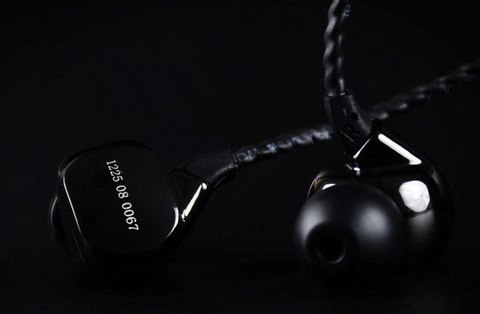
The Balance 2’s shells are a glossy resin-style housing with the model name printed directly on the faceplate. Because the cable is fixed, there’s one less failure point compared to detachable-cable IEMs, but it also means that if the cable ever does wear out near the plug or Y-split, you’re looking at a full replacement rather than swapping a cable. For a lot of casual listeners that tradeoff is fine — fixed-cable IEMs tend to be marginally more durable at the connection point since there’s no MMCX or 2-pin socket to loosen over time.
- Single dynamic driver per side, angled nozzle for a shallower insertion fit
- Fixed cable, no detachable connector
- Glossy black shell with printed branding and serial number on the faceplate
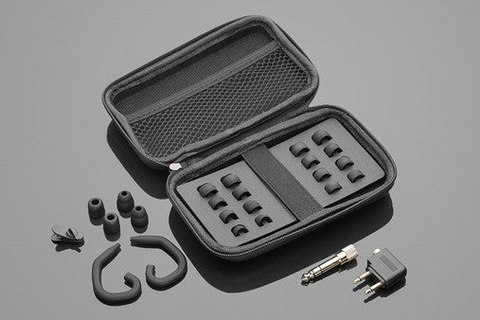
- Comes packaged with a case and a set of eartips, similar to other TFZ models in this price bracket
Sound signature
TFZ’s house sound has historically leaned toward a strong, well-extended sub-bass with a smooth, non-fatiguing top end, and the Balance series generally follows that pattern rather than chasing a neutral or analytical signature. I’d stop short of quoting exact frequency response numbers for the base Balance 2 specifically, since a lot of the detailed measurement data floating around online is actually for the 2M, and the two models are not tuned identically. What can be said with more confidence is that the Balance 2 fits the broader TFZ house style: bass that’s present and physical rather than boosted, a midrange that stays out of the way, and treble that prioritizes smoothness over sparkle.
That makes it a comfortable long-listening IEM rather than a detail-monster. If your reference point is something bright and analytical, the Balance 2 is going to read as warm and relaxed by comparison. If you tend to find budget IEMs fatiguing after an hour, this is the kind of tuning that fixes that problem.
Who should buy the original Balance 2 over the 2M
The honest answer is: anyone who doesn’t specifically need a detachable cable and wants to save money. The core dynamic driver approach and general house sound carry over between the two models, so you’re mostly paying the 2M premium for cable modularity and whatever tuning refinements TFZ made for the “reference” positioning. If you’ve never had a cable fail on you and you’re comfortable with a fixed connection, the original Balance 2 gets you most of the way there for less.
On the other hand, if you like to experiment with aftermarket cables, want balanced output options down the line, or you’ve had bad luck with fixed cables wearing out, the extra cost of the 2M buys real peace of mind. Reviews and retailer listings for the 2M, including the one at Prime Audio’s Balance 2M review, are useful reading if you want a clearer picture of exactly what that upgrade gets you.
Where to buy and what to check before ordering
Availability shifts around for older TFZ models, so it’s worth checking current stock at retailers like Lend Me UR Ears or general audio marketplaces before assuming a listing is current. A couple of quick sanity checks when you’re shopping:
- Look at the product photos closely for a visible MMCX housing at the cable-to-shell junction. If you see one, you’re looking at the 2M, not the base model.
- Compare the listed price against what you’d expect — if it’s priced close to the 2M, double-check the model name in the actual product title, not just the category or collection page.
- Read the included accessories list. Fixed-cable models sometimes ship with a slightly simpler accessory set than their detachable-cable siblings.
Frequently asked questions
Is the Balance 2 the same driver as the Balance 2M? Both are single dynamic driver designs and share a general house sound, but they are not confirmed to be identical tunings, so treat them as related but distinct products.
Can I replace the cable on the Balance 2 myself? Not without modding, since the cable is fixed at the factory rather than using a standard detachable connector.
Is the Balance 2 worth it if I already own another TFZ IEM? If you already own something from the Balance or Series lineup, the Balance 2 may feel like a lateral move rather than a clear upgrade. It’s more interesting if you’re new to the brand.
Written by someone who has bought (and occasionally mixed up) more budget Chi-Fi IEMs than is probably reasonable, mostly to save the next person the same confusion.