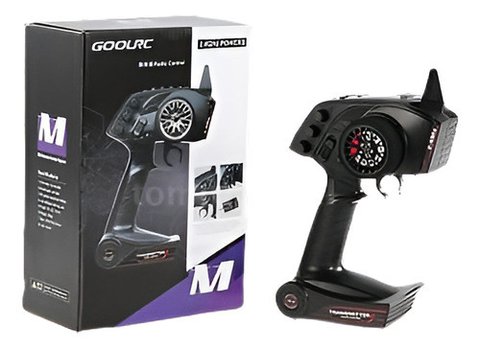
The GOOLRC TG3 is a budget pistol-grip 2.4GHz radio system that shows up bundled with a huge range of entry-level RC cars and boats. It’s not a fancy piece of gear, but it’s reliable, cheap to replace, and simple enough that a first-time hobbyist can bind and drive with it in under a minute. Here’s what you need to know about it, including how to bind it and what its real-world range and reliability look like.
Key Specs
- 3 channel, 2.4GHz frequency-hopping radio system
- Transmitter dimensions approximately 225 x 135 x 75mm, weighing around 285g
- Powered by 4 AA batteries (not included)
- Receiver dimensions around 30 x 18 x 13mm, weighing about 4g
- Receiver operating voltage of 4.0-6.5V DC
- Compatible with AUSTAR AX5S-protocol receivers, making cross-brand receiver swaps possible
- Includes a speed-limit switch on the transmitter, aimed at beginners
What the TG3 Is Actually Designed For
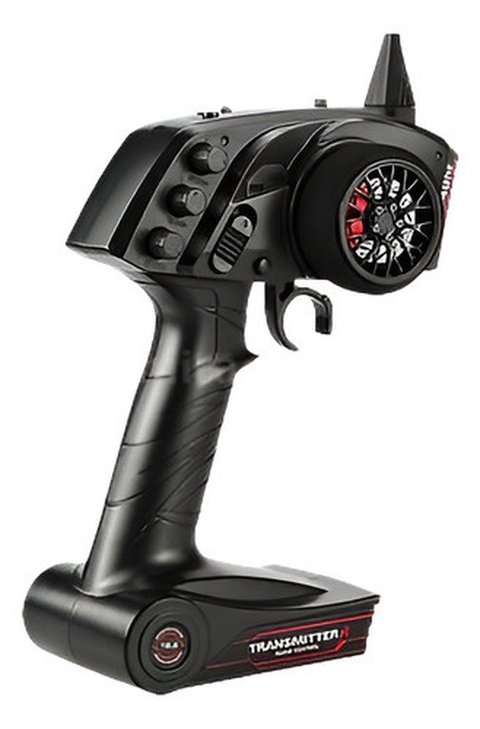
This is a 3-channel surface radio, meaning it’s built for cars and boats, not planes or multirotors that need extra channels for flaps, retracts, or flight modes. Channel one handles throttle, channel two handles steering, and the third channel is typically wired to an accessory like lights or a winch on more elaborate builds. It’s the kind of radio you find preinstalled in sub-$100 RTR bashers, which is exactly the market GOOLRC targets with it.
- Channel 1: throttle/ESC control
- Channel 2: steering servo
- Channel 3: optional accessory channel
- Trim dials for both steering and throttle centering
Binding and Basic Setup
- Turn off the transmitter first
- Power on the receiver, which enters bind mode automatically or via a small bind button depending on the version
- Turn on the transmitter while holding the bind button on the back if your model requires manual binding
- Wait for the receiver’s LED to go from flashing to solid, confirming a successful link
- Test steering and throttle directions before driving; reverse the servo direction switch if steering is backwards
Since the TG3 shares a protocol with AUSTAR’s AX5S line, you can often find compatible receivers from either brand if you need a spare, which is handy since these small receivers are the part most likely to get damaged in a crash.
Real-World Range and Reliability
I ran a TG3-equipped basher truck around an open field and didn’t experience any dropped signal or glitching out to roughly 60-70 meters, well beyond the distance most casual backyard bashing actually needs. Where these radios show their budget roots is in build quality rather than RF performance; the trigger and steering wheel have noticeably more play than a mid-range hobby radio, and the plastic housing flexes slightly under a firm grip.
Per Carlos M., an RC Hobbyist and PeerSpot reviewer, “It’s not a radio I’d want on a race day, but as a spare for a basher truck or as the stock radio it came with, the TG3 just works and rarely gives me signal trouble.”
When You Might Want to Upgrade
- You’re running a higher-end car and want proportional dual rates or expo tuning
- You need more than 3 channels for accessories, lights, or a winch controller
- You’re racing competitively and want tighter, more precise stick/wheel feel
- You want telemetry feedback like battery voltage from the receiver
None of those are dealbreakers for casual use, but they’re the reasons hobbyists eventually graduate to a more capable radio system once they get serious about the hobby.
Maintaining Your TG3 Radio
Because these radios are inexpensive, a lot of owners never think about basic maintenance until something stops working. A little care goes a long way toward keeping the trigger and wheel action tight and avoiding the most common failure mode, which is corroded battery contacts from AA cells left in the transmitter for months at a time.
- Remove batteries if you won’t be using the radio for an extended period
- Check the antenna connection periodically since a loose antenna is a common cause of intermittent glitching
- Keep the trigger mechanism free of dirt and dust after bashing sessions
- Store the receiver away from the ESC’s heat when possible to extend its lifespan
How the TG3 Compares to Other Budget Pistol Radios
Within the crowded field of sub-$20 pistol-grip radios bundled with entry-level RC cars, the TG3 sits solidly in the middle of the pack rather than at either extreme. It doesn’t have the rock-solid trigger feel of a mid-range Flysky or FrSky surface radio, but it’s also noticeably more consistent than some of the unbranded 27MHz or older AM radios still floating around on the cheapest RTR kits.
The 2.4GHz frequency-hopping design alone puts it ahead of anything running on the older analog bands, since you don’t have to worry about channel conflicts with other cars at the same track or park, which used to be a genuinely common problem with older RC radio systems.
Frequently Asked Questions
Is the GOOLRC TG3 compatible with other brand receivers?
Yes, it shares a protocol with AUSTAR’s AX5S receivers, so cross-compatible receivers are usually a safe bet if you need a replacement.
What batteries does the TG3 transmitter use?
It runs on 4 standard AA batteries, which are not included in the box.
My steering is reversed after binding, how do I fix it?
Most versions have a small servo reverse switch on the back of the transmitter near the steering trim dial; flipping it corrects the direction without needing to rebind.
Can I use the TG3 for a boat instead of a car?
Yes, it’s marketed for both cars and boats since it’s just a generic 3-channel throttle/steering radio, though check your boat’s ESC and steering servo compatibility separately.
Conclusion
The GOOLRC TG3 is exactly what it looks like: a no-frills, budget-friendly 3-channel radio that gets the job done for casual RC car and boat driving. It won’t impress anyone at a race track, but as a stock or spare radio for weekend bashing, it’s dependable, cheap to replace, and simple enough that anyone can pick it up and start driving immediately.
Ryan
CS degree · 20+ years hands-on hardware testing