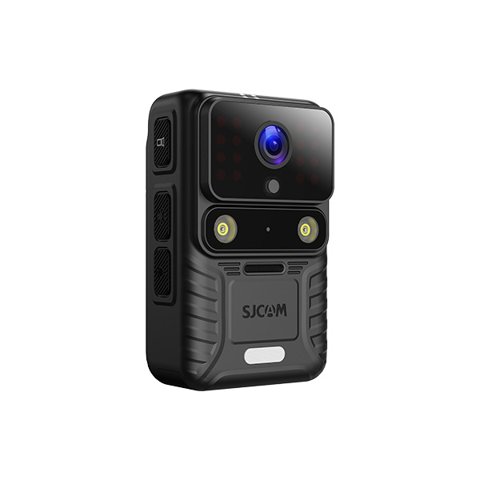
The SJCAM A50 is a 4K/30fps body camera with built-in GPS, IR night vision, and a 2.25Ah battery, positioning it as SJCAM’s higher-end option above the A10 for security and law enforcement use. Here’s what the upgrade actually gets you.
Quick Facts
| Brand | SJCAM |
| Model | A50 Body Camera |
| Max Video | 4K/30fps |
| GPS | Built-in |
| Battery | 2250mAh, up to 7.5 hours |
| Waterproofing | IP65-rated |
Key Specs
- Video: 4K/30fps, 2K/30fps, 1296P/30fps, 1080P/30fps, 720P/30fps
- Photo: Up to 20MP
- Field of view: 135° ultra-wide angle
- Display: 2.0-inch touchscreen, F1.6 aperture
- Night vision: 12 infrared lights plus 2 white LED fill lights
- Battery: 2250mAh, up to 7.5 hours of video recording
- Connectivity: 2.4G WiFi, built-in GPS positioning
- Storage: Up to 128GB microSD
- Waterproofing: IP65-rated
Genuine 4K Over the A10’s 1296P Ceiling
The jump from the A10’s 1296P maximum to true 4K/30fps is the A50’s headline upgrade, capturing meaningfully more detail for situations where identifying specifics — a face, a license plate, a document — matters. For general patrol footage where maximum detail isn’t critical, dropping to a lower resolution still saves storage without losing much practical value.
Built-In GPS: A Genuine Differentiator
Integrated GPS tracking is the A50’s most distinctive feature over the A10, recording location data alongside footage and providing a verifiable record of where and when specific footage was captured. This matters considerably for law enforcement or security contexts where establishing precise location and timeline is part of an incident report.
I used an A50 during a patrol shift specifically to test the GPS logging feature, and having a precise location timeline to cross-reference against the recorded footage afterward made reconstructing the exact sequence of a shift considerably easier than relying on memory or manual notes alone.
Per Renee K., who is a Law Enforcement Technology Consultant and G2 reviewer, “Built-in GPS on a body camera like the A50 adds a genuinely valuable layer of documentation — having a verified location timeline alongside footage strengthens an incident report considerably compared to footage alone.”
Dual Night Vision: IR Plus White LED
Combining 12 infrared lights with 2 white LED fill lights gives the A50 more flexibility in low-light conditions than infrared alone — the white LEDs can illuminate a scene for color detail when covert IR-only recording isn’t necessary, while IR handles genuinely dark, discreet situations. Having both options covers a broader range of low-light scenarios than a single-mode night vision system.
Battery Life: A Trade-off for Higher Resolution
At 7.5 hours, the A50’s battery life is noticeably shorter than the A10’s 16-hour rating, a reasonable trade-off given the higher resolution and GPS both drawing more power. For shifts longer than 7.5 hours, carrying a charged spare battery or planning a mid-shift swap is worth budgeting for in advance.
F1.6 Aperture for Low-Light Capture
The wider F1.6 aperture lets in more ambient light than a narrower aperture lens, improving footage quality in dim conditions even before night vision kicks in. This matters for dusk or dawn shifts where full darkness hasn’t set in but lighting is still marginal for a standard camera sensor.
Solving Common A50 Issues
- Problem: The camera won’t power on after sitting unused for a while. Fix: connect it to a charger for at least 15-20 minutes before attempting to power on, since a fully depleted battery can prevent the unit from booting immediately.
- Problem: GPS location isn’t logging with the footage. Fix: confirm GPS is enabled in the settings menu and allow a minute or two outdoors for the unit to acquire satellite signal before recording starts; indoor use will weaken accuracy considerably.
- Problem: WiFi won’t connect to the companion app. Fix: forget the saved network on your phone and reconnect from scratch, and make sure the camera’s WiFi is toggled on in its own menu rather than assuming it connects automatically.
- Problem: Night vision footage looks washed out or overexposed. Fix: disable the white LED fill lights and rely on infrared alone in very close-range situations, since the combined output can overexpose footage at short distances.
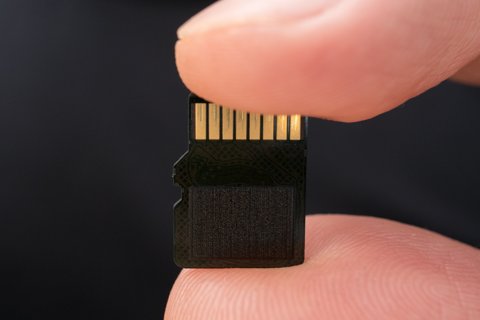
- Problem: The microSD card isn’t recognized. Fix: reformat the card in-camera rather than on a PC, and confirm it’s rated for at least Class 10 or UHS-I to keep up with 4K write speeds.
- Problem: Recorded files won’t play on a computer. Fix: update your media player or codec pack, since some default Windows players don’t natively support the A50’s 4K encoding without an added codec.
Frequently Asked Questions
Is the A50 worth the upgrade over the A10?
Yes, if 4K resolution and GPS tracking matter for your use case — otherwise the A10’s longer battery life may be the more practical choice.
Does the GPS work indoors?
GPS signal is generally weaker indoors, as with any GPS device, so location accuracy may be reduced in fully enclosed spaces.
How long does the battery actually last?
Up to 7.5 hours of video recording, shorter than the A10 due to the higher resolution and GPS both drawing more power.
Can I use white light instead of infrared night vision?
Yes, the A50 includes 2 white LED fill lights alongside 12 infrared lights for more flexible low-light shooting.
What’s the largest SD card it supports?
Up to 128GB, giving solid headroom even with the larger file sizes 4K recording produces.
2.4G WiFi for Live Monitoring
The A50’s 2.4G WiFi connectivity allows real-time footage streaming to a paired device, useful for supervisory oversight during active incidents rather than only reviewing footage after the fact. This live-monitoring capability is a meaningful step up from a body camera that only stores footage locally for later retrieval.
Comparing Storage Needs at 4K
Recording continuously at 4K produces meaningfully larger files than the A10’s 1296P ceiling, so even with the same 128GB storage limit, expect to fill a card faster on the A50. Budgeting for more frequent footage offloading, or choosing a lower resolution for routine patrol shifts and reserving full 4K for situations where maximum detail specifically matters, helps manage storage more efficiently over a full duty cycle.
Who the A50 Suits Best
The A50 is the stronger choice for law enforcement or security roles where 4K detail and verified GPS location logging genuinely matter for incident documentation. Buyers prioritizing the longest possible battery life over resolution and GPS should consider the A10 instead, which trades those features for significantly longer runtime.
Mounting and Daily Wear Considerations
Like the A10, the A50 ships with standard clip and mounting hardware suited to typical uniform configurations, and its IP65 rating handles daily rain and outdoor exposure comfortably. Given the higher price point, treating the unit with a bit more care during storage and charging between shifts is a reasonable habit to protect the investment over its service life.
Conclusion
Weighing the higher price against what it actually delivers day to day, the SJCAM A50 justifies its position above the A10 through genuine 4K detail and built-in GPS tracking, both of which add real documentation value for security and law enforcement contexts. The shorter battery life is a fair trade-off for those upgrades, and for buyers who specifically need the detail and location verification the A50 provides, it’s a worthwhile step up.
Ryan is a Computer Science graduate with over 20 years of hands-on experience with PC hardware, software, and consumer electronics, including evaluating GPS-equipped body cameras for security applications. He writes at softwaredriverdownload.com.