Not every tube amplifier needs to cost a small fortune to sound genuinely good. The Cayin MT-12N sits near the entry point of Cayin’s MT integrated amplifier lineup, and it’s proof that a modest push-pull design, built with care, can deliver the classic warmth people chase tube gear for in the first place.
This is a home component, not a headphone amp or portable device — it’s meant to drive a pair of bookshelf or floorstanding speakers in a small to medium room, and it does so with a specific, old-school kind of charm rather than raw power.
Quick Facts
| Brand | Cayin |
| Model | MT-12N Tube Integrated Amplifier |
| Topology | Class AB1 push-pull, EL84EH output tubes |
| Power Output | 9 watts per channel (8 ohm) |
| Inputs | 3x RCA line-level |
| Weight | 8.3kg |
Tube Lineup and Topology
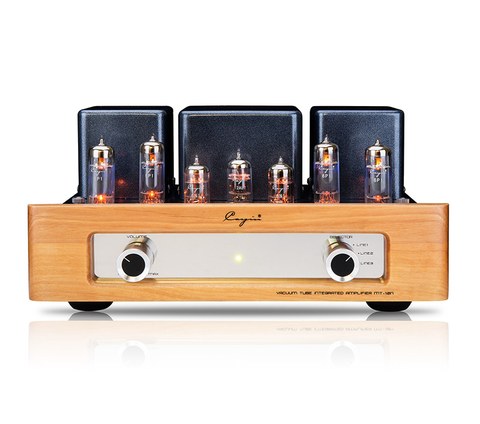
The MT-12N runs a Class AB1 push-pull output stage, and the tube complement tells you a lot about how it’s voiced:
- 1x 12AU7 handling preamp and voltage amplification duties
- 2x 6N1 tubes working as drivers
- 4x EL84EH tubes in the push-pull output stage
That EL84-based output stage is a classic recipe, prized for its “even harmonics” character — the kind of gentle, musical distortion that many listeners describe as warmth rather than coloration. It’s the same family of tube used in a long line of well-loved guitar amps and hi-fi integrateds over the decades, and Cayin leans into that heritage rather than fighting it.
Specs That Matter
On paper, the numbers are modest by design:
- 9 watts per channel into 8 ohm speakers
- Total harmonic distortion of 1% or less at 1kHz, 10 watts
- Frequency response of 20Hz–20kHz ±3dB
- Signal-to-noise ratio of 86dB or better (A-weighted)
- Input sensitivity of 300mV with 100k ohm input impedance
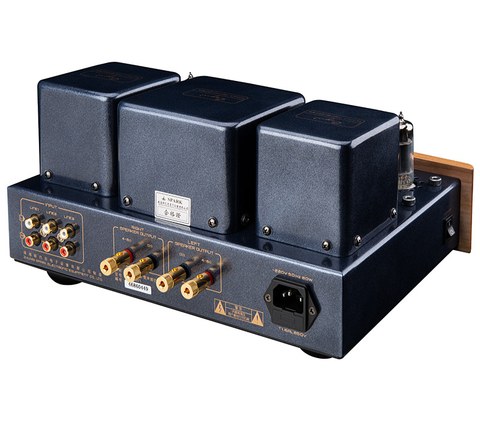
- Three RCA line inputs, plus speaker outputs for both 4 and 8 ohm loads
- Power draw of 110 watts, with a chassis measuring 300 x 245 x 160mm and weighing 8.3kg
Nine watts sounds tiny next to a modern solid-state receiver, but tube watts and transistor watts don’t feel the same in practice. Paired with reasonably efficient speakers in a smaller room, it’s plenty for enjoyable, room-filling listening without ever sounding like it’s straining.
How It Sounds
This is where the MT-12N earns its keep. The sound signature leans into that classic tube warmth, with a natural, slightly rounded top end and a midrange that feels alive rather than analytical. It’s particularly well suited to chamber music, small jazz ensembles, and acoustic recordings, where the amp’s gentle harmonic character adds a sense of body and texture rather than clinical precision.
Owners and reviewers, including the team at Ampreviews and buyers on Drop, tend to describe the amp as lively and engaging rather than laid-back, which is a nice combination — it has the tube warmth without feeling sleepy or veiled. It won’t be the amp you reach for if you want to hear every last transient in a dense electronic mix, but for the genres it’s built for, it’s genuinely satisfying.
Build & Construction
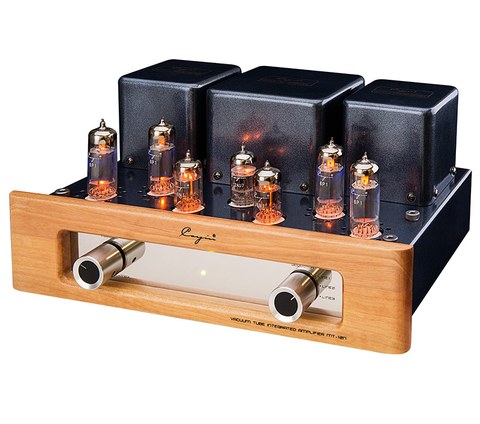
Cayin builds the MT-12N with hand-made, point-to-point wiring rather than a printed circuit board shortcut, which is a labor-intensive approach usually reserved for pricier gear. It uses two EI-core output transformers along with a dedicated toroidal power transformer, and the volume control is a genuine Japanese ALPS potentiometer — a small detail, but one that matters for long-term reliability and smooth, consistent volume tracking.
The overall fit and finish reflects Cayin’s decades of experience building tube gear, and it shows in small ways: solid speaker binding posts, a stable chassis, and a control layout that doesn’t feel like an afterthought.
Setting It Up in a Real Room
A few practical notes worth passing along if you’re considering the MT-12N for your own space. Tube amps run warmer than solid-state gear, so give the chassis some breathing room on a shelf rather than tucking it into a closed cabinet — the exposed tubes and transformers need airflow to stay happy over long listening sessions. The 110-watt power draw isn’t dramatic, but the heat generated by four output tubes running continuously is still something to plan around.
Placement relative to your speakers matters more than with a typical solid-state integrated, too. Because the output impedance and damping factor of a small push-pull tube amp differ from a transistor design, speaker cable length and quality can have a slightly more audible effect on the final sound. None of this is a dealbreaker, just something to keep in mind if you’re moving from a mainstream receiver into your first tube amplifier.
Source-wise, the three RCA line inputs are enough for a typical simple system: a CD player like Cayin’s own Mini-CD MK2, a phono stage output, and a DAC or streamer, for example. There’s no onboard phono stage or digital input, so anything digital needs its own conversion before reaching the MT-12N’s inputs.
Getting Past Common MT-12N Hiccups
- Problem: No sound from one channel. Fix: reseat the tubes on that side first, since a loosely seated EL84 or driver tube is the most common cause of a dead channel on a fresh unit or after transport.
- Problem: A persistent hum or buzz through the speakers. Fix: check that RCA interconnects are fully seated and try a different wall outlet, as ground loops between source components are a frequent culprit with tube gear.
- Problem: The amp sounds noticeably quieter or duller after a year or two of use. Fix: this is normal tube aging rather than a fault; swapping the EL84EH output tubes for a fresh matched set usually restores the amp’s original liveliness.
- Problem: One tube glows visibly brighter or dimmer than the others. Fix: power down and have the tube tested or replaced, since uneven glow between a matched pair of output tubes often signals one is wearing out faster than its partner.
- Problem: Speakers sound thin or underpowered even at higher volume. Fix: confirm your speakers are efficient enough for a 9-watt amplifier — low-sensitivity speakers designed for solid-state power simply won’t play loud enough on this amp.
- Problem: The chassis runs hotter than expected. Fix: make sure it has open space on all sides and isn’t enclosed in a cabinet, since the four output tubes need airflow and a closed space traps heat well beyond normal operating temperature.
Frequently Asked Questions
What speakers pair well with the MT-12N?
Look for reasonably efficient bookshelf or small floorstanding speakers. With only 9 watts per channel on tap, low-sensitivity speakers designed for high-power solid-state amps won’t be a great match.
How long do the tubes last, and can they be swapped?
EL84 and 12AU7/6N1 type tubes are widely available and commonly rolled by hobbyists. Expect several years of normal listening before a tube swap is needed, and the process is straightforward since the tubes sit in accessible sockets.
Is this a good first tube amplifier?
Yes. Its combination of moderate price, reputable brand, and classic architecture makes it a sensible entry point for anyone curious about tube sound without committing to a flagship-tier purchase.
Does it have a headphone output?
No, the MT-12N is built purely as a speaker amplifier with line-level RCA inputs; there is no dedicated headphone jack on this model.
How does it compare to bigger amps in Cayin’s MT series?
The MT-12N sits at the smaller, more affordable end of the lineup. Amplifiers further up the range, such as the KT88-based models, trade some of this unit’s delicate EL84 warmth for higher output power and a punchier low end, at a noticeably higher price.
Written by a self-confessed tube-amp collector who has hand-soldered more than one DIY amplifier and never tires of the warm glow of a glass envelope on a dark desk.