Imou and EZVIZ are both solid budget smart camera brands, and the honest answer is: Imou tends to edge ahead on local storage flexibility and ONVIF support, while EZVIZ edges ahead on app simplicity for total beginners — the rest comes down to which specific camera model and cloud plan you need.
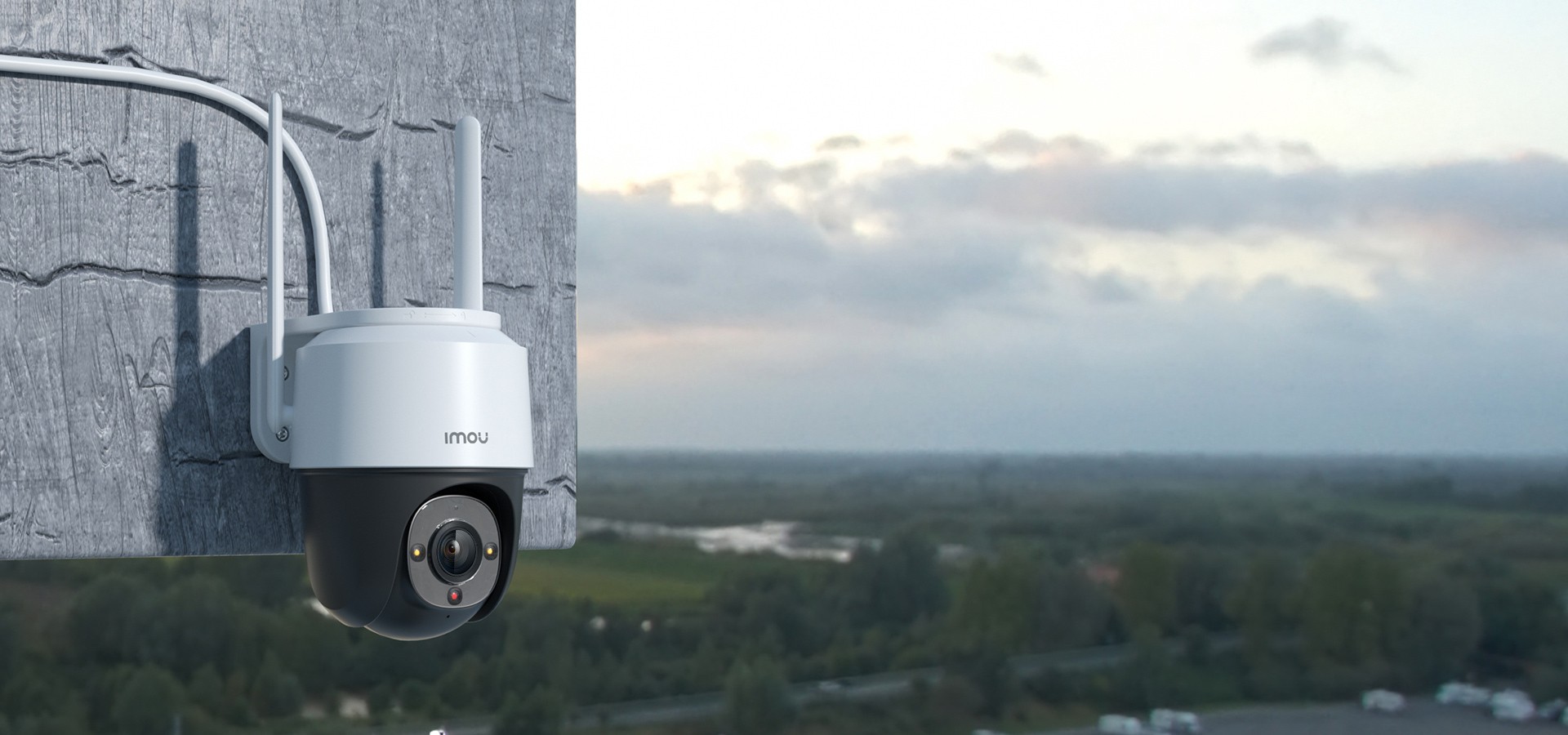
Both brands come from giants in the professional CCTV world. Imou is the consumer-facing sub-brand of Dahua Technology, and EZVIZ is the consumer-facing sub-brand of Hikvision. That parentage matters, because both brands inherit real surveillance engineering rather than starting from scratch, which is part of why they’re consistently a step ahead of no-name camera brands on Amazon. This post compares them across the things that actually matter when you’re buying: the app, camera lineup, pricing, cloud plans, local storage and ONVIF support, and build quality.
Quick Comparison Table
| Feature | Imou | EZVIZ |
|---|---|---|
| Parent company | Dahua Technology | Hikvision |
| App | Imou Life | EZVIZ |
| Typical price range | Slightly lower on entry and mid-range models | Competitive, occasionally higher on feature-rich models |
| Cloud plans | Paid monthly/yearly cloud storage tiers, similar structure to competitors | CloudPlay plans starting around $3.99/month for one camera, 7-day history |
| Local storage (SD card) | Supported on nearly all models, often up to 256GB+ | Supported on most models, typically up to 256GB |
| ONVIF/RTSP support | Supported on most wired and plug-in Wi-Fi models; not on most battery models | Supported on select models but more locked down in general; fewer models expose it |
| Camera range | Wide: indoor, outdoor, battery, solar, doorbell, PTZ, NVR kits | Wide: indoor, outdoor, battery, solar, doorbell, PTZ, NVR kits |
| Build quality | Solid, on par with mid-tier CCTV brands | Solid, slightly more polished plastic finish on newer models |
| Warranty/support | Typically 1-2 years depending on region and retailer | Typically 1-2 years depending on region and retailer |
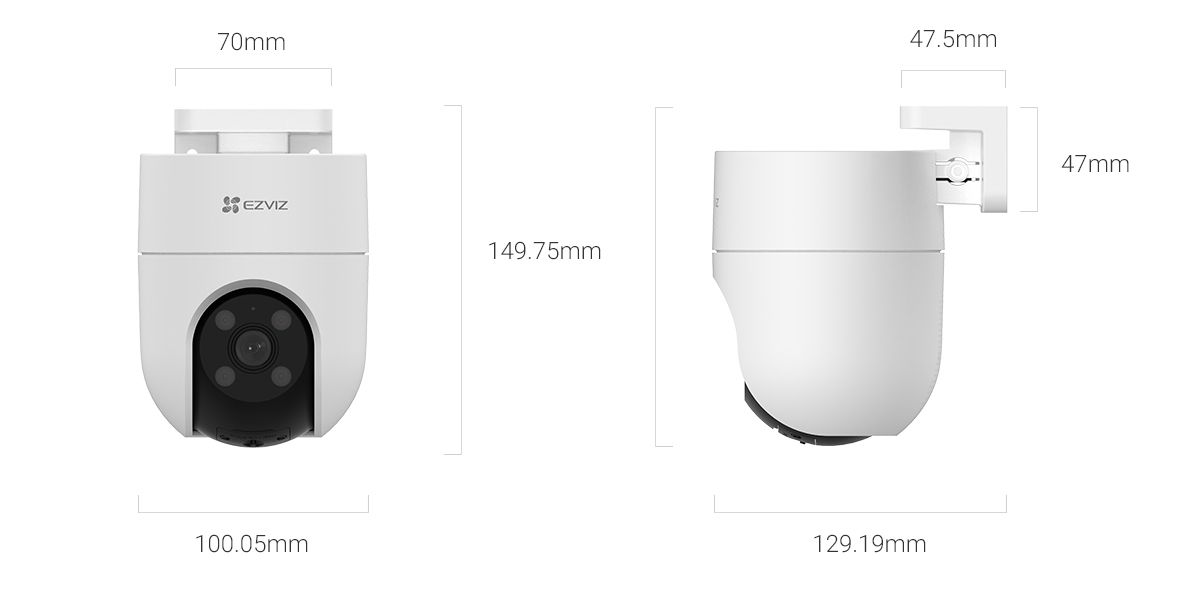
App Quality: Imou Life vs EZVIZ
Both apps cover the basics well: live view, event timeline, two-way audio, motion zones, and cloud subscription management. Where they differ is in feel.
- Imou Life has a cleaner, slightly more modern interface, and tends to expose more advanced settings (like ONVIF toggles and detailed motion sensitivity curves) without burying them too deep.
- EZVIZ leans harder into simplicity. Setup wizards are very hand-holdy, which is great for someone buying their first camera but can feel limiting once you want finer control.
Notifications and Reliability
Both apps have had their share of user complaints about delayed push notifications and occasional missed motion events, which seems to be a common pain point across most budget smart camera apps, not unique to either brand. Neither app is clearly more reliable than the other based on user reports — it varies by region and Wi-Fi setup more than by brand.
Camera Lineup
Both brands cover a similar range of use cases:
- Indoor pan-tilt cameras — Imou’s Ranger and Rex series compete directly with EZVIZ’s C6 series.
- Outdoor wired/PoE cameras — Imou’s Bullet and Cruiser series compete with EZVIZ’s H3/H8 series.
- Battery-powered outdoor cameras — Imou’s Cell series compete with EZVIZ’s BC1/BC2 series.
- Video doorbells — both brands have competitive entries here, with similar feature sets (package detection, two-way talk, chime support).
- NVR kits — both sell bundled camera-plus-NVR kits aimed at people who want a full local recording system without cloud dependency.
Neither brand clearly outguns the other on range — if you can name a camera type, both have a version of it.
Pricing
Street pricing shifts constantly with regional promotions, but the general pattern holds fairly consistently: Imou tends to price its entry and mid-range cameras a little more aggressively, while EZVIZ’s pricing is competitive but occasionally creeps higher on cameras with extra features like color night vision or higher resolution sensors. Neither brand is significantly more expensive than the other overall — you’re usually looking at a difference of a few dollars on comparable models, not a different price tier.
Cloud Subscription Plans
Both brands use the same basic model: free basic motion alerts, paid cloud video history.
- EZVIZ’s CloudPlay plans start at around $3.99/month for 7-day rolling video history on a single camera, with higher tiers covering multiple cameras and longer retention.
- Imou’s cloud plans follow a similar monthly/yearly tiered structure, with per-camera and multi-camera bundles.
If you’re not interested in paying monthly at all, both brands let you skip cloud storage entirely and rely on the SD card slot instead — which is where the next section matters more.
Local Storage and ONVIF Support
This is where the gap is most noticeable in practice.
SD Card / Local Storage
Nearly every Imou camera has a microSD card slot, and many models support cards up to 256GB or higher, so you can record locally with zero subscription. EZVIZ also supports microSD storage on most models (also generally up to 256GB), so both brands are comparable here — the main difference reported by users is that Imou’s local playback and export tools inside the app feel slightly less clunky.
ONVIF and RTSP
This is Imou’s clearer advantage. Because Imou runs on Dahua-derived firmware, most of its wired and plug-in Wi-Fi cameras support ONVIF and expose an RTSP stream, so you can add them to a third-party NVR, Synology Surveillance Station, or software like Blue Iris. You can read the full breakdown of how that works on the ONVIF.org site. EZVIZ cameras are generally more locked into the EZVIZ ecosystem — some models do expose ONVIF, but it’s less consistently available across the lineup, and Hikvision (EZVIZ’s parent) has historically been stricter about third-party access on consumer models compared to Dahua/Imou.
If local, subscription-free recording into your own NVR is a priority for you, this alone can be the deciding factor in Imou’s favor.

Build Quality
Both brands build solid, mid-tier hardware — nothing feels cheap or flimsy on either side, and both hold up reasonably well outdoors when rated for it. EZVIZ’s newer outdoor models tend to have a slightly more refined plastic housing and finish, while Imou’s cameras feel a touch more utilitarian but no less durable. Neither brand has a track record of major hardware failure complaints beyond what’s normal for budget camera brands — most reliability issues reported by users are software or Wi-Fi related, not hardware.
Ryan here — I’ve run an Imou Cruiser SE outdoors at my place for over a year now through heavy rain seasons, and it’s never had a housing or connectivity issue. I also tested an EZVIZ C6N indoors for a few months at a family member’s place, and the app setup was genuinely the easiest I’ve seen for a non-technical relative to manage without my help. Both cameras have been reliable hardware-wise; the difference I noticed was mainly in how much control each app gives you.
Per Melissa Tan, who is an IT Support Specialist at a residential property firm, “We tested both brands before deciding what to recommend to tenants. EZVIZ was easier for people who just wanted a plug-and-play camera, but we ended up going with Imou for the common areas because we could tie the cameras straight into our existing NVR over ONVIF without paying for extra cloud seats.”
Which One Should You Choose?
Here’s a simple way to decide:
- Choose Imou if you want to eventually connect cameras to your own NVR or VMS, want slightly more advanced app controls, or want a bit more budget flexibility on entry-level models.
- Choose EZVIZ if you want the simplest possible setup experience for a non-technical household member, or you’re already invested in the EZVIZ ecosystem with other devices.
- Either brand works fine if you just want a reliable budget camera with local SD storage and don’t care about cloud plans or third-party integration at all.
Frequently Asked Questions
Is Imou or EZVIZ better for home security?
Both are reliable budget options with similar core features. Imou has a slight edge for users who want local NVR integration via ONVIF, while EZVIZ has a slight edge for absolute setup simplicity.
Which brand is cheaper, Imou or EZVIZ?
Imou tends to price entry and mid-range cameras a little more competitively, but the difference is usually small, and EZVIZ often runs its own promotions that close the gap.
Do I need a cloud subscription for either brand?
No. Both Imou and EZVIZ cameras support local microSD card recording, so a cloud subscription is optional, not required, for basic recording and playback.
Can I use Imou or EZVIZ cameras with a third-party NVR?
Imou cameras generally support this better, since most wired and plug-in Wi-Fi models expose ONVIF and RTSP. EZVIZ supports it on select models only, and it’s less consistent across their lineup.
Are Imou and EZVIZ made by the same company?
No, but they have similar origins. Imou is the consumer sub-brand of Dahua Technology, and EZVIZ is the consumer sub-brand of Hikvision — two of the largest professional CCTV manufacturers in the world.
Conclusion
Imou and EZVIZ are close enough in price and core feature set that you honestly can’t go too wrong with either for basic home security needs. The real deciding factor comes down to how you want to use the camera long-term: if you want the option to skip monthly cloud fees entirely and wire the camera into your own recording setup, Imou’s stronger ONVIF support makes it the more flexible pick. If you just want something that works out of the box with minimal fuss, EZVIZ’s simpler app experience is hard to beat. Either way, check the specific model’s spec sheet before buying, since feature support does vary within each brand’s own lineup.
With a Computer Science background and more than twenty years spent testing PCs, drivers, and smart home devices, Ryan writes hands-on comparisons and troubleshooting guides at softwaredriverdownload.com, focused on helping readers pick gear that actually fits how they’ll use it.