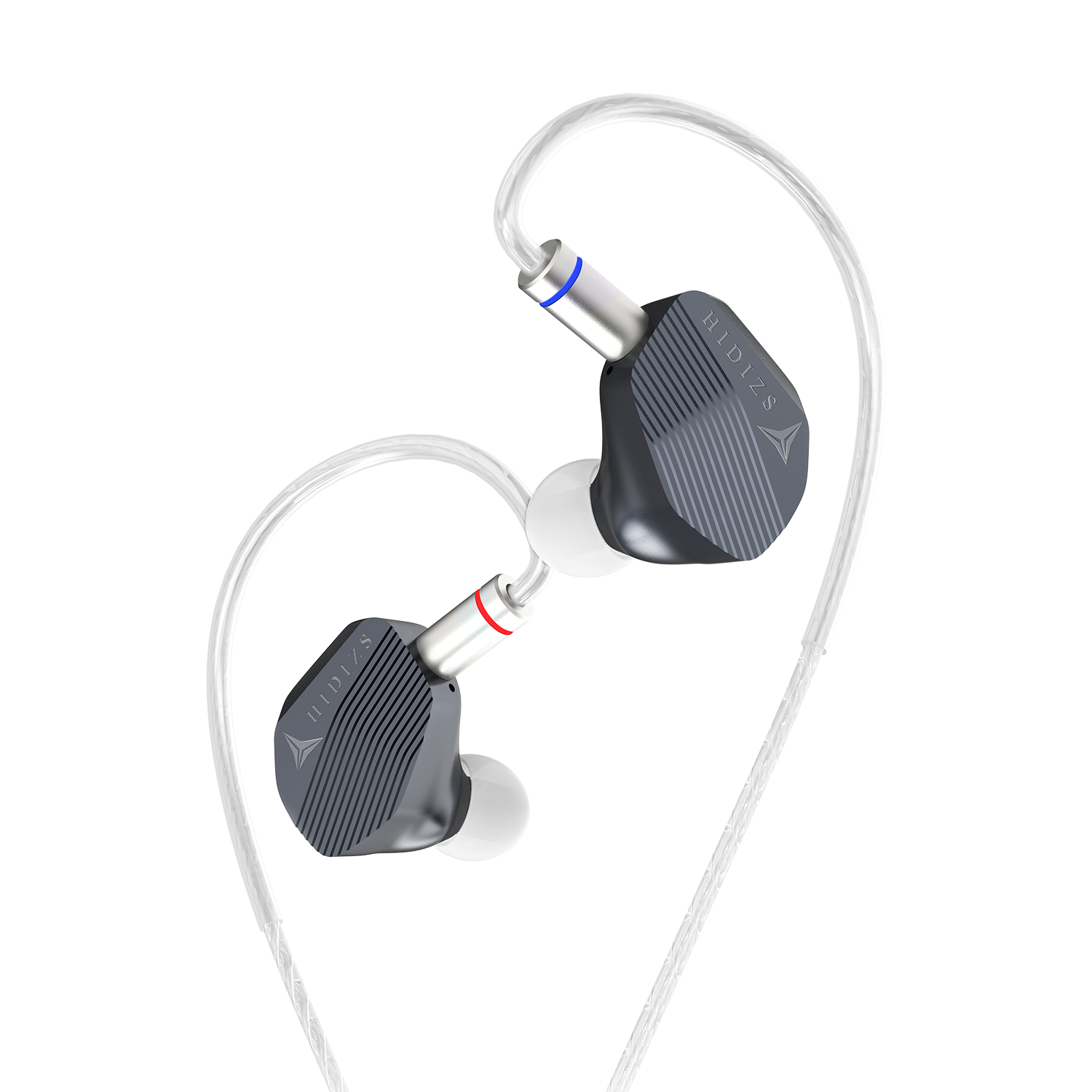
Hidizs sells two planar magnetic in-ear monitors that sit close enough in price and branding to confuse a lot of first-time buyers: the MP143 Salt and the MP145. Both use large planar drivers, both come from the same “Ocean” design family with whale-inspired shell shapes, and both are genuinely good for the money. But they are not the same earphone, and the driver size difference translates into a real, audible difference in how each one handles bass and soundstage.
I spent a week swapping between both units on the same source and the same tracks to sort out which one actually deserves a spot in your cart.
The short version
The MP143 Salt uses a smaller 14.3mm planar driver, weighs about 20 percent less, and delivers tighter, more controlled bass with better imaging. The MP145 uses a larger 14.5mm planar driver, has a bigger, roomier soundstage, and leans slightly boomier in the bass. Both ship with a set of interchangeable sound-tuning filters, and both are Hi-Res certified with frequency response claims stretching to 40kHz.
Spec comparison
| Spec | Hidizs MP143 Salt | Hidizs MP145 |
|---|---|---|
| Driver | 14.3mm planar magnetic, “FAST 2” | 14.5mm planar magnetic |
| Sensitivity | 103 dB/mW | ~104 dB/Vrms |
| Impedance | 17 ohms | 30 ohms |
| Weight | About 20% lighter | Heavier, more solid feel |
| Bass character | Tighter, more controlled | Bigger, slightly boomier |
| Soundstage | Narrower, better imaging | Wider, more spacious |
| Approx. price | Around $129 | Around $199 |
Driver size and why it matters
A planar driver’s diaphragm has to move as a single flat sheet across a magnetic field, so a larger diaphragm generally means more surface area pushing air, which typically shows up as a bigger, more enveloping soundstage. The tradeoff is that larger diaphragms can be harder to control precisely, which is part of why the MP145’s bass reads as a touch looser and boomier next to the MP143 Salt’s tighter, more disciplined low end. Neither is “wrong” — it comes down to whether you want size or control.
Because the MP143 Salt runs a lower 17-ohm impedance against the MP145’s 30 ohms, the Salt is also marginally easier to drive to loud volumes without distortion, which matters if your source is a phone or a low-power dongle rather than a dedicated amp.

Build and accessories
- Both models include three interchangeable sound-tuning filters that physically alter the airflow and tuning.
- Both use a detachable 2-pin cable, so aftermarket cables are compatible with either model.
- The MP145’s shell has a more industrial, chunkier feel in hand; the MP143 Salt feels more streamlined and disappears in the ear more easily during longer sessions.
- Both achieve Hi-Res Audio certification with rated frequency response up to 40kHz.
Which one should you buy
Pick the MP143 Salt if you listen to bass-heavy genres like hip-hop, EDM, or pop and want the low end to stay controlled at higher volumes, or if you are pairing it with a lower-power source like a phone. Pick the MP145 if you listen to more acoustic, orchestral, or spacious mixes where a wider soundstage matters more than pinpoint bass control, and you have a source with a bit more driving power to spare.
Full specs for both models, along with current bundle options, are listed on the Hidizs Ocean Planar Family comparison page, which is a good place to double-check current pricing before you order.
Real-world listening notes
Numbers on a spec sheet only tell part of the story, so here is what actually stood out switching between the two on the same playlist. On a bass-heavy electronic track, the MP143 Salt kept the kick drum feeling punchy and defined even as I pushed the volume up, while the MP145 started to lose a bit of that punch and blur slightly into the surrounding low-mids at the same volume. On an acoustic guitar and vocal recording, the MP145’s extra soundstage width gave the recording more of a “live room” feeling, placing the vocalist a touch further back with more air around the instrument, while the MP143 Salt kept things more intimate and forward.
Neither difference is subtle once you are listening for it, but neither is so large that either earphone feels like the “wrong” choice broadly speaking. This really is a case of matching the earphone to your dominant listening habits rather than chasing an objectively better option, since Hidizs clearly tuned these two models to serve different tastes within the same driver family rather than to replace one another.
If you regularly switch between genres and cannot decide, lean toward the MP143 Salt as the safer all-rounder purchase — its tighter, more controlled low end tends to translate better across a wider range of music than the MP145’s roomier but occasionally looser presentation.
Troubleshooting common issues
Planar IEMs behave a little differently than the balanced-armature and dynamic-driver earphones most people are used to, so a few of the complaints that show up in owner forums are worth addressing directly rather than assuming a defective unit.
- A faint clicking or “driver flex” sound when inserting the earphone: this happens with planar diaphragms when air pressure changes suddenly in the ear canal. Insert the tip more slowly and let air escape gradually rather than pushing it in fast.
- Noticeable volume difference between the left and right earpiece: check that the 2-pin connectors are fully seated on both sides first, since a partially inserted connector is the most common cause and is easy to miss by eye.
- Stock tips don’t seal well in your ear: both models’ whale-inspired shells sit at an unusual angle compared to typical IEM shells, so if the stock tips aren’t sealing, a third-party tip set in the same size is worth trying before assuming the fit just doesn’t work for your ears.
- Tuning filters feel loose or fall out: make sure the filter is threaded in straight rather than at an angle, and avoid overtightening, which can strip the fine threading over repeated swaps.
- Sound seems thin or overly bright out of the box: confirm you’re using the filter tuned for your preference, since swapping filters changes the tonal balance more noticeably on these than on most IEMs, and double-check tip seal before adjusting anything else.
Frequently asked questions
Is the MP145 simply a bigger version of the MP143 Salt?
Not exactly. They share a driver family and design philosophy, but they are tuned differently and target slightly different listening priorities — control versus scale.
Do both use the same cable?
Yes, both use a standard detachable 2-pin cable, so cables are interchangeable between them.
Which is easier to drive from a phone?
The MP143 Salt, thanks to its lower 17-ohm impedance and slightly higher sensitivity rating.
Can I use the MP145’s tuning filters on the MP143 Salt?
No, the filters are sized specifically for each shell and are not cross-compatible.
Long-term reliability considerations
Both models share the same general build quality standards Hidizs applies across its planar lineup — detachable 2-pin cables that can be replaced individually if one side fails, and shells that have held up fine to regular pocket and bag carry without cracking or loosening at the nozzle. Since both use interchangeable tuning filters, it is worth keeping the small filter set stored safely rather than loose in a bag, since losing one limits how much sound adjustment you can do later.
Conclusion
Neither the MP143 Salt nor the MP145 is a strict upgrade over the other — they are siblings tuned toward different priorities. If you had to pick one blind, go with the MP143 Salt for its tighter bass and easier drivability, and step up to the MP145 only if a wider soundstage genuinely matters more to your listening habits than bass precision.
Comparison by Ryan, a self-described gear tinkerer who keeps a small collection of budget planar and dynamic driver IEMs on hand specifically for side-by-side testing like this.