Preamplifiers get overlooked in a lot of desktop and two-channel systems. People will spend months researching a DAC and an amplifier and then just grab whatever passive volume control happens to be cheapest, not realizing that the component sitting between them can color the entire chain. Denafrips’ Athena 15th is the top of their preamp range, and it’s built specifically to avoid being that afterthought.
| Spec | Detail |
|---|---|
| Design | Fully balanced, discrete Class A signal path |
| Volume control | 60-step microprocessor-controlled relay attenuator |
| Measurements | THD+N around 0.00012%, signal-to-noise ratio around 127dB |
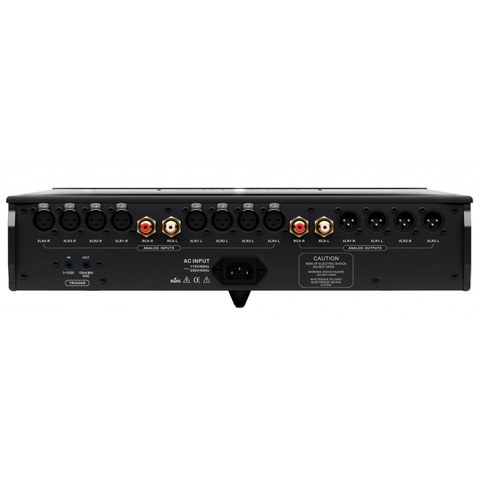
| Inputs | Three XLR, one RCA, plus one dedicated non-switchable XLR4 input |
| Dimensions | Approximately 433mm wide by 385mm deep by 110mm tall |
| Price tier | Flagship of the three-preamp lineup, above the Hades and Hestia |
| Compatibility | Pairs best with fully balanced R2R DACs and matched power amps |
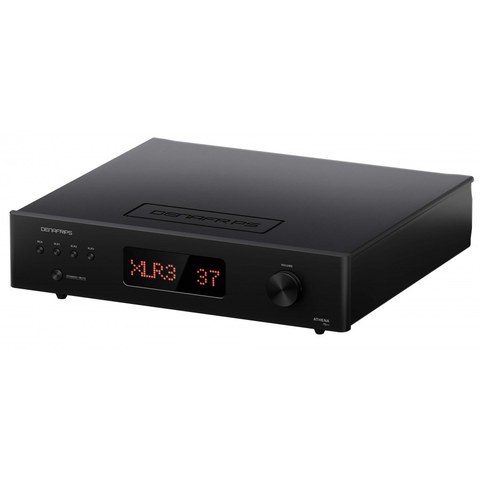
A pure Class A, fully balanced design
The Athena sits above the Hestia and Hades in Denafrips’ three-preamp lineup, and the 15th Anniversary revision carries over the fully symmetrical, discrete Class A signal path while refining the internals. Key specs include:
- 60-step microprocessor-controlled relay attenuator for the volume stage
- THD+N rated at roughly 0.00012%
- Signal-to-noise ratio around 127dB
- Four switchable inputs (three XLR, one RCA) plus one dedicated volume-controlled XLR input
- Dimensions of approximately 433mm wide by 385mm deep by 110mm tall
That relay-based attenuator matters more than it sounds. Cheaper preamps rely on a potentiometer, which introduces channel imbalance at low volumes and gradual wear over years of use. A stepped relay attenuator switches between precisely matched resistors instead, so channel balance stays accurate at every volume position and there’s nothing mechanical to degrade.
Why a fully balanced signal path matters
Running XLR end-to-end through a system, from DAC to preamp to amplifier, rejects common-mode noise that would otherwise get picked up by longer cable runs. It’s the same principle used in professional studio wiring. For a desktop rig with short cable runs the benefit is smaller, but if your preamp sits a few feet from your amplifier or your room has electrically noisy equipment nearby, balanced XLR connections genuinely reduce hum and hiss compared to single-ended RCA.
The Athena’s single non-switchable XLR4 input is worth calling out specifically — it bypasses the input-selection relay entirely, which shortens the signal path when you only need one source connected. If you’re running a single DAC into the Athena as your only source, wiring into XLR4 is the cleanest option.
Pairing recommendations
Given the Athena’s resolving, low-noise floor, it rewards being paired with equally clean upstream and downstream gear. A few pairing notes from setting one up myself:
- Pairing with an R2R DAC like the Pontus 15th or Venus 15th keeps the whole front end coherent in tonal character.
- Power amplifiers with lower input sensitivity benefit most from the Athena’s ample gain headroom — you won’t be fighting a noisy top end of the volume range.
- Keep interconnect cable runs as short as practical even with balanced wiring; shorter runs still measure marginally quieter in real rooms.
Denafrips’ own product page lists full specifications, and Audiophonics has detailed photos of the internal build if you want to see the relay attenuator layout before buying.
Is the step up from Hades or Hestia worth it?
The honest answer is: it depends on how resolving the rest of your system is. In a modest desktop rig with a budget DAC and a compact power amp, the differences between the Athena and the cheaper Hades will be subtle. Once you’re running a genuinely high-resolution front end — something in the Pontus 15th or Venus 15th class — the Athena’s lower noise floor and tighter channel matching become easier to hear, especially at low listening volumes where channel imbalance in cheaper attenuators is most audible.
Build quality and long-term ownership
Relay-based attenuators have a real practical advantage beyond immediate sound quality: they’re mechanically simpler to keep accurate over a decade of ownership than a wiper-based potentiometer. A pot degrades gradually as the resistive track wears from repeated contact, which is why older amplifiers develop scratchy or unbalanced volume controls after years of use. A relay switching between fixed resistor values has no wiper contact to wear down in the same way, so channel balance should hold up far longer under normal use.
That said, a few practical ownership notes worth knowing before you buy:
- Keep the unit in a well-ventilated spot; Class A circuits run warmer than Class AB or D designs and benefit from airflow around the chassis
- Avoid stacking other components directly on top of it, both for heat dissipation and to avoid transmitting mechanical vibration into the chassis
- If you notice any relay clicking becoming audible or erratic over time, it’s worth having it checked rather than ignoring it, since relay contacts can occasionally need cleaning after years of dusty environments
Comparing to other preamps at this price
Most preamps in the Athena’s price range use either a traditional potentiometer or a resistor-ladder volume IC rather than a full mechanical relay bank, largely because relay attenuators are more expensive to manufacture reliably. That’s the main reason the Athena’s asking price sits where it does — you’re paying for a genuinely different, more durable approach to volume control rather than just a fancier enclosure around a common design.
A quick note on gain staging
One detail that trips up first-time preamp buyers: a preamp’s job isn’t to add loudness on top of your source, it’s to give you fine, accurate control over the level already coming from your DAC. If you find yourself running the Athena near the very top of its volume range just to reach a comfortable listening level, that’s usually a sign your downstream amplifier has low input sensitivity rather than a problem with the preamp itself. Checking your amp’s rated input sensitivity against the Athena’s output level before buying can save some confusion during setup.
Troubleshooting and Setup Tips
The Athena is a mostly plug-and-play component, but a few setup mistakes come up repeatedly with fully balanced preamps like this one.
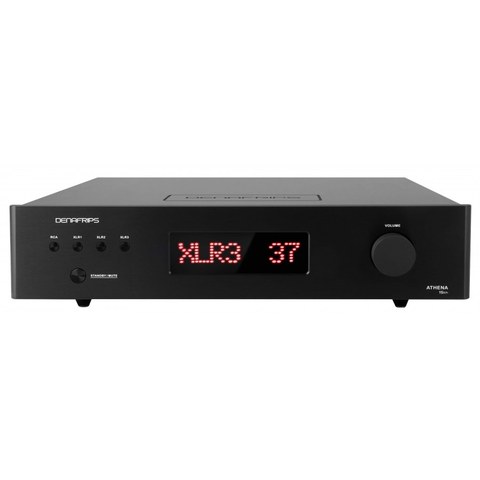
- No sound after connecting: double check the correct input is selected on the front panel or remote, since the Athena’s relay-based input selector needs an active selection and won’t default to the last-used source after a full power cycle on some units.
- Channel imbalance at very low volume: this is unusual on a relay attenuator, but if it happens, try a different volume step a few clicks up or down, then have the unit checked, since it usually points to a relay contact needing cleaning rather than a design flaw.
- Unexpectedly loud output right at power-on: some owners set the volume too high before the last shutdown; the Athena does not always reset to a safe minimum volume automatically, so get in the habit of lowering volume before powering off.
- Hum or noise despite balanced XLR wiring: confirm every device in the chain, not just the preamp, is using balanced XLR end-to-end, since mixing a single-ended RCA link anywhere in the path reintroduces the noise balanced wiring is meant to avoid.
- Using the RCA input as an alternate pathway: if a balanced source is not available, the single RCA input covers single-ended sources without needing an adapter cable, though expect a slightly higher noise floor than the XLR inputs.
- Relay clicking sounds during volume changes: a light click with each step is normal behavior for a mechanical relay attenuator; only investigate further if the clicking becomes erratic or audio drops out during the click.
FAQ
Does the Athena 15th have a remote control?
Yes, it ships with a remote for volume and input switching, controlling the same relay-based attenuator as the front panel.
Can I use RCA sources with a fully balanced preamp?
Yes, the Athena includes an RCA input alongside its three XLR inputs, so single-ended sources are fully supported.
Is this a headphone amplifier?
No, the Athena is a line-stage preamplifier only; it has no headphone output.
What’s the difference between Athena and Hades?
The Hades is based on the same platform but with a simpler implementation; the Athena is the flagship with tighter tolerances and a more refined power supply.
Does it need to stay powered on to sound its best?
Many owners leave Class A preamps powered on in standby to avoid a warm-up period, though this is a matter of personal preference and standby power draw.
Preamps are the component I recommend people upgrade last and think about first — by the time you’re shopping for one, you already know exactly what your system is missing, and that context makes gear like the Athena much easier to evaluate.