Class-A amplification has a reputation for sounding great and running hot, and the Aune X7S leans fully into that trade-off. Designed by the same person behind Aune’s well-regarded Panda and B1 amplifiers, it is a compact desktop headphone amp built to drive nearly anything you plug into it, and after using it as my primary desktop amp for a stretch, I understand why it has stuck around through multiple revisions.
| Quick Facts | Aune X7S |
|---|---|
| Brand | Aune |
| Type | Desktop Class-A balanced headphone amplifier |
| Output stage | Eight power transistors in four groups, true balanced |
| Power supply | Regulated ±15V rails |
| Bias current | 38mA static Class-A per output transistor |
| Gain settings | Three switchable stages |
| Finish options | Black or silver |
| Typical street price | Around $250 |
Inside the Class-A design
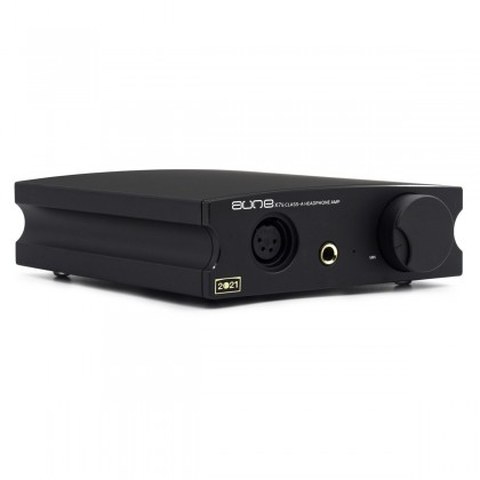
The X7S uses eight power transistors split into four groups to achieve true balanced output, running off a regulated plus and minus 15V power supply. Each output transistor is biased at 38mA of static current in Class-A mode, which is what gives it that full-bodied, warm character while also being the reason it needs decent airflow around the chassis during use. Despite the internal complexity, the unit stays compact, only slightly larger than a CD disc, so it does not dominate a desk the way some larger Class-A designs do.
- Eight power transistors in four groups for true balanced output
- Regulated plus and minus 15V power supply
- Class-A operation at 38mA static current per output transistor
- Three gain settings to match different headphone sensitivities
The updated edition improvements
The version currently sold represents the third generation of the X7S design, with a revised transformer and more efficient capacitors compared with the original release. Those changes are aimed squarely at tightening up the power delivery and reducing any residual noise, and in side-by-side comparisons against the earlier version, the improvement is real rather than a marketing refresh. Full measurements against the original design are documented at Audiophonics, and a detailed listening review sits on Headfonia.
A known design gripe
Not everything about the X7S is beyond criticism. The attenuator knob controlling volume has been called out by several owners as poorly designed, with edges that serve no obvious purpose and a feel that some describe as pivoting unevenly between minimum and maximum, sitting slightly off-kilter with a bit of wobble during adjustment. It does not affect the sound, but it is a tactile annoyance worth knowing about before you buy, especially if you are coming from an amp with a more refined volume control.
Sound and pairing notes
Going from budget desktop amps like the Liquid Spark, JDS Atom, or SMSL sAp-1 up to the X7S is a genuinely noticeable step, with a fuller, more three-dimensional sound and better control at higher volumes. Around the $250 price point, it competes well against amps costing meaningfully more, and the balanced output in particular benefits headphones that support a 4-pin XLR or 4.4mm connection, since the fully balanced circuit avoids some of the crosstalk and ground-related compromises of a single-ended design.
If your headphones run on the harder-to-drive side, the three gain settings give you enough headroom to find a comfortable match without excess noise at low volumes, which is a common failure point for amps that only offer a single fixed gain stage.
Placement and heat management
Given the Class-A bias running through the output stage, the X7S benefits from being kept somewhat clear of other components on a crowded desk or rack, ideally with a bit of open space above and around the chassis for heat to dissipate naturally. It is not going to overheat under normal home use, but stacking other gear directly on top of it or tucking it into a closed cabinet without ventilation is not a great idea over long listening sessions.
I also found it worth experimenting with the three gain settings rather than leaving it on the default, since matching gain properly to your specific headphones makes a bigger difference to perceived noise floor and dynamic range than most listeners expect. Sensitive IEMs in particular benefit from the lowest gain setting to avoid unnecessary hiss.
Comparing the black and silver finishes
Beyond the standard black finish, the X7S is also available in silver, and both versions come in original and updated edition variants across Aune’s retail partners. There is no sonic difference between the two colorways, so the choice comes down entirely to which finish suits your desk setup better. If you already own other Aune components in a specific finish, matching the X7S to that existing color scheme is purely aesthetic but worth considering if you care about a cohesive-looking desk.
What is in the box
A typical purchase includes the amplifier itself, a region-appropriate power cable, and basic documentation, without a lot of extra bundled accessories. This is fairly standard for a component-focused desktop amp at this price, where the budget is clearly directed at the internal circuitry rather than padding out the unboxing experience with items most buyers already own, like interconnect cables or a headphone stand.
Common Setup Problems and Fixes
- Problem: The chassis gets uncomfortably hot after an hour of use. Fix: This is normal for a Class-A design biased at 38mA; give it open space on the desk rather than tucking it into a closed cabinet, and avoid stacking other gear directly on top of it.
- Problem: Sensitive IEMs hiss noticeably at low volume. Fix: Switch to the lowest of the three gain settings; the X7S ships on a higher default gain that suits full-size headphones more than sensitive in-ears.
- Problem: No sound from the balanced output. Fix: Confirm your headphone cable is actually wired for 4-pin XLR or 4.4mm balanced operation — a single-ended cable plugged into a balanced-only jack, or vice versa, will not produce sound or will sound noticeably wrong.
- Problem: A faint hum or buzz appears only when other gear shares the same power strip. Fix: This usually points to a ground loop; try a different outlet, a cheap ground loop isolator, or moving the amp off a shared strip with noisy switch-mode supplies nearby.
- Problem: The volume knob feels like it wobbles or sits slightly off-center. Fix: This is a known cosmetic quirk of the X7S attenuator rather than a defect affecting sound quality, so it doesn’t need repair on its own unless the wobble becomes severe.
- Problem: Volume seems too quiet even at higher settings with hard-to-drive headphones. Fix: Move up to a higher gain setting rather than assuming the amp lacks power — three gain stages exist specifically to match different headphone sensitivities.
FAQ
Is the Aune X7S a tube amp?
No, it is a solid-state Class-A design, not a tube amplifier.
Does it run hot?
Yes, Class-A operation at 38mA static current means it runs noticeably warmer than a typical Class-AB amp, so give it ventilation space.
What changed in the updated edition?
A revised transformer and more efficient capacitors compared with the original release, improving power delivery and reducing noise.
Is the volume knob actually a problem?
Several owners have criticized its feel and design, though it does not affect the sound quality itself.
What headphones pair well with it?
Most full-size headphones, particularly those with a balanced 4-pin XLR or 4.4mm cable option, benefit from the fully balanced output.
Final thoughts
Desktop headphone amps in this general price bracket are a crowded field, and it takes a genuine engineering pedigree to stand out rather than just a bigger number on a spec sheet. The X7S has that pedigree, carried over from Aune’s earlier well-regarded designs, and despite a volume knob that could use a redesign, it remains one of the more consistently recommended Class-A amps in its price class for good reason.
I have owned more desktop amps over the years than I would like to count, and the X7S remains one of the few Class-A designs at this price that actually justifies the extra heat it puts off.