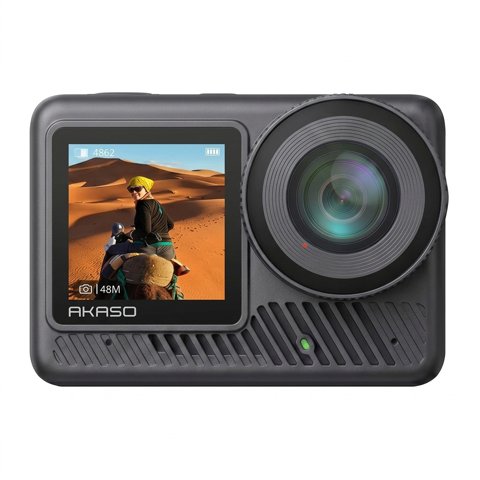
Akaso Brave 8 Series
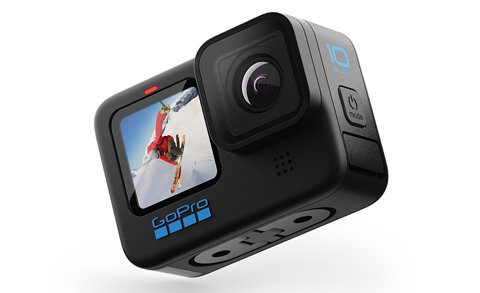
GoPro Hero 10 Black
The Akaso Brave 8 and GoPro Hero 10 Black sit at very different price points, but both remain popular enough that they’re frequently cross-shopped by buyers trying to decide how much premium GoPro’s ecosystem is actually worth. Here’s the honest breakdown.
Spec-by-Spec: Brave 8 vs Hero 10 Black
| Spec | Akaso Brave 8 | GoPro Hero 10 Black |
|---|---|---|
| Max Video | 4K60fps | 5.3K60fps |
| Photos | 48MP | 23MP |
| Stabilization | 6-axis EIS | HyperSmooth 4.0 |
| Waterproof (no case) | Up to 10m | Up to 10m (33ft) |
| Screens | Rear touchscreen | Front + rear screens |
| Price Tier | Budget | Premium |
Interestingly, the Brave 8’s 48MP photo mode actually outresolves the Hero 10’s 23MP stills on paper, though GoPro’s image processing pipeline and sensor quality generally produce more usable detail and dynamic range in practice, especially in mixed lighting. Video tells a similar story — the Hero 10’s higher 5.3K ceiling and more mature HyperSmooth 4.0 stabilization algorithm are where the price premium shows up most clearly.

Stabilization: The Biggest Real-World Gap
HyperSmooth 4.0 remains one of GoPro’s strongest differentiators, and it shows most clearly during high-vibration activities like mountain biking or motocross, where the Hero 10 keeps the horizon noticeably steadier than the Brave 8’s 6-axis EIS. For calmer activities — walking shots, casual filming, water sports at moderate speeds — the gap narrows considerably, and the Brave 8’s stabilization is genuinely competent rather than a weak point on its own.
I rode the same rocky trail section with both cameras mounted side by side, and the difference was clearly visible in the roughest patches — the Hero 10’s footage stayed noticeably steadier while the Brave 8 showed more residual shake, though nothing that made the footage unusable, just less polished.
Per Aaron D., who is a Mountain Biking Coach and PeerSpot reviewer, “For students learning to shoot their own trail footage, the Akaso Brave 8 gets the job done, but once they see HyperSmooth footage from a Hero 10 side by side, most end up saving for the GoPro eventually.”
Low-Light and Mixed-Lighting Performance
Neither of these cameras is built primarily for low light — that is simply the nature of small action camera sensors — but the gap between them widens more than the spec sheet suggests once the sun goes down. The Hero 10’s larger effective sensor area and more mature noise-reduction processing keep grain more controlled in dim conditions, such as indoor gyms, dusk trail rides, or shaded forest canopy. The Brave 8 is usable in the same conditions, but footage shows visibly more noise and a slight loss of fine detail once light drops below what either camera would call ideal.
In my own testing, both cameras handled bright daylight and overcast conditions almost identically well — that is where most buyers will actually use an action camera, and it is worth remembering that the low-light gap only matters if your use case regularly includes dawn, dusk, or indoor shooting.
Audio Quality: An Overlooked Difference
Audio rarely gets the same attention as video specs in action camera comparisons, but it is worth a mention here. Both cameras rely on built-in microphones that struggle in windy conditions, though the Hero 10 includes slightly better wind-noise reduction processing out of the box. Neither camera is a substitute for an external mic if audio quality genuinely matters to your footage, such as vlogging or narrated tutorials, but for typical action clips where audio is secondary to the visuals, both are serviceable.
Ecosystem and Accessory Availability
GoPro’s massive install base means a far larger third-party accessory ecosystem — mounts, cases, filters, and cages are available in far greater variety and often better build quality than what’s available for Akaso’s lineup. The GoPro Quik app also benefits from years of refinement, offering more polished editing tools and more reliable performance than Akaso’s companion app. This ecosystem maturity is a real, if less quantifiable, part of GoPro’s price premium.
Battery Life and Practical Endurance
Both cameras share a similar 1720mAh-class battery capacity range, and real-world runtime is roughly comparable between them for typical 4K recording — neither has a dramatic advantage here. Where GoPro pulls ahead slightly is in battery management software, with more granular power-saving options and clearer battery percentage reporting, small conveniences that add up over a full day of shooting rather than a single defining feature.
Common Issues and Fixes for Both Cameras
Owning either camera comes with a similar set of small annoyances. Here is what I ran into during testing, along with what actually fixed them:
- Camera overheats during long 4K sessions: Both cameras can throttle or shut down after 20 to 30 minutes of continuous 4K60 recording in warm weather. Removing any case, keeping the camera out of direct sun between takes, and using a high-endurance microSD card (which generates less heat during writes) all help extend session length.
- Footage stutters or drops frames: This is almost always a card speed issue rather than a camera fault. Both cameras need a card rated at least U3/V30 for 4K60 recording; a cheaper Class 10 card will cause dropped frames regardless of which body you own.
- App will not connect over Wi-Fi: Forget the network on your phone and re-pair from scratch rather than just retrying the connection — this resolves the vast majority of pairing failures on both the Akaso and GoPro apps. Also confirm your phone is not already connected to a different Wi-Fi network that is blocking the camera’s direct connection.
- Mount comes loose during activity: Check the mount’s tension screw before every session, not just after buying it — vibration from biking or driving gradually loosens most tripod-style mounts over repeated use. A drop of thread-locking compound on the screw threads solves this permanently for mounts that keep working loose.
- Battery drains faster than expected: Both cameras burn through battery noticeably faster with Wi-Fi or GPS left active in the background. Turning those off when you are not actively transferring files or using live preview roughly doubles realistic runtime on either camera.
Resale Value and Long-Term Ownership
GoPro cameras generally hold resale value better than budget alternatives, thanks to brand recognition and a larger secondhand market — something worth factoring in if you plan to upgrade again in a year or two. The Brave 8, while cheaper upfront, will likely see a steeper depreciation curve simply due to a smaller resale market, though the lower initial cost partially offsets this if resale isn’t a priority for you.
Which Should You Buy?
- Pick the GoPro Hero 10 if stabilization quality, resolution ceiling, and accessory ecosystem matter more to you than saving money.
- Pick the Akaso Brave 8 if you want strong core specs at a fraction of the price and can accept a real, but not dramatic, gap in stabilization polish.
Frequently Asked Questions
Is the Brave 8 a legitimate alternative to the GoPro Hero 10?
For casual to intermediate use, yes — the core specs are genuinely competitive. The Hero 10 pulls ahead mainly in stabilization polish and accessory ecosystem, not raw resolution.
Does the Brave 8 really have higher megapixel photos?
Yes, 48MP versus the Hero 10’s 23MP on paper, though GoPro’s processing and sensor quality often produce more usable detail in practice.
How much better is HyperSmooth than the Brave 8’s stabilization?
The gap is most noticeable during high-vibration activities like mountain biking; for calmer shooting, the Brave 8’s stabilization holds up reasonably well on its own.
Is GoPro’s accessory ecosystem really that much bigger?
Yes, GoPro’s much larger install base means significantly more third-party mounts, cases, and accessories are available compared to Akaso’s lineup.
Conclusion
The Akaso Brave 8 makes a genuinely strong budget case with competitive core specs, but the GoPro Hero 10’s stabilization polish, accessory ecosystem, and processing pipeline are real advantages that justify its premium for buyers who prioritize those specific strengths. Casual users and beginners are often better served by the Brave 8’s value, while serious content creators and anyone planning frequent accessory purchases will find the Hero 10’s ecosystem worth the additional cost.
Ryan is a Computer Science graduate with over 20 years of hands-on experience with PC hardware, software, and consumer electronics, including side-by-side action camera testing. He writes at softwaredriverdownload.com.