The Akaso 360 launched as a direct budget challenger to the Insta360 X3, using similarly sized sensors at a noticeably lower price. Both capture 5.7K 360-degree video, but the specs diverge in a few places that matter more than the headline resolution numbers. Here’s the full breakdown.
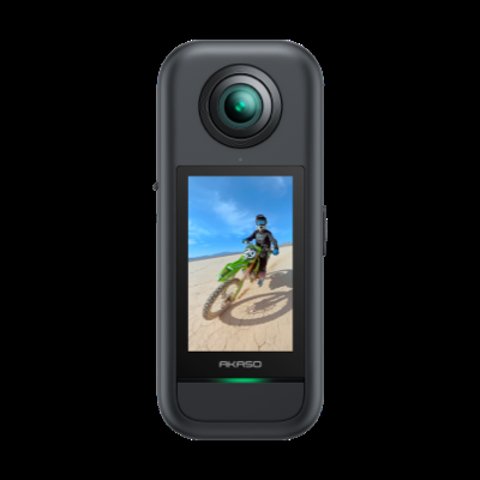
Akaso 360
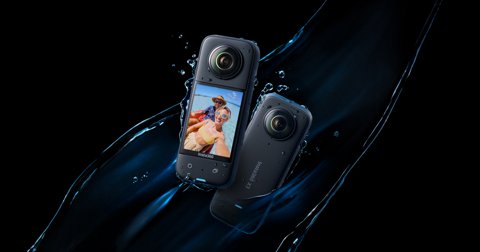
Insta360 X3
Spec-by-Spec: Akaso 360 vs Insta360 X3
| Spec | Akaso 360 | Insta360 X3 |
|---|---|---|
| Max Video | 5.7K 360 | 5.7K 360 |
| Sensor Size | Two 1/2.0-inch sensors | Two 1/2.0-inch sensors |
| HDR Video | Not supported | Supported |
| Waterproofing | Not waterproof | Up to 10m (33ft) without a case |
| Reframing App | AKASO 360 app | Insta360 app |
| Starting Price | $199.99 | Higher, frequently discounted |
The sensor size parity is the headline surprise here — Akaso isn’t cutting corners on the core imaging hardware, which is why image quality in good light is genuinely comparable between the two. The real differences show up in HDR support, waterproofing, and low-light handling, not in the base resolution numbers.

Where Each Camera Wins
- Insta360 X3 wins on waterproofing: being rated to 10 meters without a separate case is a real advantage for water sports, boating, or any activity near water where the Akaso 360 would need extra protection it doesn’t currently offer.
- Insta360 X3 wins on HDR video: a feature the Akaso 360 currently lacks, which matters most in high-contrast scenes with both bright skies and shadowed foregrounds.
- Akaso 360 wins on value: comparable sensor size and resolution for a significantly lower starting price, making 360 camera ownership accessible to a wider range of budgets.
- Both struggle similarly in low light: the shared 1/2-inch sensor size means neither camera excels once lighting drops below bright daylight, with visible noise creeping into shadow detail on both.
I shot the same afternoon mountain bike trail with both cameras side by side, and in good daylight, the footage was close enough that picking out which camera shot which clip wasn’t obvious at a glance. The gap widened noticeably once the sun started setting, where the X3’s HDR handling kept more detail in the shadows while the Akaso 360’s footage lost that detail to noise and crushed blacks.
Per Denise K., who is a Travel Content Creator and G2 reviewer, “I switched from the Insta360 X3 to the Akaso 360 for casual daylight content and honestly couldn’t tell much difference in my final edited clips — but I kept my X3 for anything near water or shot in mixed lighting.”
App Ecosystem Comparison
Insta360’s app has a multi-year head start and it shows in polish — more editing templates, more stable performance across a wider range of phones, and a larger library of tutorials and community content built around it. The AKASO 360 app covers the same core reframing and editing workflow competently, but it’s a newer product with a smaller feature set and less refined edge-case handling. For most casual users, the AKASO 360 app is perfectly adequate; power users who lean heavily on advanced editing features will notice the gap more.
Stabilization and Stitching Quality
Insta360’s stitching algorithm — the process that blends the two lens feeds into a seamless 360 sphere — has years of refinement behind it, and the seam between lenses is nearly invisible in most shooting conditions on the X3. The Akaso 360’s stitching is competent but occasionally shows a faint seam line in scenes with close, high-contrast subjects near the lens boundary, a minor but noticeable difference for anyone shooting close-up 360 content regularly. Stabilization on both cameras handles typical action movement well, though Insta360’s algorithm edges ahead specifically in high-vibration scenarios like mountain biking over rough terrain.
Which Should You Buy?
- Pick the Akaso 360 if you want to try 360 camera content on a budget, primarily shoot in good daylight, and don’t need waterproofing without a case.
- Pick the Insta360 X3 if you need waterproofing, HDR video for mixed lighting, or want the more mature and polished app ecosystem.
Fixing Common Setup Problems
- Problem: A faint stitching seam is visible in footage – keep close, high-contrast subjects away from the lens boundary, which is where the seam is most noticeable, particularly on the Akaso 360.
- Problem: The companion app won’t detect the camera – update the AKASO 360 or Insta360 app to the latest version and restart the camera’s WiFi before re-pairing.
- Problem: Water gets past the housing on the Akaso 360 – remember it is not waterproof without an added case, so confirm the case is properly sealed before any water activity.
- Problem: HDR footage on the Insta360 X3 still looks flat in mixed lighting – confirm HDR video mode is explicitly enabled in the shooting settings, since it isn’t always the default.
- Problem: Low-light footage looks noisy on either camera – this is expected given the shared 1/2-inch sensor size, so avoid relying on either camera for after-dark shooting.
- Problem: Battery drains faster than expected during continuous 5.7K recording – carry a spare battery or a power bank for full-day shoots.
Frequently Asked Questions
Is the Akaso 360 a legitimate alternative to the Insta360 X3?
In good daylight conditions, yes — the comparable sensor size means image quality is genuinely close. The X3 pulls ahead mainly in HDR, waterproofing, and low-light handling.
Can I take the Akaso 360 underwater?
Not without an additional waterproof case, unlike the X3 which handles up to 10 meters without one.
Does the resolution difference actually matter?
Not much — both cameras shoot 5.7K 360 video with similarly sized sensors, so the practical image quality gap is smaller than the price difference might suggest.
Which app is easier to use for a first-time 360 camera owner?
Both are approachable, but Insta360’s app has more tutorials and community content built up over time, which can shorten the learning curve for absolute beginners.
Conclusion
The Akaso 360 makes a genuinely strong budget case against the Insta360 X3, matching it on sensor size and daylight image quality for meaningfully less money. The X3 still earns its premium through waterproofing, HDR video, and a more mature app, so the right choice depends on whether those specific features matter for how you plan to use the camera. Buyers who are just starting to explore 360 content and want to keep costs low have a genuinely capable option in the Akaso 360, while those with more demanding or specialized shooting needs will likely find the X3’s extra cost justified.
Ryan is a Computer Science graduate with over 20 years of hands-on experience with PC hardware, software, and consumer electronics, including side-by-side 360 camera testing. He writes at softwaredriverdownload.com.