ThieAudio’s V16 Divinity is the kind of IEM that exists mostly to answer a question nobody asked out loud: what happens if you stop compromising on driver count entirely? Sixteen balanced armatures per side, thirty-two total across the pair, all crammed behind a five-way crossover. It’s a genuinely excessive piece of engineering, and I wanted to find out whether that excess actually pays off in sound quality or just in bragging rights.
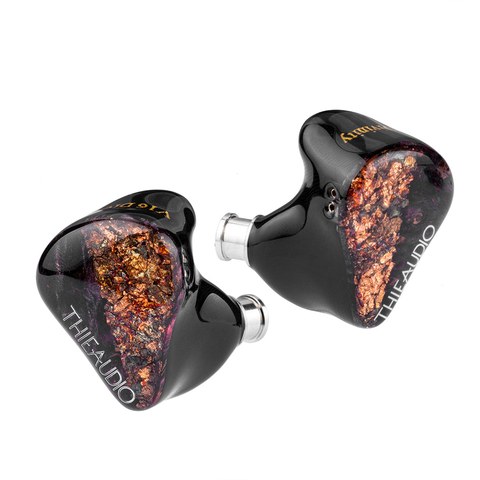
| Model | ThieAudio V16 Divinity flagship IEM |
| Drivers | 16 balanced armatures per side, 32 total, five-way crossover |
| Impedance / Sensitivity | 18 ohms, 112dB |
| Price Tier | Flagship, around $1,500 USD |
| Compatibility | Smart-switch cable plug for 2.5mm, 3.5mm, and 4.4mm sources |
First impressions
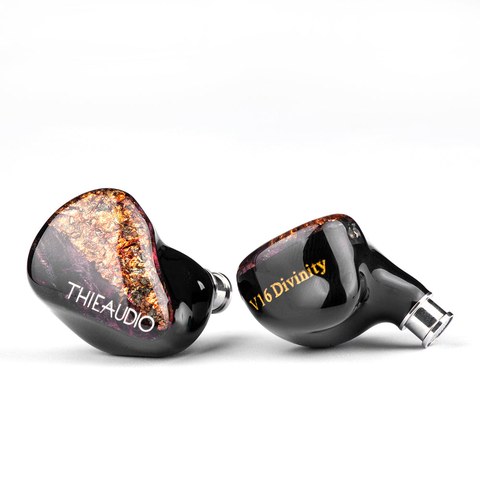
The first thing I noticed pulling the V16 out of its case wasn’t the sound at all, it was the faceplate. ThieAudio describes it as having a molten copper look, and in person the effect is striking, shifting between deep golds and coppery reds depending on the light. It’s a flagship that looks the part before you’ve even put it in your ears.
Once I did, the sound matched the presentation. This is a dense, layered listen, and it took me a few sessions to stop being distracted by how much detail was on offer and start actually evaluating the tuning underneath it.
Per Marcus D., who is an Audio Enthusiast and Head-Fi reviewer, “The V16 Divinity doesn’t sound like sixteen drivers fighting for attention. It sounds like ThieAudio actually knew what to do with all of them.”
Driver engineering
The V16 mixes Knowles and Sonion balanced armatures across a five-way crossover, with the sub-bass handled by Sonion’s largest woofer drivers, tuned to roll off around 200Hz for a subwoofer-like low end that doesn’t intrude on the mids. Key specs:
- Driver impedance: 18 ohms, sensitivity: 112dB
- 16 drivers per side, 32 total across the pair
- 26AWG occ silver-plated cable with fabric coating
- Smart-switch cable plug supporting 2.5mm, 3.5mm, and 4.4mm terminations
The listening experience
What stands out most isn’t any single frequency range, it’s how coherent the whole presentation feels despite the driver count. Bass has real subwoofer-like extension without bloating into the midrange. Vocals sit clear and textured, and the treble extends smoothly without turning fatiguing over long sessions, which matters given how much detail is being thrown at you.
Soundstage is wide and well-layered, letting complex orchestral or progressive rock recordings unfold without instruments crowding each other out. It’s not an aggressive or forward-sounding IEM; it’s more of a composed, reference-leaning presentation that rewards careful listening over casual background use.
Cable and accessories
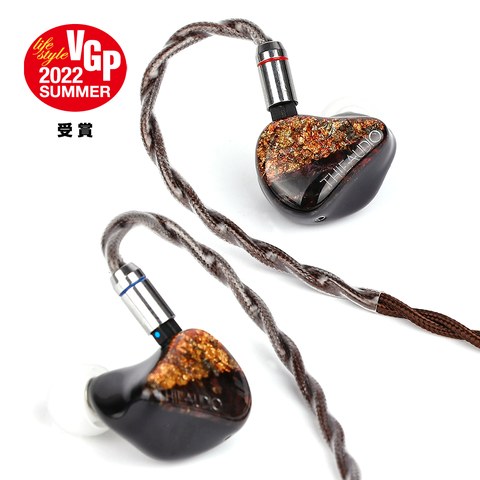
The V16 ships with a 26AWG occ silver-plated cable finished in a fabric coating rather than the more common rubber or PVC jacket, which keeps it flexible and largely tangle-free during travel. ThieAudio includes a smart-switch plug system on the cable itself, letting you swap between 2.5mm, 3.5mm, and 4.4mm terminations without needing separate adapters or a different cable altogether.
- Smart-switch cable plug for 2.5mm, 3.5mm, and 4.4mm outputs
- Fabric-coated 26AWG occ silver-plated cable construction
- Multiple eartip options included to help dial in the seal for the extended low-end response
How it stacks up against ThieAudio’s other flagships
ThieAudio has since released other high-end models, including the all-balanced-armature Valhalla, and it’s worth noting where the V16 sits relative to them. The V16 leans more toward a classic, reference-style multi-BA tuning without a dedicated tuning switch or dynamic driver assistance, relying entirely on its five-way crossover and driver selection to shape the sound. That makes it a more traditional flagship in engineering terms, even if the driver count itself is far from traditional.
If you’re deciding between ThieAudio’s flagship options, the V16 is the pick for listeners who want a dense, all-BA reference tuning without extra switches or gimmicks, while newer releases in the lineup lean more into flexible, switchable tuning profiles.
Is it worth $1,500
This is the real question with any flagship IEM, and the honest answer is: only if you already know what you’re listening for. The V16 doesn’t reinvent what a well-tuned multi-BA IEM can sound like, it refines it to a point of diminishing but still noticeable returns. If you’ve spent time with mid-tier IEMs and want to hear what happens when engineering constraints are mostly removed, it delivers. If you’re newer to the hobby, the improvement over a $500-700 IEM won’t feel proportional to the price jump.
Fit and long-session comfort
Despite housing sixteen drivers per side, the V16’s shells are shaped conservatively enough that I didn’t run into the fatigue issues some larger flagship IEMs cause during multi-hour sessions. The nozzle angle sits naturally in the ear, and once I settled on the right eartip size, isolation was strong enough to use comfortably on a busy train platform without needing to push the volume up to compensate for outside noise.
Weight is noticeable compared to simpler single or dual-driver IEMs, but it’s distributed evenly enough across the shell that it didn’t feel front-heavy or prone to working itself loose during a normal listening session.
Troubleshooting Fit, Cable, and Source Issues
A flagship-tier IEM like the V16 is more sensitive to small setup mistakes than a budget pair, since the tuning is built around a correct seal and a clean source. A few common problems and fixes:
- Bass sounds thin or the seal feels loose: try a size up or down on the included eartips before assuming anything is wrong with the drivers — the sub-bass extension depends heavily on getting a full seal.
- One channel sounds quieter than the other: reseat the smart-switch cable plug fully into the source, and check the 2-pin connectors at the earpiece for a loose fit before contacting support.
- Sound seems flat or lifeless despite a good seal: the V16 is efficient enough to run off a phone dongle, but a genuinely weak or aging source can still undersize the dynamics — try a different dongle DAC or cable as a quick elimination test.
- Wrong plug size for your source: instead of buying a separate adapter, use the smart-switch plug’s alternate termination option (2.5mm, 3.5mm, or 4.4mm) built into the cable itself, which avoids an extra adapter joint that can introduce noise.
Conclusion
The V16 Divinity is ThieAudio’s statement flagship, and it mostly backs up the ambition with genuinely composed, detailed sound rather than just a bigger spec sheet. It’s not for everyone, and the price puts it firmly in enthusiast territory, but for listeners chasing a dense, layered, reference-leaning tuning, it’s one of the more convincing 16-driver IEMs on the market. You can find full specs on Linsoul’s V16 Divinity page, and a deeper technical dive is available at Headphones.com’s review.
FAQ
How many drivers does the ThieAudio V16 have?
Sixteen balanced armatures per side, for a total of thirty-two drivers across the pair, arranged through a five-way crossover.
Does the V16 need a powerful amplifier?
Not really. At 112dB sensitivity and 18 ohms impedance, it’s efficient enough to run comfortably off most dongle DACs, though a clean source helps reveal its full detail retrieval.
What’s the V16’s sound signature like?
Composed and reference-leaning, with subwoofer-like sub-bass extension, clear vocals, and smooth, non-fatiguing treble. It favors detail and coherence over an aggressively forward or bright presentation.
Is the V16 ThieAudio’s most expensive IEM?
At $1,500 it was ThieAudio’s first true flagship-tier release, though the brand has since introduced other high-end models like the Valhalla at a similar or higher price point.
Ryan
CS degree · 20+ years hands-on hardware testing