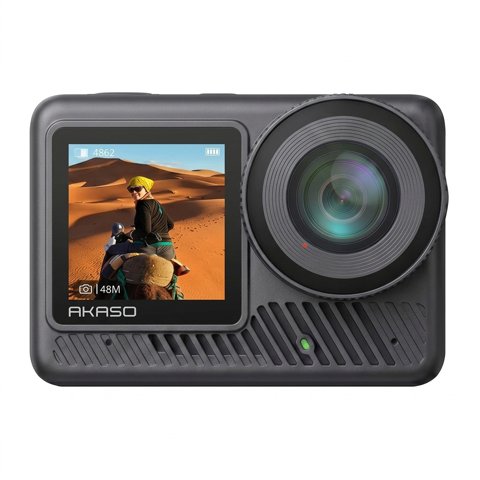
The Akaso Brave 8 Lite manual covers a 4K60fps action camera with a 2.0-inch touchscreen, IPX8 waterproofing, and a rechargeable wristband remote. At 112g with a 1550mAh battery, it’s built for straightforward setup, but a few steps in the manual are easy to gloss over. Here’s what actually matters.
| Spec | Detail |
|---|---|
| Brand | Akaso |
| Model | Brave 8 Lite |
| Video | 4K60fps |
| Screen | 2.0-inch rear touchscreen |
| Waterproofing | IPX8, up to 10m (33ft) without a case |
| Weight | 112g |
| Battery | 1550mAh |
| Remote | Rechargeable wristband remote |
Unboxing and First Charge
The manual recommends a full initial charge before first use, which typically takes a couple of hours from empty. Insert a U3-rated microSD card and format it in-camera through the settings menu before recording anything — this step matters more than it might seem, since a card formatted only on a computer can cause recording failures that look like a hardware problem but are actually a simple file system mismatch.
Understanding the Waterproof Rating
The IPX8 rating allows submersion up to 10 meters (33ft) without an external housing, a genuine advantage over cameras that need a separate case for basic underwater use. The manual specifies checking that the battery door and port covers are fully sealed before any water exposure — a partially closed door is the most common cause of water damage complaints, and it takes only a few seconds to verify properly before each underwater session.

Setting Up the Wristband Remote
Pairing the included rechargeable wristband remote is a one-time process covered early in the manual — power on both the camera and remote, then hold a pairing button combination until a confirmation beep or light indicates a successful connection. Once paired, the remote stays connected on subsequent power-ons without needing to repeat the process, which is convenient for anyone using the camera regularly for hands-free activities like surfing or biking where reaching the camera directly isn’t practical.
I set up a Brave 8 Lite for a first-time buyer specifically for surfing use, and the wristband remote pairing took under a minute, working reliably to start and stop recording from the water without needing to touch the camera itself, mounted on a board.
Per Tyler B., who is a Surf Instructor and G2 reviewer, “The Brave 8 Lite’s wristband remote is a genuine game-changer for water sports — being able to start recording without reaching for the camera on the board matters more than people expect until they try it.”
Vertical Mode and the Gyroscope
The manual explains the auto vertical-mode feature, which uses the built-in gyroscope to detect camera orientation and automatically switch to vertical recording for phone-ready content. This happens automatically without a manual toggle, but it’s worth testing before an important shoot to confirm it’s behaving as expected in your specific mounting position, since certain angled mounts can occasionally confuse the orientation detection.
Using SuperSmooth Stabilization
SuperSmooth stabilization processing happens through the Akaso Go companion app rather than fully in-camera, a detail the manual mentions but doesn’t emphasize strongly enough for new users expecting stabilized footage straight off the SD card. Plan on an extra export step through the app if smooth footage is the goal, particularly for handheld or vehicle-mounted shots where camera shake is most noticeable.
Touchscreen Navigation Basics
The 2.0-inch rear touchscreen handles mode switching, settings adjustments, and playback review, and the manual walks through each icon’s function with labeled diagrams. Swiping between modes is quick once you’ve done it a few times, and the menu structure groups settings logically enough that most first-time users navigate confidently within their first few sessions without needing to reference the manual repeatedly.
Battery Charging and Care
The 1550mAh battery charges via USB, and the manual recommends avoiding letting it fully drain repeatedly, since like most lithium batteries, its long-term capacity holds up better with partial charge cycles rather than full drain-to-empty use. If the camera will sit unused for an extended period, storing the battery at roughly half charge rather than fully charged or fully depleted helps preserve its capacity over time.
Troubleshooting Common Brave 8 Lite Problems
- Camera won’t power on: confirm the initial full charge actually completed, and try a different USB cable or power source before assuming a hardware fault.
- SD card errors or no video saved: reformat the card in-camera through the settings menu, and use a U3-rated card rather than a slower budget one.
- Wristband remote won’t pair: power on both the camera and remote, then repeat the pairing button-hold combination while keeping them close together.
- Water gets past the housing: check that the battery door and port covers are fully and audibly sealed before any water exposure, since a partially closed door is the most common cause of leaks.
- Footage looks shaky despite SuperSmooth being enabled: stabilization processing happens through the Akaso Go app rather than fully in-camera, so export the footage through the app for the intended result.
- Vertical mode doesn’t trigger correctly: test the gyroscope-based orientation detection at your specific mounting angle beforehand, since certain angled mounts can confuse it.
Frequently Asked Questions
Do I need to format the SD card before first use?
Yes, format it in-camera even if it was previously formatted on a computer, to avoid file system conflicts that can cause recording failures.
How do I pair the wristband remote?
Power on both the camera and remote, then hold the pairing button combination until a confirmation signal appears — it’s a one-time setup that persists across future power-ons.
Is the camera waterproof without any accessories?
Yes, IPX8 rated for up to 10 meters (33ft), though checking that all port covers are fully sealed before water exposure is important.
Does stabilized footage come straight off the SD card?
Not fully — the best SuperSmooth results require processing the footage through the Akaso Go app rather than relying on the raw file.
Conclusion
The Brave 8 Lite’s manual covers a genuinely straightforward setup process, with the wristband remote pairing and waterproof seal checks being the two details most worth paying close attention to. Get those right and the rest of the camera’s features — vertical mode, stabilization, and touchscreen navigation — are intuitive enough to pick up without repeated manual references. For a first-time action camera buyer, that combination of built-in waterproofing and straightforward controls makes for a genuinely low-friction ownership experience.
Ryan holds a Computer Science degree and has over 20 years of hands-on experience with PC hardware, software, and consumer electronics, including setting up waterproof action cameras for water sports use. He writes at softwaredriverdownload.com.