Comparing the Moondrop Blessing 3 to the Kiwi Ears Orchestra Lite is really a comparison of two different design philosophies rather than two competitors chasing the same sound. One uses dynamic drivers for bass authority, the other skips dynamic drivers entirely and leans on eight balanced armatures for speed and detail. I spent a couple of weeks switching between them on the same tracks to see where each one actually wins.
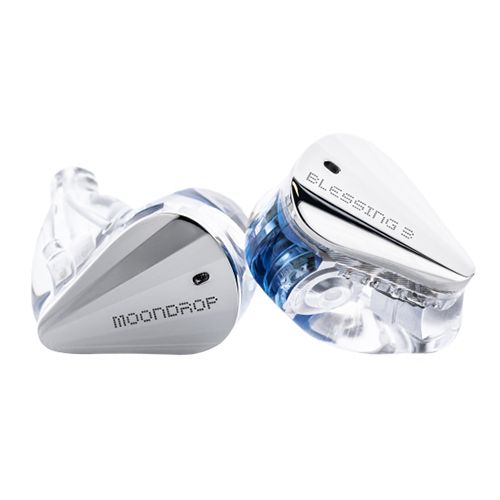
Driver architecture: dynamic hybrid vs all-armature
The Blessing 3 uses a 2DD+4BA hybrid layout: two 10mm dynamic drivers in a horizontally opposed arrangement for bass, plus four balanced armatures split across mids and highs, for six drivers total. Impedance sits at 14.8Ω with 120dB/Vrms sensitivity.
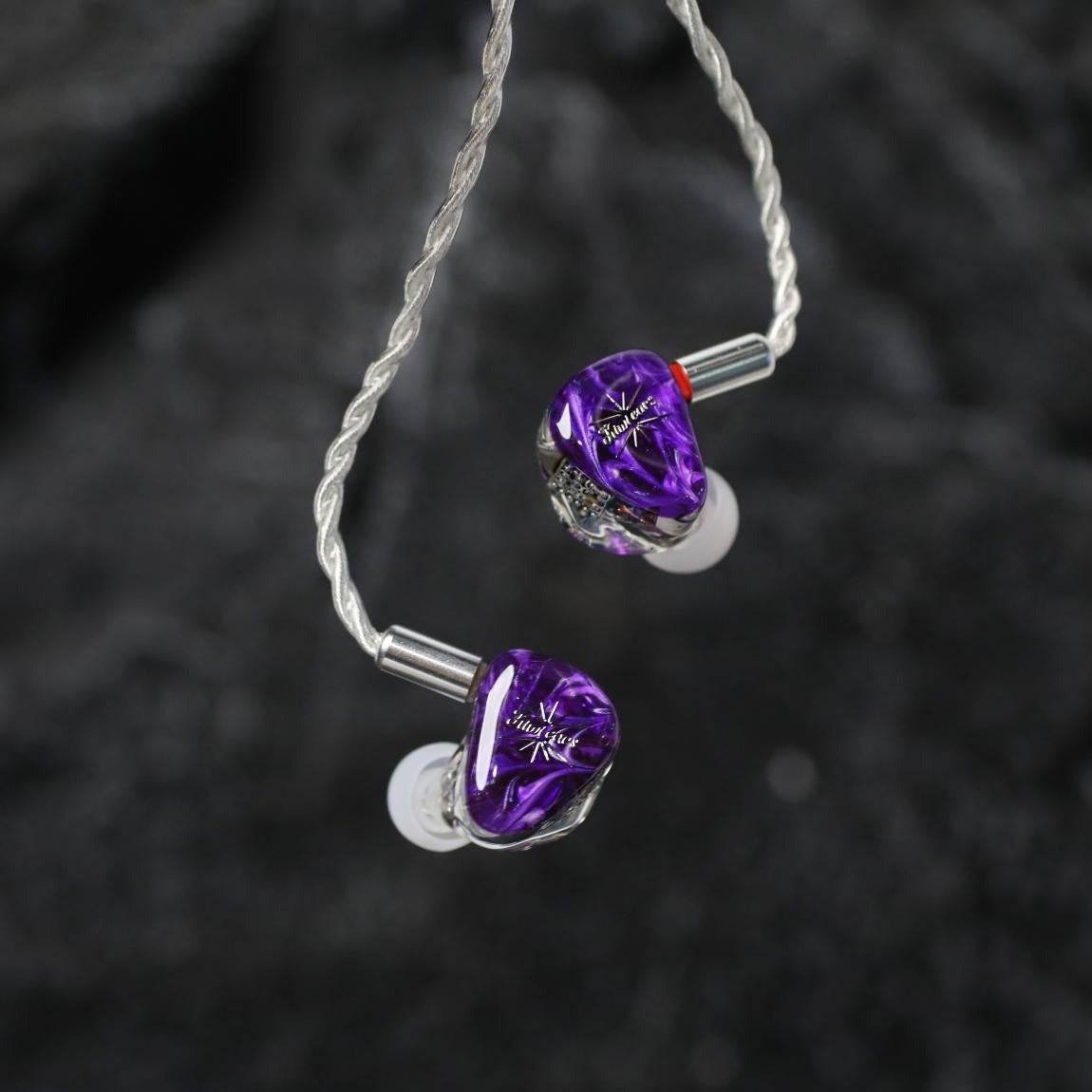
The Orchestra Lite goes the opposite direction with an all-balanced-armature design: two tweeters for treble, four midrange armatures, and two larger armatures for bass, an 8BA total configuration using a mix of Knowles and Belsing drivers tied together with a three-way passive crossover. Impedance is 16Ω with a lower 112dB SPL/mW sensitivity, meaning it needs slightly more power to reach the same volume as the Blessing 3.
| Spec | Moondrop Blessing 3 | Kiwi Ears Orchestra Lite |
|---|---|---|
| Drivers | 2DD + 4BA (6 total) | 8BA (2+4+2 split) |
| Impedance | 14.8Ω | 16Ω |
| Sensitivity | 120dB/Vrms | 112dB SPL/mW |
| Frequency response | 10Hz–30kHz | 20Hz–20kHz |
| Connector | 0.78mm 2-pin | 0.78mm 2-pin |
How they actually sound side by side
The Blessing 3’s dual dynamic drivers give it a real edge in bass authority and sub-bass rumble that the all-armature Orchestra Lite simply cannot match — balanced armature bass drivers are fast and controlled, but they rarely deliver the same physical sense of impact as a well-tuned dynamic driver. On bass-heavy modern production, the Blessing 3 is the more satisfying listen.
Flip to something like a small jazz ensemble or a solo string recording, though, and the Orchestra Lite’s advantage shows up. Its all-armature design resolves fine transient detail and instrument texture a bit more precisely, and the treble tweeters give cymbals and violin overtones a crisp, well-separated quality. It is a more clinical, analytical presentation compared to the Blessing 3’s warmer, more forgiving character.
- You want punchy, well-extended bass from dual dynamic drivers
- You listen to a wide mix of genres, not just acoustic or vocal-heavy music
- You want a warmer, more “musical” overall tonal balance
- You want maximum treble detail and instrument separation
- You mostly listen to acoustic, classical, or vocal-forward recordings
- You don’t need strong sub-bass slam as a priority
Comfort and cable quality
Both ship with detachable 0.78mm 2-pin cables and multiple eartip sizes. The Orchestra Lite’s shell is a touch smaller since it avoids housing bulky dynamic drivers, which some readers with smaller ears may find more comfortable for long sessions. The Blessing 3’s shell is only marginally larger and still sits securely for hours of wear in my experience.
The Orchestra Lite’s three-way passive crossover, built from five independent passive components, is a genuinely involved piece of engineering for an all-armature design at this tier. It’s part of why the driver handoffs sound as clean as they do — a poorly executed crossover on an 8BA design can create audible seams between the bass, mid, and treble armature groups, and Kiwi Ears clearly put real effort into avoiding that here.
Source pairing and amplification
Neither earphone strictly requires a dedicated amplifier, but the Orchestra Lite’s lower 112dB SPL/mW sensitivity rating means it benefits a bit more from a cleaner, slightly more powerful source than a bare phone jack. I noticed a modest but real improvement in dynamic punch and treble extension when running the Orchestra Lite off a basic USB-C dongle DAC compared to a phone’s built-in output. The Blessing 3’s higher 120dB/Vrms sensitivity made it less source-picky in comparison, sounding close to its best even straight out of a phone.
If you’re planning to primarily use either earphone directly from a phone without any dongle or dedicated source, that’s worth factoring into your decision — the Blessing 3 will get you closer to its full potential without extra hardware.
Which genres favor which earphone
- Electronic, hip-hop, modern pop production: Blessing 3’s dual dynamic bass wins clearly
- Classical, chamber music, solo vocal or acoustic guitar: Orchestra Lite’s resolution and separation edge ahead
- Rock and metal: reasonably close, though the Blessing 3’s punch suits heavier tracks slightly better
- Podcasts and spoken word: both perform well, though the Orchestra Lite’s clarity is marginally more pleasant for dialogue-heavy listening
Price and value considerations
Pricing between these two typically sits close enough that value comes down to what you actually listen to most, rather than one option being a clearer overall bargain. If your library skews heavily toward one extreme — almost entirely bass-forward electronic production, or almost entirely acoustic and classical — the choice practically makes itself. Most listeners fall somewhere in between, which is exactly why this comparison keeps coming up in community discussions rather than having a settled, universally agreed answer.
Common Setup Problems and Fixes
- Problem: One side sounds quieter than the other. Fix: Check the 2-pin connector orientation and reseat the cable firmly on both earpieces; a loose or slightly misaligned connector is the most common cause of a channel imbalance on detachable-cable IEMs.
- Problem: Bass feels weak or thin despite the driver spec. Fix: Try a larger or different eartip; seal quality has an outsized effect on perceived bass for both dynamic-driver and balanced-armature designs, and a poor seal will hollow out low end more than any driver difference.
- Problem: Treble sounds harsh or fatiguing on the Orchestra Lite. Fix: Give the balanced armatures 20 to 30 minutes of warm-up time, and double-check source quality; a bright, poorly mastered file will expose the Orchestra Lite’s resolving nature more than a warmer IEM would.
- Problem: Either earphone sounds unusually quiet from a laptop or dongle. Fix: Confirm the source’s output impedance is low and check that any in-line EQ or sound enhancement software isn’t attenuating volume; both IEMs are efficient enough that low volume usually points to a source-side setting.
- Problem: The cable feels stiff or tangles easily out of the box. Fix: This is normal for a new stock cable; a short break-in period of normal handling usually loosens it, or you can swap to a third-party 0.78mm cable if it bothers you long-term.
Frequently asked questions
Is the Moondrop Blessing 3 or Kiwi Ears Orchestra Lite better for bass-heavy music?
The Blessing 3, without much competition. Its dual dynamic driver setup delivers noticeably more bass authority and sub-bass extension than the all-armature Orchestra Lite.
Which one is better for classical or acoustic listening?
The Orchestra Lite’s all-balanced-armature design tends to resolve fine detail and instrument separation a little more precisely, which suits acoustic and classical recordings well.
Do either of these need an amplifier?
Both are reasonably efficient, though the Orchestra Lite’s lower sensitivity rating means it can benefit slightly more from a dedicated source with extra headroom versus a bare phone jack.
Are the cables and eartips interchangeable between them?
Yes, both use the common 0.78mm 2-pin connector standard, so cables are interchangeable, and most standard silicone eartips will fit either nozzle.
Final verdict
Neither of these earphones is objectively “better” — they are built around genuinely different priorities. If your listening leans toward bass-forward modern production, the Blessing 3 is the more rewarding choice. If you spend more time with acoustic, classical, or vocal-focused recordings and want maximum resolution, the Orchestra Lite is worth the audition.
About the author: outside of my day job, I spend an unreasonable amount of time cross-referencing IEM frequency response graphs against my own listening notes.