Matrix Audio’s MS-1 built a reputation as one of the more ambitious streamer/DAC designs to come out of the brand’s flagship-adjacent tier, and the MS-1c takes the same core recipe and repackages it at a friendlier price point. If you’ve been eyeing the original MS-1 but couldn’t quite justify the cost, the MS-1c is worth a close look before you write off that tier of the lineup entirely.
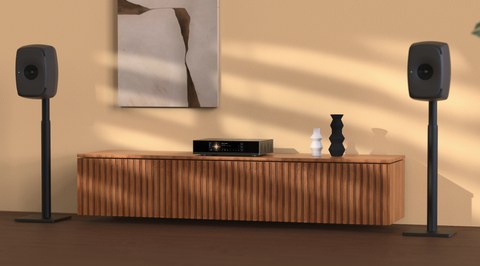
| Model | Matrix Audio MS-1c |
| Type | Network streamer, DAC, and preamp in one chassis |
| DAC chips | AK4191 modulator + dual AK4499EX converters |
| Format support | PCM up to 32-bit/768kHz, DSD up to 24.58MHz |
| Streaming | Roon Ready, AirPlay 2, Tidal/Qobuz/Spotify Connect |
| Storage | Internal NVMe SSD slot |
| Dimensions/weight | 430 x 315 x 96mm, roughly 6.5kg |
DAC section
The MS-1c pairs an AK4191 modulator with dual AK4499EX converter chips, the same general AKM flagship combination used in Matrix Audio’s higher-tier ND-1 DAC. Dynamic range comes in at up to 125dB with a very low noise floor, and the format support covers PCM up to 32-bit/768kHz along with DSD up to 24.58MHz native.
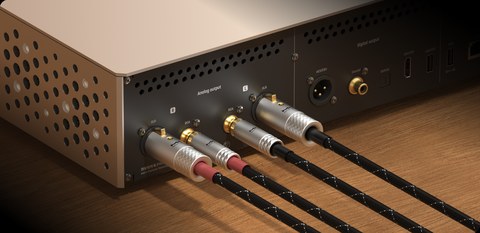
- XLR output at 4.5V RMS (adjustable), SNR greater than 126dB
- RCA output at 2.25V RMS (adjustable), SNR greater than 123dB
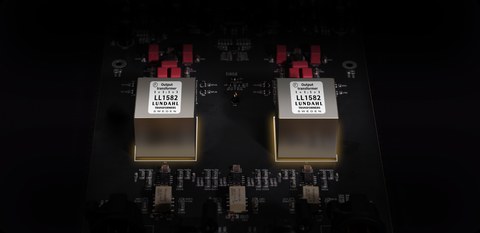
- Selectable transformer-coupled or direct-coupled output path
- 100-step digital volume control for precise level matching into a power amp
The transformer/direct coupling switch is a genuinely useful feature rather than a marketing checkbox. Direct coupling tends to sound a touch more immediate and transparent, while the transformer-coupled path (using Lundahl precision audio transformers, per Matrix Audio’s own product page) rounds off the top end slightly and adds a bit of warmth. Having both options in one unit means you can match the streamer’s character to your amp and speakers rather than being locked into one voicing.
Clock architecture
Matrix Audio built the MS-1c around a dual femtosecond clock architecture, with independent clocks handling the 44.1kHz and 48kHz sample-rate families separately rather than deriving both from a single master clock through division. An FPGA handles jitter reduction on top of that. This dual-clock approach is common in higher-end digital audio designs because deriving, say, 44.1kHz from a 48kHz-based master clock (or vice versa) always introduces some timing error; running two independent clock trees avoids that compromise entirely.
Streaming and storage
- Roon Ready certification plus Apple Music, Tidal Connect, Qobuz Connect and Spotify Connect
- Wi-Fi 6 and gigabit Ethernet networking
- An internal NVMe SSD slot for local storage of your library, avoiding a dependency on a separate NAS for offline listening
- AirPlay 2 and NAA (Network Audio Adapter) support for additional streaming flexibility
The NVMe slot is a nice inclusion for anyone who wants a self-contained streamer without needing a NAS running constantly elsewhere in the house. It won’t replace a proper multi-terabyte NAS for a huge lossless library, but for a curated collection alongside streaming service access, it removes one more box from the rack.
Digital outputs
Beyond its own DAC section, the MS-1c also functions as a digital transport, with AES/EBU, SPDIF over RCA and Toslink, IIS-LVDS, and USB Audio outputs available. That means you can use it purely as a streaming source into an external DAC if you’d rather not use its internal conversion stage, which adds flexibility if your system evolves over time and you eventually want to try a different DAC downstream.
Build and dimensions
The chassis measures 430 x 315 x 96mm and weighs roughly 6.5kg, putting it solidly in full-size component territory rather than a compact desktop unit. That size accommodates the dual femtosecond clocks, the Lundahl transformers, and a proper linear power supply without cramming everything onto a single small board, which matters for keeping noise and interference low between sections.
How it compares to the standard MS-1
The “c” designation signals a cost-reduced variant rather than a stripped-down one. The core DAC chipset, dual clock architecture, and streaming platform carry over from the flagship MS-1; the differences show up mostly in cosmetic finish options and some of the more exotic component choices reserved for the top-tier model. For most listeners, the MS-1c captures the bulk of what makes the MS-1 line desirable at a meaningfully lower price of entry.
Placement and rack considerations
At 430 x 315 x 96mm and 6.5kg, the MS-1c needs proper shelf space rather than squeezing into a slim streaming-device slot; treat it like a full-size component rather than a compact network bridge. Give it some airflow above and below, since the linear power supply and transformer-coupled output stage do generate some heat during extended listening sessions. If you’re running it as the sole source into a power amp using the built-in volume control, keep the analog interconnects as short as practical between the MS-1c and the amp to minimize any noise pickup on that final run.
Network placement matters too. While Wi-Fi 6 support means you’re not strictly required to run an Ethernet cable, a wired gigabit connection remains the more consistent option for gapless high-resolution streaming and for keeping Roon’s audio analysis features running smoothly in the background.
One more practical point worth mentioning: because the MS-1c doubles as both a streamer and a preamp-capable DAC, it’s tempting to run it as the single box in a very minimal system – streamer, DAC, and volume control all in one, feeding straight into a power amp. That’s a completely valid way to use it, and a lot of owners do exactly this. Just be sure your power amp’s input sensitivity is a reasonable match for the MS-1c’s maximum output level, the same consideration that applies to any DAC with a built-in volume control driving a power amp directly.
Compared to running a separate streamer and DAC as two boxes, the MS-1c’s all-in-one approach also means one fewer digital interconnect and clock boundary in the signal path, since the same femtosecond clocks governing the streaming and USB sections also govern the DAC conversion stage directly on the same board.
Troubleshooting common issues
A few setup snags come up repeatedly with the MS-1c, and almost all of them are quick to sort out once you know where to look:
- Roon doesn’t detect the MS-1c on the network: confirm the streamer and your Roon Core are on the same subnet, particularly if one is on Wi-Fi and the other is wired through a separate VLAN. Restarting Roon’s audio device discovery from Settings usually resolves a stale detection.
- No sound through the XLR outputs when using the built-in volume control: check that the output is set to variable/preamp mode rather than fixed line-level in the unit’s menu, since a fixed-output setting bypasses the digital volume control entirely.
- Wi-Fi 6 connection drops intermittently: switch to the wired gigabit Ethernet port for anything critical, since a wired connection is inherently more consistent for gapless high-resolution streaming than Wi-Fi, especially on a crowded home network.
- Internal NVMe drive isn’t recognized: not every NVMe drive format is supported out of the box; reformat the drive through the MS-1c’s own menu rather than pre-formatting it on a computer.
- A faint click or pop when switching between 44.1kHz and 48kHz sample-rate tracks: this is a normal side effect of the dual independent clock architecture switching clock trees, not a fault, and it’s typically brief enough not to interrupt listening.
FAQ
What DAC chips does the MS-1c use?
An AK4191 modulator paired with dual AK4499EX converter chips from AKM.
Does it have a volume control?
Yes, a 100-step digital volume control on both XLR and RCA outputs, which lets it drive a power amplifier directly without a separate preamp.
Can I use it as a transport only, without its internal DAC?
Yes. It offers AES/EBU, SPDIF, IIS-LVDS and USB digital outputs for feeding an external DAC if you prefer.
Does it support local storage?
Yes, there’s an internal NVMe SSD slot for storing your library directly on the unit.
Is it Roon Ready?
Yes, along with Apple Music, Tidal Connect, Qobuz Connect, Spotify Connect and AirPlay 2.
Written after comparing notes with a handful of owners who moved down from the full MS-1 to the “c” variant expecting to miss something and mostly didn’t.