Matrix Audio built the Element X2 Pure to mark the company’s tenth anniversary, and rather than adding more features to the flagship Element line, the engineering team took the opposite approach: they removed the headphone amplifier entirely and redirected everything toward the digital-to-analog conversion and analog output stage. The result is a component that is part network streamer, part dual-mono DAC, and part analog preamplifier, aimed squarely at listeners who want to drive a power amp or active speakers directly without an extra box in the chain.
| Model | Matrix Audio Element X2 Pure streamer / DAC / preamp |
| DAC | Dual ESS ES9039PRO chips, true mono mode |
| Formats | PCM up to 768kHz, native DSD to 22.4MHz, full MQA unfold |
| Price Tier | High-end flagship, SRP around $4,799 USD |
| Compatibility | Roon Ready, Tidal Connect, Spotify Connect, Qobuz, AirPlay 2; no headphone output |
What changed from the standard Element X2
The regular Element X2 in Matrix Audio’s lineup includes a headphone amp stage for desktop and near-field listening. The “Pure” variant strips that out. Every design decision in the Pure version, from the transformer to the internal wiring, was made to shorten and simplify the signal path for the line-level output rather than to also support headphones. If you need headphone output from an Element-series unit, the standard X2 or the smaller MS-1c streamer are better fits; the X2 Pure is a source-and-preamp component, full stop.

DAC architecture
Inside sit dual ESS ES9039PRO chips, ESS Technology’s flagship converter that succeeded the long-serving ES9038PRO. Each chip runs in true mono mode, meaning all eight internal D/A conversion units on a given chip work in parallel for a single channel rather than being split across both channels. That is a meaningfully different (and more expensive) approach than running one chip in stereo mode, and it is part of why the X2 Pure sits near the top of Matrix Audio’s non-M-series catalog.
- Digital inputs: dual coaxial, optical, IIS-LVDS, and USB Type-B
- Format support: PCM up to 768kHz, native DSD to 22.4MHz, and full MQA unfold
- Built-in preamp stage with up to +10dB gain at 15.8VRMS
- New O-core toroidal transformer and machined aluminum shielding around the DC-coupled audio path
Using it as a preamp
The built-in analog preamp is the feature that changes how you’d actually build a system around this unit. Rather than running the X2 Pure into a separate line-stage preamp, you can connect it directly to a power amplifier and control volume from the X2 Pure itself. Matrix Audio designed it to pair with their own M-series power amplifiers for exactly this reason, though it works with third-party power amps just as well as long as your input sensitivity and gain structure line up.
This is worth sitting with for a moment if you are coming from a traditional separates setup. Cutting out a dedicated preamp reduces one interconnect run and one power supply’s worth of noise floor from your system, at the cost of losing the flexibility of a multi-input preamp with phono stages, tape loops, and so on. For a source-first, streaming-centric system, that’s usually a fair trade.
Streaming and network features
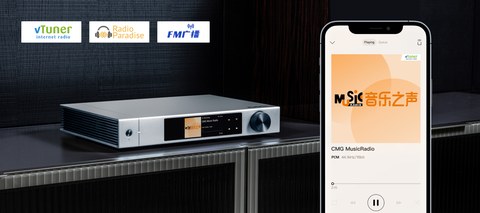
The X2 Pure runs on Matrix Audio’s MA Player platform and supports Roon Ready, Tidal Connect, Spotify Connect, Apple Music via AirPlay 2, Qobuz, and the usual DLNA/UPnP options for network shares. Setup follows the same pattern as other Matrix Audio streamers: connect it to your network, install the MA Remote app, and let it index your library or link your streaming accounts. Owners moving from the standard X2 report the transition is seamless since the streaming stack is unchanged; only the analog output path is different.
Practical considerations before buying
- Confirm your power amplifier’s input sensitivity is compatible with the X2 Pure’s maximum output level so you are not stuck running the volume control near its floor or ceiling
- If you need a headphone jack for any part of your listening, this is not the model – look at the standard X2 or a mini-i Pro series unit instead
- Plan your rack space and ventilation around the O-core transformer; it runs a genuinely full-size power supply for a streamer-class component, and it does generate some heat under sustained use
- Because MQA decoding is built in, you do not need a separate MQA-capable renderer elsewhere in the chain if you still listen to MQA-encoded content
It is worth noting that MQA licensing has become a moving target across the industry in recent years, so buyers should not treat MQA support as the primary reason to choose this unit – treat it as a bonus on top of an otherwise excellent PCM and DSD streamer/DAC/preamp.
Who this is for
The Element X2 Pure suits listeners who have already committed to a power-amp-plus-speakers system and want to simplify the front end into a single streaming source with preamp functionality built in. It is overkill, and arguably the wrong tool, for anyone who primarily listens on headphones or who wants to keep a dedicated preamp with multiple analog inputs for turntables, tuners, or other sources.
Living with it day to day
Owners who move from a separates system with a dedicated preamp report that the biggest adjustment isn’t sound quality, it’s habit. You stop thinking of “the source” and “the preamp” as two boxes with two remotes and start thinking of the X2 Pure as the single control point for the whole front end. The MA Remote app covers volume, input switching, and streaming control from one screen, so day-to-day operation ends up simpler than a traditional multi-box setup once you’re past the initial network configuration.
Firmware updates arrive over the network periodically and have historically added streaming service support and stability fixes rather than changing the core DAC behavior, which is reassuring if you’re the type who likes gear to sound consistent over the years rather than shifting with every update.
Troubleshooting Setup and Streaming Problems
Most issues owners run into with a networked streamer like the X2 Pure come down to the home network rather than the DAC hardware itself. Common problems and fixes:
- Roon won’t detect the X2 Pure: confirm the unit and the Roon core are on the same network subnet, and check that any router-level device isolation or guest-network settings aren’t blocking discovery.
- MA Remote app can’t find the unit: restart the X2 Pure and the app, and make sure the phone is connected to the same WiFi network rather than mobile data.
- No sound reaches the power amp: double-check the preamp’s volume level isn’t set near zero, and confirm your power amp’s input sensitivity is actually matched to the X2 Pure’s output level as described above.
- AirPlay or Spotify Connect drops mid-track: a congested WiFi network is the usual culprit; moving the unit closer to the router or switching to a wired Ethernet connection resolves most intermittent streaming dropouts.
- Network streaming is unreliable in your setup: as an alternate pathway, connect a source directly over USB, coaxial, or optical input instead of relying on the network stack, which keeps playback working even during a home network outage.
FAQ
Does the Element X2 Pure have a headphone output?
No. The Pure variant removes the headphone amplifier found in the standard Element X2 to focus entirely on the DAC and preamp output stage.
What DAC chips does it use?
Dual ESS ES9039PRO chips running in true mono mode, one chip per channel.
Can I connect it directly to a power amplifier?
Yes. The built-in preamp stage with adjustable gain lets you skip a separate line-stage preamp entirely.
Does it support MQA?
Yes, full MQA hardware decoding and unfold is supported alongside standard PCM and native DSD formats.
Is it Roon Ready?
Yes, along with Tidal Connect, Qobuz, Spotify Connect and AirPlay 2 support.
Twenty-plus years of buying, selling, and occasionally regretting hi-fi gear has taught me that the “simplify the chain” upgrades are usually the ones that stick around longest in a system. This is one of those.