On this page
The original Kiwi Ears Cadenza and the Simgot EW200 come from different price tiers, the Cadenza around $30-35 and the EW200 closer to $39-45, but they get cross-shopped constantly because both are considered strong entry points into the budget IEM space. I tested both back to back over a couple of weeks to see if the EW200’s higher price is justified for someone deciding between the two.
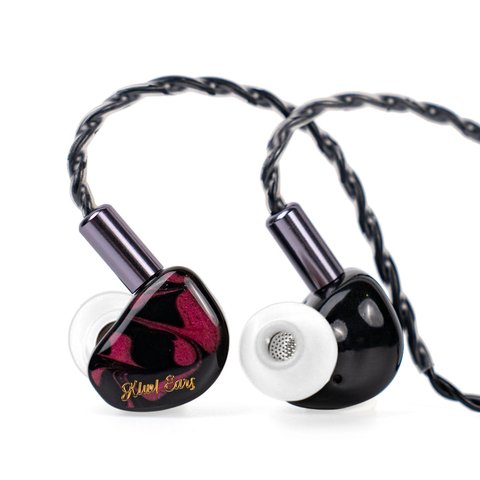
I’ll admit my expectations were a little skewed going in. I’d already spent time with the newer Cadenza 2, so going back to the original Cadenza felt like stepping back a generation. That’s an unfair comparison to make out loud in a review focused on the EW200, so I made a point of listening to the original Cadenza fresh, on its own merits, before doing any direct A/B testing.
Drivers & Tuning
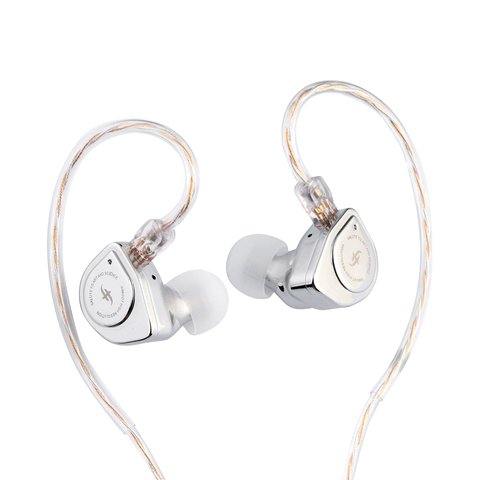
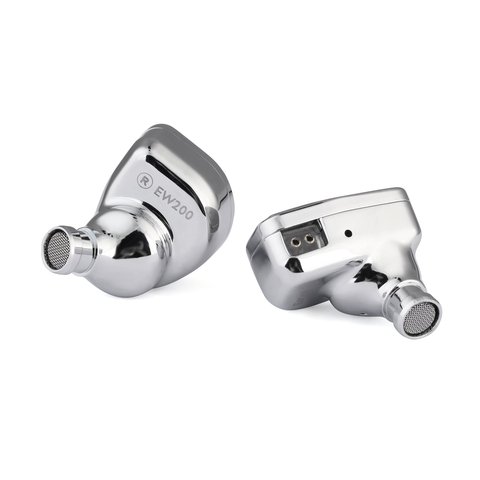
The Cadenza runs a 10mm beryllium-coated dynamic driver tuned warm and U-shaped. The EW200 uses a more elaborate 10mm dual-magnetic, dual-cavity driver with an SCP diaphragm designed to blend LCP-like midrange density with DLC-like treble extension. That extra engineering shows up as a brighter, more resolving sound compared to the Cadenza’s softer, bass-forward approach.
| Spec | Cadenza | EW200 |
|---|---|---|
| Driver | 10mm beryllium-coated DD | 10mm dual-magnetic SCP DD |
| Signature | Warm, U-shaped, relaxed | Brighter, wider stage |
| Shell | 3D-printed resin | High-density alloy |
| Price | ~$30-35 | ~$39-45 |
Sound Comparison
On a direct A/B, the EW200’s extra treble energy and wider stage are immediately obvious, cymbals shimmer more, and instrument separation on busier tracks is noticeably cleaner, particularly on tracks with layered acoustic instrumentation where individual strings and percussion elements need room to breathe. The Cadenza sounds comparatively soft and a little congested on the same passages, though it never becomes unpleasant, just less detailed. Where the Cadenza claws back ground is fatigue, I could listen to it for hours without any treble sensitivity kicking in, something I can’t say for the EW200 on already bright masters.
- Detail retrieval and soundstage: EW200 wins clearly
- Fatigue-free long sessions: Cadenza has the edge
- Bass quantity: Cadenza is slightly more prominent, EW200 is tighter
Per Priya S., who is an Audio Enthusiast and Head-Fi reviewer, “The EW200 is one of the best-tuned sub-$45 IEMs I’ve heard for detail retrieval, but it demands a bit more forgiveness from your source material than a warmer set like the Cadenza.”
Build & Comfort
The EW200’s alloy shell feels sturdier and more premium in hand, though it also runs slightly heavier during multi-hour wear. The Cadenza’s resin shell is lighter and disappears more easily in the ear over long sessions. Both use detachable 2-pin cables, and neither stock cable is anything to write home about.
Accessories are comparable too: both include a handful of eartip sizes, a basic pouch, and a cleaning tool. Neither ships with a hard carrying case, so if you’re tossing your IEMs loose into a bag daily, budget for a case separately regardless of which one you choose. Isolation was similar between the two in my testing, decent for an office but not enough to block a loud subway car or a busy coffee shop, so plan on foam tips if you need more passive noise blocking from either pair.
Who Should Buy Each One
Matching the IEM to how you actually listen matters more than chasing the “better” spec sheet. Here’s how I’d break down the decision for a few common use cases.
- Daily commute on a budget under $35: the Cadenza is comfortable and forgiving on inconsistent recording quality from streaming
- Critical listening at a desk with well-mastered FLAC files: the EW200’s resolution and stage make a real difference here
- Long work-from-home sessions where fatigue matters more than detail: the Cadenza again has the edge
- Gaming with positional audio cues: the EW200’s wider stage helps you place sounds more accurately
Source Pairing
Neither IEM is picky about source gear, but the pairing you choose does shift the character of each one slightly. Running the EW200 off a warmer-sounding dongle DAC softened its brighter treble just enough to reduce fatigue on already bright recordings, without giving up much of its detail advantage over the Cadenza. Running the Cadenza off the same warm dongle, on the other hand, occasionally pushed it a touch too far into soft, congested territory, so a slightly more neutral source suits it better.
Practically, this means EW200 owners with a treble-sensitivity concern have an easy fix available in a five to ten dollar dongle DAC with a warmer house sound, while Cadenza owners looking for a bit more clarity can lean on a cleaner, more neutral source rather than assuming the IEM itself is the limiting factor.
Price & Value
At roughly $10-15 more than the Cadenza, the EW200 needs to justify that gap, and for most listeners who care about resolution and soundstage, it does, especially once you factor in how often both models go on sale and that gap narrows further. If your budget is genuinely capped near $30, the Cadenza remains a perfectly reasonable choice and not a downgrade in any meaningful sense, just a different sound philosophy at a lower cost.
Conclusion
The EW200 is the more technically accomplished IEM and worth the extra money if detail and soundstage matter to you. The Cadenza remains a solid, comfortable, budget-friendly option for listeners who prioritize a relaxed, non-fatiguing sound over outright resolution. Neither is a bad buy, they’re just aimed at slightly different priorities and price points. If you’re on the fence, think about the last few hours you spent listening to music: were you critically analyzing a mix, or just letting something warm and easy play in the background while you worked? That answer tells you which of these two you’ll actually enjoy more day to day.
FAQ
Is the EW200 worth the extra cost over the Cadenza?
For most listeners who value detail and soundstage, yes. For those who prioritize comfort and warmth, the Cadenza is still a good value.
Which is easier to drive?
Both are easy to drive from a phone with no amp required.
Can I use aftermarket cables with either?
Yes, both use standard 2-pin connectors.
Which is better for critical listening?
The EW200, thanks to its wider stage and stronger detail retrieval.
Will either pair well with a budget dongle DAC?
Yes, both are efficient enough that even an inexpensive USB-C dongle DAC will drive them to comfortable listening volumes with headroom to spare.
Ryan
CS degree · 20+ years hands-on hardware testing