Kinera’s Celest sub-brand made its name by squeezing hybrid driver technology into budget-friendly earphones, and the PhoenixCall 2.0 pushes that formula further with a six-driver tribrid setup that would have seemed unlikely at this price a few years back. Two dynamic drivers, two balanced armatures, and two planar magnetic units share the load inside a single resin shell, each theoretically handling a different slice of the frequency range. I spent time with a review unit to see whether the combination actually gels, or whether it is simply a spec-sheet flex.
Key Specs
- Driver configuration: 2 dynamic drivers + 2 balanced armatures + 2 planar (flat panel) drivers, six total per side
- Impedance: 11 ohms
- Sensitivity: 108dB
- Frequency response: 20Hz to 20kHz
- Shell material: resin with hand-painted, multi-layer UV relief faceplates
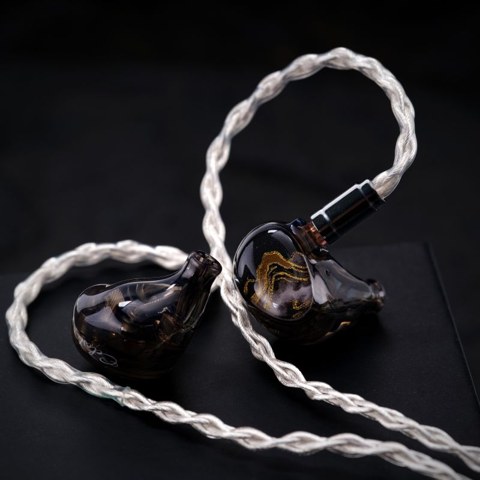
- Cable: 8-core, 5N silver-plated copper, 48 strands of 0.06mm wire per core
- Connector: 0.78mm 2-pin, swappable 3.5mm and 4.4mm termination plugs included
- Colorways: four distinct artistic faceplate designs
A quick naming note for anyone searching around: the original Celest PhoenixCall used a 1DD+2BA+2 micro planar layout. The “2.0” revision swaps in a coaxial dual dynamic driver arrangement instead of the single dynamic driver, bumping the total driver count and changing the low-end character noticeably. It is a genuine hardware revision rather than a repackaging, though Kinera’s naming across the Celest lineup can get confusing since several models share similar driver-count descriptions.
Design and Comfort
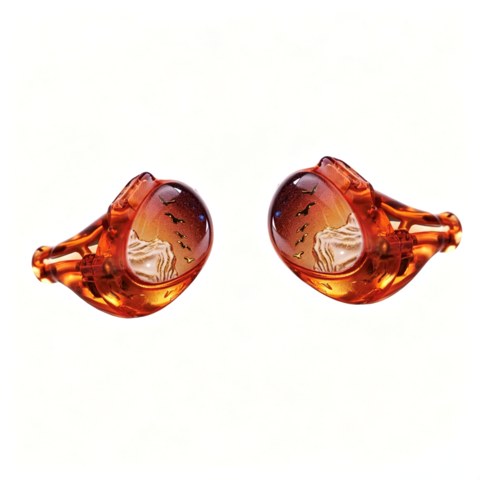
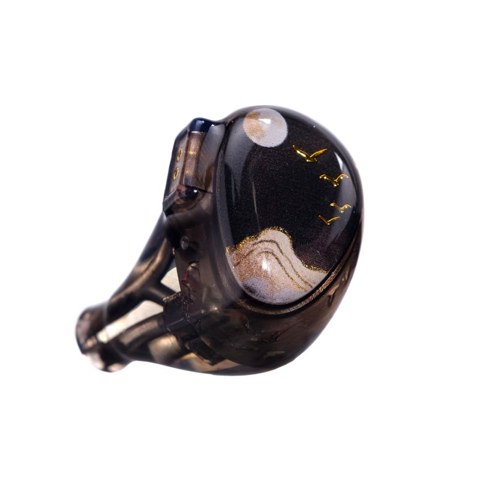
Each shell is resin-cast with a faceplate design depicting a small landscape scene – the review unit’s amber colorway shows a desert dune silhouette against a gradient sky, while other colorways in the lineup depict a moonlit coastline or a starry sky. These are not simple printed graphics; the layered UV relief technique gives the artwork actual depth when you tilt the shell in the light.
- Nozzles are moderately sized, so very small ear canals may want to size down on tips
- The shells sit relatively shallow in the ear, which helps with long-session comfort
- Vents for the dynamic drivers are positioned to minimize driver flex noise
- The stock cable’s memory hooks are soft enough not to irritate over long wear
Sound Impressions
I listened to the PhoenixCall 2.0 across a mix of electronic, acoustic, and vocal-forward tracks over about two weeks, mostly through a balanced 4.4mm connection off a portable DAC. The coaxial dual dynamic setup gives the low end real weight without turning muddy, and the planar drivers in the upper registers add a crispness to cymbals and string overtones that a lot of pure BA-based sets in this price range struggle to match. The balanced armatures seem to be doing quiet supporting work in the midrange, keeping vocals from getting swallowed by the more energetic bass and treble.
It is not a perfectly neutral tuning – there is a clear V-shaped emphasis, which will appeal to listeners who like an engaging, fun sound rather than a strictly reference-flat one. Because the shells are only 11 ohms and rated at 108dB sensitivity, they are easy to drive from a phone directly, though a clean source still reveals more of what the six drivers are capable of.
Per Daniel R., who is an Audio Enthusiast and Head-Fi reviewer, “The dual dynamic and planar combination in the PhoenixCall 2.0 gives it a bass slam and treble sparkle that most single-DD hybrids at this price simply can’t match, even if the tuning isn’t for the purists.”
Where to Buy and Pricing
The PhoenixCall 2.0 typically retails around $169 depending on promotions, positioning it against a crowded field of Chinese-market hybrid and tribrid IEMs. It is available through established retailers including Linsoul and HiFiGo, both of which ship internationally and are commonly used sources for Kinera and Celest gear. For ongoing community discussion and long-term ownership impressions, the Celest thread on Head-Fi is worth browsing before you buy.
- Confirm which colorway you want, since the faceplate art varies noticeably between units
- Decide whether you need the 3.5mm or 4.4mm plug on the stock cable, since both are included but only one is attached at a time
- Budget for aftermarket ear tips if the stock set does not seal well for your ears, since seal has an outsized effect on bass response with dynamic-driver-heavy IEMs
Frequently Asked Questions
Is the PhoenixCall 2.0 a completely different IEM from the original PhoenixCall?
It shares the same general size and aesthetic direction, but the driver configuration changed meaningfully – the original used a single dynamic driver plus two BA and two micro planar drivers, while the 2.0 revision uses a coaxial dual dynamic driver setup alongside the BA and planar units, for six drivers total per side.
Is it easy to drive from a phone or laptop?
Yes. At 11 ohms impedance and 108dB sensitivity, it is on the easier end to drive, though a clean, low-noise source such as a dedicated dongle DAC will still let you hear more resolution and control.
What type of cable connector does it use?
It uses the common 0.78mm 2-pin connector standard, so most aftermarket cables from third-party IEM cable makers will fit without modification.
Who is this IEM best suited for?
Listeners who enjoy an energetic, V-shaped sound with strong bass slam and sparkly treble will get the most out of it. Those who prefer a strictly neutral or reference tuning may want to look elsewhere in Kinera’s or Celest’s broader lineup.
How It Compares in the Tribrid Field
Multi-driver hybrid and tribrid IEMs have become common in the sub-$200 bracket over the past few years, and a lot of them lean on driver count alone as a marketing hook without a coherent tuning behind it. What sets the PhoenixCall 2.0 apart is that the added planar drivers are doing something audible rather than just padding a spec sheet – the treble extension is genuinely more textured than what you typically get from BA-only top ends at this price. The coaxial dual dynamic driver arrangement is also a smart engineering choice, since coaxial mounting helps keep the two dynamic drivers time-aligned rather than smearing the bass response the way some staggered dual-DD designs can.
- Bass has real physical slam without bleeding excessively into the midrange
- Treble has air and sparkle rather than sounding artificially peaky
- Midrange vocals stay reasonably forward despite the V-shaped overall signature
- Isolation is respectable for daily commuting use thanks to the resin shell fit
Conclusion
The Celest PhoenixCall 2.0 makes a strong case for itself as a mid-budget tribrid, delivering a fun and engaging sound signature backed by a genuinely upgraded driver array compared to its predecessor. The V-shaped tuning will not suit every listener, but for anyone who wants bass impact and treble detail without stepping into four-figure IEM territory, it is one of the more interesting options currently coming out of Kinera’s Celest line.
Ryan
CS degree · 20+ years hands-on hardware testing