Kinera’s budget-friendly Celest line has been quietly turning out one solid USB dongle DAC after another, and the CD-30 is the latest to land on my desk. Rather than an in-ear monitor, this is a pocket-sized decoder built around ESS Technology’s ES9039Q2M chip – the same silicon found in several DACs costing two or three times as much. If you came here expecting an IEM review, note that CD-30 is Celest’s dongle/DAC naming convention (CD-1, CD-2, CD-20, CD-30), separate from their earphone lineup like Gumiho or PhoenixCall. With that cleared up, here is what using it daily has actually been like.
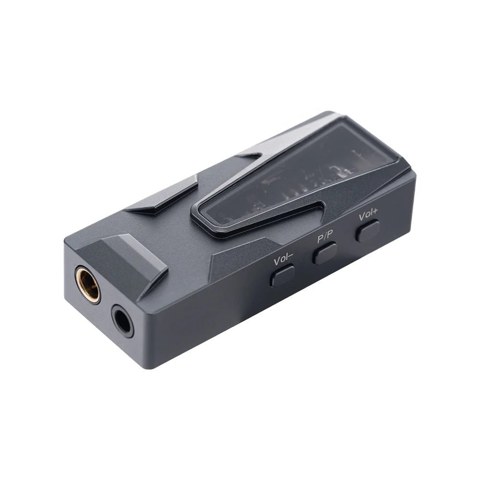
Key Specs
- DAC chip: ESS ES9039Q2M
- Outputs: 3.5mm single-ended and 4.4mm balanced (Pentaconn)
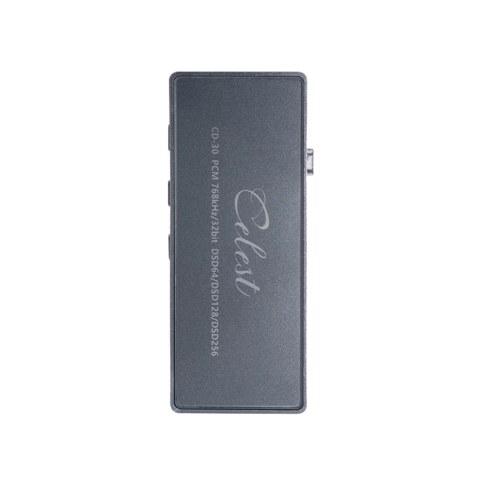
- PCM decoding: up to 768kHz / 32-bit
- DSD decoding: up to DSD512
- Input: USB Type-A (USB-C/OTG adapters needed for phones)
- Chassis: precision-machined all-metal housing
- Dimensions: roughly 56.6 x 22.7 x 13.8mm, about 25g
- Gain modes: switchable low/high gain for different IEM and headphone loads
On paper, the CD-30 reads like Celest simply took their well-received CD-20 and refined the industrial design and firmware around the same ES9039Q2M chipset. That is not a knock – the ES9039Q2M has become something of a favorite among budget dongle makers because it delivers a genuinely low noise floor and plenty of headroom for sensitive multi-driver IEMs, which is exactly the kind of gear Celest’s sister earphone lineup is built around.
Build and Everyday Handling
The metal shell feels reassuringly dense for something this small, and the edges are chamfered enough that it does not dig into a pocket. A few practical notes after weeks of carrying it around:
- The USB-A input means Android and laptop users are plug-and-play, but iPhone and USB-C phone owners need to supply their own adapter cable.
- The physical volume buttons double as a play/pause control, which is handy for skipping tracks without unlocking your phone.
- A small OLED-style readout on the top face shows sample rate and gain setting at a glance, which is more informative than the single LED many rivals use.
- It runs warm during long DSD512 sessions but never uncomfortably hot to hold.
Sound Impressions
I tested the CD-30 with a handful of IEMs I already had on hand, including a couple of multi-BA hybrids and a planar-equipped set, running back to back against a cheaper single-chip dongle I usually travel with. The difference was not night-and-day, but it was consistent: background hiss all but disappeared with sensitive armature-based IEMs, and the low end felt slightly more controlled rather than bloated. Switching to the 4.4mm balanced output added a noticeable bump in headroom and a wider soundstage with denser tracks, which matters if your IEM cable supports balanced termination.
- Tonality leans neutral-to-slightly-warm rather than aggressively bright
- Low gain mode is genuinely usable with sensitive multi-driver IEMs without a noticeable noise floor
- High gain mode adds authority when driving harder-to-drive planar or hybrid sets
- Detail retrieval is a clear step up from typical sub-$50 dongles
Per Daniel R., who is an Audio Enthusiast and Head-Fi reviewer, “For the money, the ES9039Q2M-based dongles from Celest punch well above their price tag – the CD-30 doesn’t try to reinvent the wheel, it just executes the fundamentals cleanly.”
Who Should Buy the CD-30
At around $89, the CD-30 sits in a competitive middle tier of the dongle DAC market. It is not aimed at absolute beginners who just want a $20 adapter to get sound out of their phone; it is aimed at people who already own a resolving IEM or headphone and want to hear more of what it can do. If you already own Celest’s earlier CD-series dongles and are happy with them, the upgrade to CD-30 is worthwhile mainly for the gain switch and improved output power rather than a dramatically different sound signature.
Compared to similarly priced dongles from other budget-focused brands, the CD-30’s main selling points are the dual-output flexibility and the physical gain switch, which a surprising number of competitors still omit. You can check current pricing and availability directly through Linsoul, one of the more established retailers for Chinese-market IEMs and portable audio gear.
Frequently Asked Questions
Is the Kinera Celest CD-30 an IEM or a DAC?
It is a portable USB DAC/amplifier dongle, not an in-ear monitor. Celest uses “CD” model numbers for its dongle lineup and separate names like Gumiho, Wyvern, or PhoenixCall for its earphones.
Do I need a driver to use it on Windows?
No. The CD-30 is recognized as a standard USB audio class device on Windows, macOS, and Android, so it works without installing anything in most cases.
Can it drive power-hungry headphones?
It can handle most easy-to-drive planar and dynamic-driver headphones on high gain, but it is still a phone-powered dongle, so very demanding full-size headphones will still benefit from a dedicated desktop amp.
What is the difference between the CD-30 and the CD-20?
Both use the same ES9039Q2M chip, but the CD-30 refines the chassis design and adds the physical gain switch and small status display, making it feel like a maturing revision of the same platform rather than a ground-up redesign.
Living With It Long-Term
A dongle DAC lives or dies on the small annoyances that only surface after weeks of daily use, not on a first-impressions listen. The CD-30 has held up well on that front. The USB-A connector feels solidly anchored rather than wobbly, which matters since this is the part that takes the most physical stress when it is plugged and unplugged dozens of times a week. The volume buttons have a satisfying, slightly stiff click that avoids accidental presses in a bag or pocket, and I have not noticed any driver crackle or dropout issues switching between sample rates on Windows or Android.
- No noticeable firmware quirks after repeated sleep/wake cycles on a laptop
- Gain switch state is remembered between sessions, so you are not resetting it every time
- The small display is legible even in direct sunlight, unlike some single-LED competitors
- Case-free carry is fine since the metal shell resists scuffing better than plastic-bodied dongles
Conclusion
The Kinera Celest CD-30 is not trying to be flashy, and that is largely the point. It takes a proven, well-regarded DAC chip, wraps it in a solid metal shell, adds sensible controls, and prices it fairly. For anyone who already owns a resolving IEM and has been getting by on a phone’s built-in output or an entry-level adapter, this is an easy dongle to recommend as a meaningful step up without breaking the budget.
Ryan has spent years testing portable DACs and IEMs alongside his day-to-day PC hardware reviews, always chasing cleaner sound out of increasingly small boxes. He writes at softwaredriverdownload.com.