Genuine R2R ladder DACs used to start well north of a thousand dollars. Audalytic, the budget-focused sub-brand from Gustard, is part of a recent wave of products trying to bring that technology down into much more accessible territory, and the DR70 is its flagship argument for why R2R doesn’t have to be a luxury category.
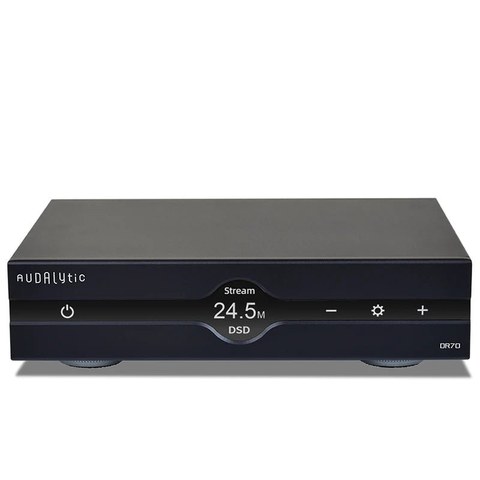
| DAC Type | 25-bit discrete R2R ladder |
| Clock | Femtosecond-grade CK-01 |
| Streaming | DLNA and AirPlay |
| Digital Inputs | USB, coaxial |
| List Price | ~.99 |
| Related Model | DR70n (adds extra features) |
What Audalytic is and why Gustard created it
Audalytic is Gustard’s dedicated budget line for desktop DACs, streamers, and headphone amplifiers, letting the parent brand experiment with lower price points without diluting the Gustard name itself. The DR70 is currently the line’s most talked-about product: a genuinely discrete R2R streamer DAC priced under $400.
- 25-bit complementary discrete R2R ladder module with individually placed precision resistors
- Custom FPGA logic controlling the ladder network
- Femtosecond-grade CK-01 clock, shared with the pricier DR70n sibling model
- Built-in network streaming with DLNA and AirPlay support
- List price around $359.99
How it compares to the pricier DR70n
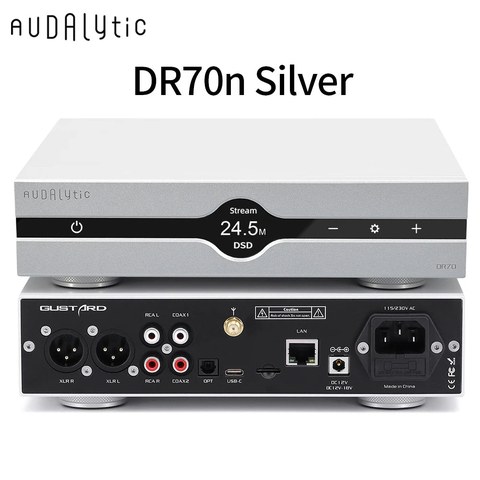
Gustard sells a step-up variant called the DR70n alongside the standard DR70. According to Gustard’s own positioning, the base DR70 shares the same proprietary R2R module, FPGA logic, and CK-01 clock as the DR70n — the difference between the two comes down to additional features and refinements on the “n” variant rather than a fundamentally different DAC core. That makes the standard DR70 an unusually strong value proposition if you don’t need whatever extras the “n” version adds.
Sound character
Reviewers consistently describe the DR70 as musical and slightly warm-leaning rather than clinical, which tracks with what you’d expect from R2R ladder conversion generally. It’s not positioned as a measurement-chasing DAC, and Gustard doesn’t pretend otherwise — it’s built for people who’d rather enjoy their music than obsess over a spec sheet, while still getting genuine R2R technology rather than a marketing gimmick.
Streaming features
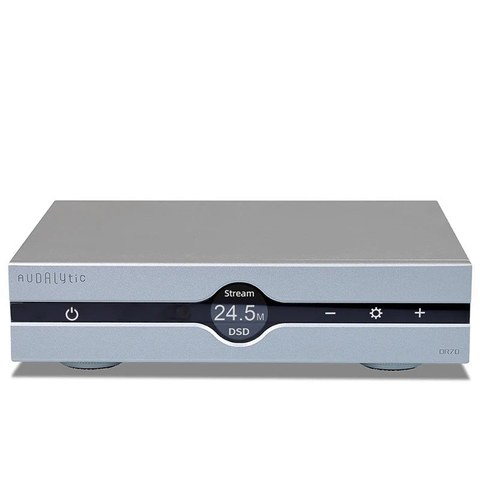
Unlike a traditional standalone DAC, the DR70 doubles as a network streamer:
- DLNA support for streaming from a NAS or local network media server
- AirPlay support for wireless streaming directly from Apple devices
- Standard digital inputs for use as a conventional DAC when you’d rather connect via USB or coaxial from a separate source
The one recurring criticism across reviews is the companion control app, which several reviewers describe as the weakest part of the package relative to the DAC hardware itself — worth knowing going in if app polish matters to your buying decision.
For a deeper technical breakdown, The HiFi Cat’s review covers measurements and build quality in detail, and Audiosolved has a thorough breakdown of the streaming feature set specifically.
Who this DAC is for
- First-time R2R buyers who want to try the technology without committing to four-figure pricing
- Anyone who wants a combined streamer-and-DAC rather than juggling a separate streaming device
- Budget-conscious desktop or bedroom system builders who still want genuine discrete DAC engineering rather than an inexpensive off-the-shelf chip solution
Setup tips
- Connect via Ethernet rather than relying purely on Wi-Fi for the network streaming features, for the most stable DLNA and AirPlay performance
- If you experience app connectivity hiccups, try using the DR70 as a wired USB or coaxial DAC instead while troubleshooting the network side separately
- Give the unit adequate ventilation; like most compact desktop DACs, airflow helps keep the internal clock circuitry stable over long listening sessions
How it stacks up against other budget R2R DACs
The sub-$500 R2R DAC category has grown more competitive recently, but a lot of entries in this price range cut corners on the clock circuitry specifically, since precision clocks are one of the more expensive components to source cheaply. The DR70’s decision to share its femtosecond-grade CK-01 clock with the pricier DR70n, rather than fitting a cheaper clock to hit a lower price point, is a meaningful differentiator worth weighing against competing budget R2R options. It’s the kind of decision that shows up in actual measured jitter performance rather than just marketing copy.
A note on managing expectations at this price
It’s worth being upfront that a sub-$400 R2R DAC, even a genuinely well-engineered one like the DR70, isn’t going to out-resolve four-figure competition. What it does deliver is authentic R2R character and a shared clock design with a pricier sibling model, at a price where a lot of competing products cut corners on exactly those components. Judged against its actual price bracket rather than against flagship gear, it’s a legitimately strong recommendation.
Troubleshooting common DR70 issues
- Streaming app won’t detect the DR70 on the network: confirm the unit is connected via Ethernet rather than Wi-Fi, since the wired connection is noticeably more reliable for DLNA and AirPlay discovery, and restart both the DR70 and your router if it still doesn’t appear.
- AirPlay drops mid-track: this is usually a Wi-Fi congestion issue on the source device rather than the DAC itself; moving the DR70 onto a wired connection while keeping AirPlay on your phone or laptop over Wi-Fi generally resolves intermittent dropouts.
- No sound over USB or coaxial input: double check the DR70 is switched to the correct input source on its front panel or app, since it will not auto-switch away from network streaming mode just because a cable is plugged in.
- Unit runs warm during long sessions: give it open space on all sides rather than tucking it into an enclosed shelf, since the precision clock circuitry benefits from consistent airflow and temperature.
- Control app feels unreliable or laggy: this is a known weak point across reviews of the DR70’s companion app; using the unit as a straightforward wired DAC via USB or coaxial sidesteps the app entirely if streaming features are not a priority for you.
FAQ
Is Audalytic a separate company from Gustard?
No, it’s Gustard’s own budget-focused sub-brand for more accessible desktop DACs, streamers, and headphone amplifiers.
What’s the difference between the DR70 and DR70n?
They share the same core R2R module, FPGA logic, and clock; the DR70n adds extra features on top at a higher price.
Does the DR70 have a headphone output?
Check current listings for your specific configuration, as headphone output availability can vary by revision; its core role is as a streamer-DAC.
Is the streaming app reliable?
Reviewers note the app is the weakest part of the package, so consider using it primarily as a wired DAC via USB or coaxial if app reliability is a dealbreaker for you.
Can it be used as a standalone DAC without the streaming features?
Yes, it accepts standard digital inputs and functions as a conventional DAC if you’d rather feed it from a separate transport or computer.
Final thoughts on value
Budget audio gear has a well-earned reputation for overpromising and underdelivering, which makes it worth restating just how unusual it is to find a genuinely discrete R2R module at this price. Most competing budget DACs in this range either use a cheap all-in-one DAC chip or a heavily cost-reduced ladder implementation that cuts corners on resistor matching. The DR70 doesn’t appear to be doing either, based on the shared clock and module architecture with its pricier sibling.
I test a lot of budget audio gear that promises “flagship technology at a fraction of the price,” and most of it doesn’t hold up under real listening — the DR70 is one of the few recent examples where that claim is largely accurate.