If you have spent any time browsing IEM upgrade cables, you already know the category is full of vague marketing claims and cables that look expensive but do very little for the sound. The DUNU DUW-02S is a bit different — it is a purpose-built replacement cable, not a wireless gadget or a Bluetooth dongle, and DUNU is upfront about exactly what it is made of and how it is built. I picked one up to replace a worn stock cable on a pair of single-dynamic-driver IEMs, and after a few weeks of daily use I have a clear picture of who this cable is actually for.
What the DUW-02S Actually Is
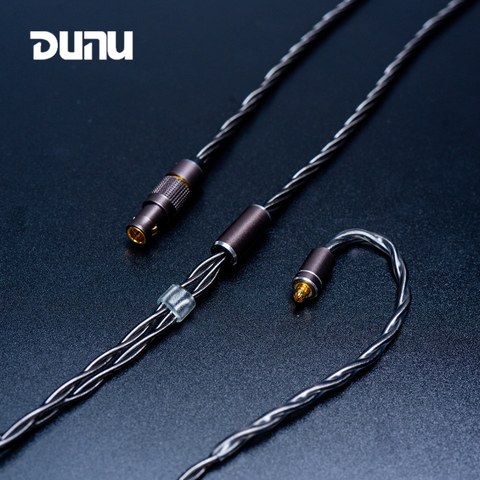
To be clear from the start: the DUW-02S is a handbraided upgrade cable for in-ear monitors. It is not a USB DAC, not a Bluetooth adapter, and it does not add any wireless functionality to your IEMs. What it does is replace the stock cable that came with your earphones with a higher-purity conductor and a more flexible, more durable braid, along with a modular plug system that lets you switch termination types without buying a second cable.
The cable uses a four-conductor round Litz braid made from high-purity silver-plated OCC (single-crystal copper) wire, in what DUNU calls a Type 1 Litz configuration at 26AWG. Overall length is 1.2m±0.1m, which is the standard length for most IEM cables and long enough to route over the ear and down to a pocket or a DAP without excess slack.
Q-Lock PLUS: The Actual Selling Point
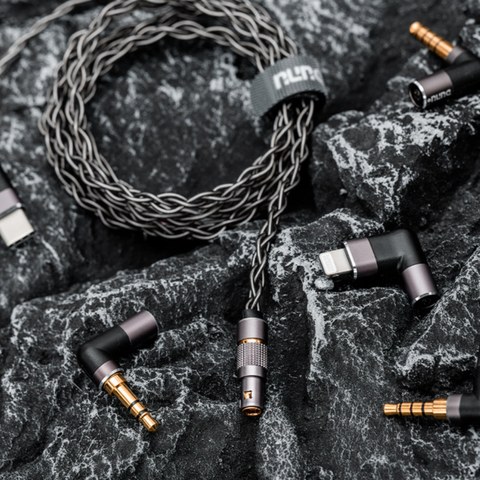
The headline feature is DUNU’s patented Q-Lock PLUS quick-switch modular plug system. Instead of committing to one termination when you buy the cable, the earphone-side connector (MMCX or 0.78mm 2-pin, depending on which variant you order) stays fixed, while the source-side plug can be swapped out. You can read more about how DUNU documents the mechanism on their official DUW-02S product page.
- Standard 3.5mm TRS single-ended plug included as the base configuration
- Optional Lightning digital plug for iOS devices that skip the headphone jack
- Optional USB-C digital plug for phones and DAPs with USB-C output
- Earphone-side connector choice of MMCX or 0.78mm 2-pin
In practice this means one cable can follow you across a phone upgrade, a new DAP, or a change in which IEM you are using day to day, as long as the earphone-side connector matches. It is a genuinely useful bit of engineering rather than a marketing gimmick, since swapping the plug takes seconds and does not require any tools.
Build Quality and Handling
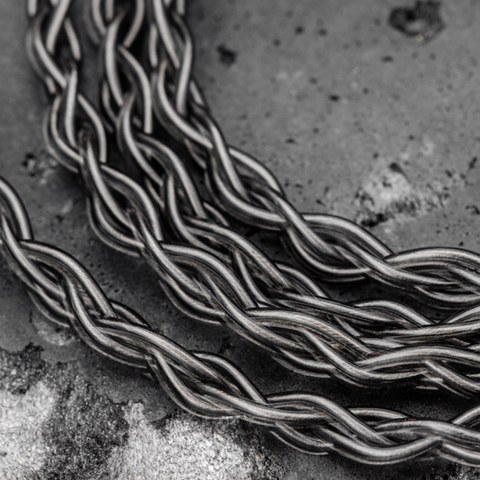
The handbraided round Litz construction is noticeably more supple than the twisted braid used on the older DUW-02, which this cable effectively replaces in DUNU’s lineup. It resists the tangling and memory kinks that plague cheaper stock cables, and it drapes over the ear without the stiffness you sometimes get from thicker aftermarket cables. The connector barrels and Y-split are metal, with a light knurled texture that makes the plug easy to grip when you are swapping terminations in a dim room or on a train.
Microphonics — the thumping noise a cable makes when it brushes against clothing — are well controlled thanks to the ear guides at the earphone-side connectors, though this will vary a little depending on how you route the cable over your ear.
Why Upgrade the Cable At All
A common question I get is whether upgrade cables are worth the money at all, given that the driver and shell of an IEM do most of the work in shaping the sound. My honest take is that a cable swap is one of the smaller levers you can pull, but it is not a zero-effect one either. Stock cables that ship with mid-range and budget IEMs are frequently thin, low-purity copper chosen to hit a price point rather than a performance target, and swapping in something like the DUW-02S addresses two separate things at once: signal purity and physical durability. The durability angle is often overlooked in cable discussions, but it matters in daily use — a cable that survives years of pocket abuse and repeated plugging is worth something even before you get into any tonal differences.
There is also the ergonomic angle. Stock cables are frequently over-the-ear designs with stiff, non-adjustable ear guides that do not fit every ear shape well. The DUW-02S’s handbraided round Litz construction is noticeably more pliable, which in my experience made a bigger day-to-day difference in comfort than any change in tonal balance.
Compatibility
DUNU sells the DUW-02S with either an MMCX or a 0.78mm 2-pin earphone-side connector, so before ordering you need to check which connector your IEMs use. It is designed to pair naturally with DUNU’s own IEM lineup, including the DK2001, Titan S, and Falcon Pro, but since both MMCX and 0.78mm 2-pin are widely used industry-standard connectors, it will fit a large number of IEMs from other brands too, provided the connector type matches.
- Confirm whether your IEM uses MMCX or 0.78mm 2-pin before ordering
- Choose your preferred source-side plug (3.5mm TRS is standard; Lightning or USB-C cost extra)
- Check that the recessed or flush connector shape on your IEM shells has enough clearance for the cable’s connector housing
Sound Impressions
Cable-swap differences are always a contentious topic, and I try not to overstate them. What I can say from side-by-side listening against a stock copper cable is that the DUW-02S brought a slightly more extended top end and a touch more separation in busier mixes, consistent with what you would expect from a higher-purity silver-plated conductor. It is a subtle upgrade rather than a dramatic one, and the bigger practical win is the modular plug system rather than any tonal transformation. If you are chasing a specific sound signature change, a cable swap alone is unlikely to get you there; if you want a more durable, more flexible cable with plug flexibility, this fits the bill.
Retailers like Linsoul and HiFiGo both carry the DUW-02S alongside DUNU’s other cable options, so it is worth comparing it against the step-up DUW-02 Pro if budget allows, since the Pro uses a different conductor material at a higher price point.
Pricing and Where It Fits in DUNU’s Cable Lineup
DUNU positions the DUW-02S as an entry point into its modular cable ecosystem, sitting below the step-up DUW-02 Pro, which uses Furukawa single-crystal copper and commands a higher price. If you are simply looking to replace a worn or damaged stock cable and want the flexibility of swappable plugs without spending Pro-tier money, the DUW-02S covers that need well. If you are chasing the last bit of measurable purity and are willing to pay for it, it is worth reading up on the Pro model before deciding, since the conductor material differs meaningfully between the two.
One thing worth flagging for anyone comparing cables across brands: not every modular system is interchangeable. DUNU’s Q-Lock PLUS plugs are specific to DUNU’s own modular cables, so you cannot mix and match a Q-Lock PLUS earphone-side cable with a different brand’s modular plug hardware. If you want the plug-swapping convenience, you are committing to DUNU’s ecosystem for that particular cable.
Frequently Asked Questions
Is the DUW-02S wireless or Bluetooth?
No. It is a wired upgrade cable only. There is no Bluetooth chip, battery, or wireless functionality anywhere in the design.
Can I use the USB-C or Lightning plug as a DAC?
The digital plugs route a digital signal to your device’s own output stage or an inline decoder depending on the exact plug variant, but this is a cable accessory, not a standalone DAC/amp product.
Will this fit my IEM?
Only if your IEM uses MMCX or 0.78mm 2-pin connectors, since those are the two earphone-side options DUNU offers for this cable.
How long is the cable?
1.2 meters, plus or minus 0.1 meters, which is standard for most IEM cables.
I have been writing about audio gear and PC peripherals for years now, and I always try a cable myself before recommending it rather than going off spec sheets alone.