Flathead earbuds never really went away — they just went quiet for a while. Now two of the more interesting budget-to-mid-tier open designs have landed almost side by side: the DUNU Alpha 3 and the FiiO FF3. Both use a 14.2mm dynamic driver in an open, vented earbud shell rather than a sealed in-ear tip, and both are aimed at listeners who miss the airy, natural staging that flathead designs are known for. I spent time with both side by side, swapping cables and sources, and this is how they actually compare rather than how the spec sheets alone would suggest.
Design and Build Philosophy
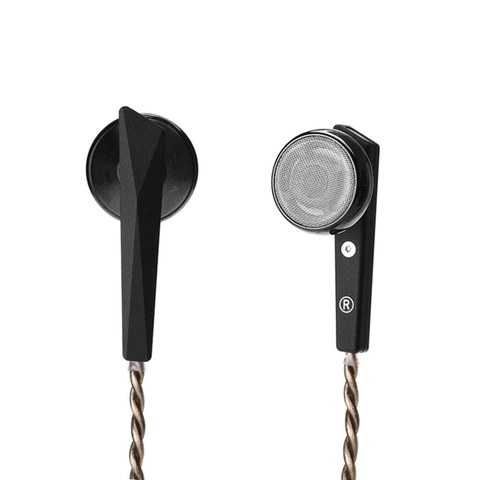
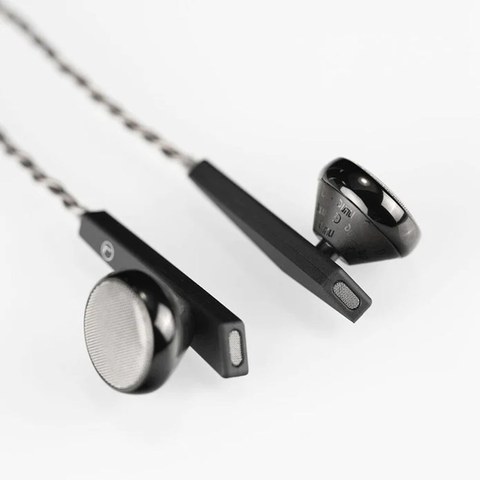
The Alpha 3 leans into a jewelry-like build. DUNU uses a stainless steel and aluminum alloy shell, with an angular faceted stem that looks almost architectural. Weight comes in around 30 grams for the pair, and the cable is a fixed single-crystal copper silver-plated Litz design, terminated in either a 3.5mm or 4.4mm plug depending on which version you order. Because the cable isn’t detachable, what you buy is what you keep long-term, so cable rolling isn’t part of the equation here.
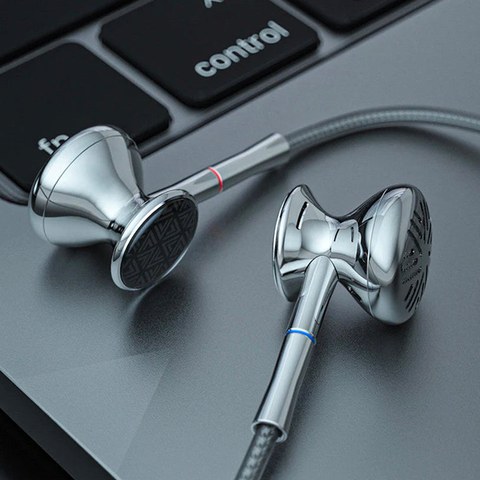
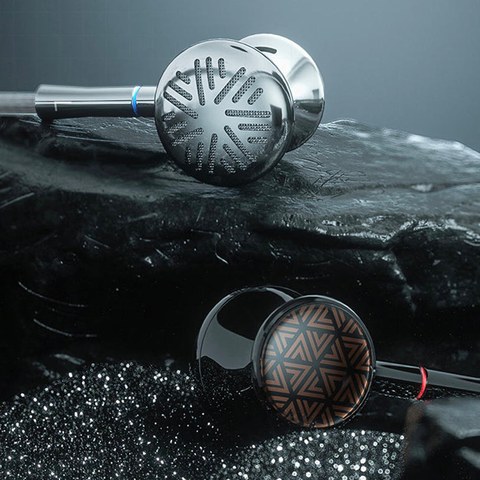
FiiO went a different direction with the FF3. Its 316L stainless steel body is shaped almost like a small axe head or drum, and at roughly 31 grams (without cable) it sits close in hand-feel to the Alpha 3 despite the different silhouette. The bigger practical difference is that FiiO made the plug swappable — you get a twist-lock connector so the same earbud shells work with either a 3.5mm single-ended or 4.4mm balanced cable, both included, both using silver-plated monocrystalline copper conductors.
Driver Tech and Tuning Approach
Both companies chose the same 14.2mm driver diameter, which makes the internal engineering choices more interesting than the raw size. DUNU fits the Alpha 3 with an LCP (liquid crystal polymer) composite diaphragm and what it calls an independent suspension system, essentially decoupling the diaphragm’s edge movement to reduce distortion at higher volumes. The result, in my listening, leans toward a clean, slightly forward midrange with above-average treble extension for an open earbud — measured THD stays under 0.5%, and it shows in how composed vocals sound even when a track gets busy.
FiiO instead used dual internal cavities with a beryllium-plated dome and a PU gasket, paired with an acoustic tube structure that channels resonance from the larger cavity toward the listener’s ear for extra low-end weight. That’s a very deliberate answer to the classic flathead complaint of thin bass. In practice the FF3 does dig noticeably deeper than most open earbuds I’ve tried, though it trades a bit of the Alpha 3’s midrange precision to get there.
Full Spec Comparison
| Spec | DUNU Alpha 3 | FiiO FF3 |
|---|---|---|
| Driver | 14.2mm dynamic, LCP composite diaphragm | 14.2mm dynamic, beryllium-plated dome |
| Shell material | Stainless steel & aluminum alloy | 316L stainless steel, dual cavity |
| Frequency response | 5Hz–40kHz | Not officially published to same range |
| Sensitivity | 105dB±1dB | Tuned for stronger bass response |
| Impedance | 32Ω | 32Ω (approx.) |
| THD | < 0.5% | Not officially listed |
| Weight | ~30g (pair, with cable) | ~31g (shells only, no cable) |
| Cable | Fixed single-crystal copper, silver-plated Litz | Swappable, silver-plated monocrystalline copper |
| Plug options | 3.5mm or 4.4mm (choose at purchase) | 3.5mm and 4.4mm both included (swappable) |
| Included tips/covers | Standard foam covers | 3 types: bass, balanced, crisp treble foams |
| Typical price | Mid-tier, sold in the same bracket as FF3 | $99 |
Comfort and Everyday Fit
Neither earbud seals your ear canal, so neither will isolate outside noise, and that’s the whole point of the category — you’re buying open, natural staging, not a commute companion for a noisy train platform. Comfort-wise, both sit lightly and stay put reasonably well for an earbud form factor. I found the Alpha 3’s angular stem easier to keep oriented correctly by feel, while the FF3’s rounder, drum-shaped shell felt marginally more forgiving on longer sessions since there are fewer edges pressing into the outer ear.
- Alpha 3 favors a jewelry-like, faceted shell that some listeners will simply prefer visually
- FF3 favors interchangeable tuning covers, so you can tilt the sound signature per track or genre
- Both ship with a soft carry pouch adequate for desk use, not pocket abuse
- Neither is a great choice for exercise or commuting given the open-back design
Sound Signature in Practice
On acoustic and vocal-forward tracks, the Alpha 3 is the more analytical of the two — it separates instruments cleanly and treble has real sparkle without turning harsh. The FF3 pulls ahead on electronic and bass-heavy material, where its acoustic tube design gives kick drums and sub-bass lines a physical presence that’s rare for an open earbud. Swapping the FF3’s included foam covers changes the balance noticeably; the “bass” cover pushes low end further forward, while the “crisp” cover tames it and opens up the top end closer to what the Alpha 3 offers by default.
If you already know you gravitate toward a reference-leaning, slightly bright tuning, the Alpha 3 will feel more immediately “correct.” If you want an open earbud that still has some low-end weight and the flexibility to reshape the tuning with swappable covers, the FF3 is the more adaptable option. You can read a deeper technical breakdown of the FF3’s chamber design over at Headfonics’ FF3 review, which matches what I heard in my own listening sessions.
Value and Final Verdict
At their respective price points, both earbuds punch above what open-back designs usually deliver. The FF3’s $99 price and included swappable plug/cable system make it an easy recommendation if you want flexibility without hunting down a third-party cable later. The Alpha 3 asks a similar outlay but leans on premium materials and a fixed, purpose-built cable that many listeners will simply never feel the need to replace.
My honest take after living with both: buy the FF3 if you want one earbud that can be tuned toward bass or treble emphasis depending on mood, and buy the Alpha 3 if you want a single, cohesive tuning that’s already close to reference and don’t mind paying for the metalwork. Neither is a bad decision — they’re simply built for slightly different listeners within the same open-earbud niche. You can check current availability and full retailer specs for both models directly at Linsoul’s DUNU collection and HiFiGo’s FF3 coverage.
I write these comparisons after spending real listening time with each unit rather than going off spec sheets alone, swapping between sources and tips until a clear pattern in the tuning emerges.