The DDPAI Z40 and 70mai A500S are both mid-tier single-front dash cams recording just under 2K resolution, aimed at drivers who want solid image quality without paying flagship prices. Here’s how they compare.
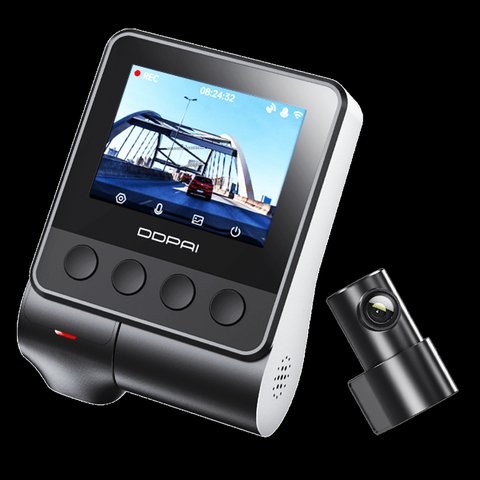
Spec Comparison
| Spec | DDPAI Z40 | 70mai A500S |
|---|---|---|
| Resolution | 1944P | 2.7K (2592×1944) |
| Sensor | Sony IMX335 | Sony IMX335 |
| Field of view | 140° | 140° |
| Display | 2″ IPS screen | 2″ screen |
| Rear camera support | Rotatable built-in rear lens | Optional RC06 add-on |
| Storage | MicroSD, D²save protection | MicroSD up to 128GB |
Shared Sensor, Different Implementation
Interestingly, both cameras use the same Sony IMX335 sensor, which means raw image quality potential is essentially identical between them. The difference comes down to how each brand’s image signal processor handles that sensor data — DDPAI’s Z40 outputs at 1944P while 70mai pushes the A500S slightly further to 2.7K. In practice, the difference in perceived sharpness is fairly modest given the shared underlying sensor, so this isn’t the deciding factor it might appear to be on paper.
Rear Camera Approach: Built-In vs Optional
The Z40’s rotatable rear lens is built into the same unit as the front camera, letting you flip it to face the cabin for interior monitoring or leave it facing forward for a wider effective view. The A500S instead relies on 70mai’s optional RC06 rear camera accessory for true rear-facing coverage, which means dual-channel functionality is an added-cost upgrade path rather than a built-in feature on the base A500S unit.
If dual-channel coverage matters to you, factor the A500S’s optional RC06 rear camera cost into your budget comparison from the start — comparing just the base unit prices between these two models understates what you’d actually spend to get equivalent front-and-rear coverage.
D²save vs Standard Loop Recording Protection
DDPAI’s D²save technology on the Z40 is designed specifically to preserve emergency event footage even if the microSD card itself fails, which addresses one of the more common dash cam failure scenarios. The A500S relies on standard loop recording and G-sensor event locking without this additional failsafe layer, meaning a card failure on the A500S is more likely to result in complete footage loss for whatever was recorded right before the failure.
For full specs, see DDPAI’s official Z40 product page and 70mai’s official A500S product page.
Total System Cost Comparison
When comparing prices, remember that the Z40’s built-in rotatable rear lens means the sticker price already includes dual-channel functionality, while the A500S’s listed price typically reflects the front unit alone. Once you add a compatible RC06 rear camera to reach equivalent dual-channel coverage, the total cost gap between the two narrows considerably or can even reverse depending on current pricing, so always compare complete system costs rather than base unit prices alone.
Frequently Asked Questions
Is the shared sensor really identical between both cameras?
Both use the Sony IMX335 sensor, though final image output depends heavily on each brand’s processing pipeline, not just the raw sensor.
How much does the RC06 rear camera cost?
Pricing varies by retailer; check 70mai’s current accessory listings for exact current cost.
Does the Z40’s rear lens record simultaneously with the front?
Check the current firmware behavior, as some rotatable single-unit dash cams switch between front and rear rather than recording both simultaneously.
Which one is better for extreme heat parking?
Both use supercapacitor-style power backup designed for temperature extremes, so neither has a clear advantage here.
Is GPS included on either model?
Check the current listing for each, as GPS inclusion can vary by bundle for both cameras.
Which is easier to set up for a first-time buyer?
Both follow standard single-unit installation processes with comparable difficulty for a first-time buyer.
Does either support a dedicated parking mode accessory?
Both work with a standard hardwire kit for extended parking mode; check current accessory compatibility for each.
Which one has a wider field of view?
Both share a similar 140° front field of view given the shared Sony IMX335 sensor and comparable lens design.
Does either support Time-Lapse parking recording?
Yes, both support time-lapse style parking recording to conserve storage during extended parking periods.
Which one has a more durable mounting bracket?
Both use standard adhesive mounts common across this price tier; neither stands out as notably more durable than the other.
Is a car charger included with both models?
Yes, a standard 12V car charger ships with both as part of the base package.
Do both include a printed quick-start guide?
Yes, both typically ship with a printed quick-start guide alongside the standard packaging materials in the retail box.
Are replacement adhesive mounts sold separately?
Yes, both brands typically sell replacement adhesive mount pads as low-cost accessories if the original wears out over time.
Can either camera be powered from a portable battery pack?
Yes, both accept standard 5V USB power, so a portable battery pack can run them off the vehicle’s ignition when needed.
Which One Fits a Simpler Front-Only Setup
If you specifically want just a front-facing camera without any rear coverage plans, the A500S as a base unit is the more straightforward choice, since you’re not paying for the Z40’s rotatable rear lens hardware you won’t use. If dual-channel coverage is part of your plan from the start, the Z40’s included rear capability makes more sense as a complete package rather than building toward it with a separate accessory purchase.
Checking Current Stock and Pricing
Since both cameras have been on the market for a while, check current stock levels before assuming either is readily available at a good price. Older models sometimes see price fluctuations as retailers clear remaining inventory ahead of newer releases, which can occasionally make one significantly more attractively priced than the other despite similar specs on paper.
Conclusion
The Z40’s built-in rotatable rear lens and D²save protection give it a practical edge for buyers who want dual-camera coverage without extra accessory purchases. The A500S remains competitive if you’re comfortable adding the RC06 separately or only need front-facing coverage.
Ryan
Computer Science graduate · longtime smart home and PC hardware tester