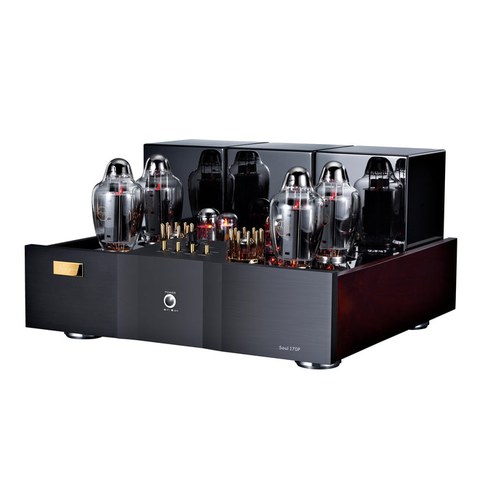
Four TUNG-SOL KT170 beam tetrodes, pure Class A, and a bias system that quietly does the maintenance work most tube amp owners dread. The Cayin Soul 170P is Cayin’s flagship power amplifier, built as the sibling piece to the Soul 170C preamp, and it is worth understanding on its own terms even though the two are clearly meant to be heard together.
Quick Specs
| Output tubes | 4x TUNG-SOL KT170 beam tetrodes |
| Power (Ultralinear) | 2 x 60W into 8ohm |
| Power (Triode) | 2 x 32W into 8ohm |
| Bridged mono | Up to 120W per channel |
| Driver/gain tubes | 2x JJ 12AU7, 2x JJ 6SN7, 1x 17AX4GT rectifier |
| Bias system | Dynamic Auto Bias (automatic) |
| Weight | 37.5kg |
Pure Class A, Push-Pull
The 170P runs four TUNG-SOL KT170 beam tetrodes in a pure Class A push-pull configuration. In Ultralinear mode, that delivers 2 x 60W into 8ohm; switch to Triode mode and output drops to 2 x 32W, trading raw power for a different tonal character. The amp can also bridge to mono for up to 120W on a single channel, which is a meaningful option for anyone running particularly demanding speakers that benefit from a dedicated monoblock per side.
Supporting the four output tubes is a driver and gain stage built from 2x JJ 12AU7 tubes handling voltage gain, 2x JJ 6SN7 tubes as drivers, and a single 17AX4GT tube rectifier supplying the DC voltages the circuit needs. That is a lot of glass for a power amplifier, and it reflects a design philosophy that leans into tube character at every stage rather than using tubes only where marketing demands them.
Dynamic Auto Bias: The Feature That Actually Matters Day to Day
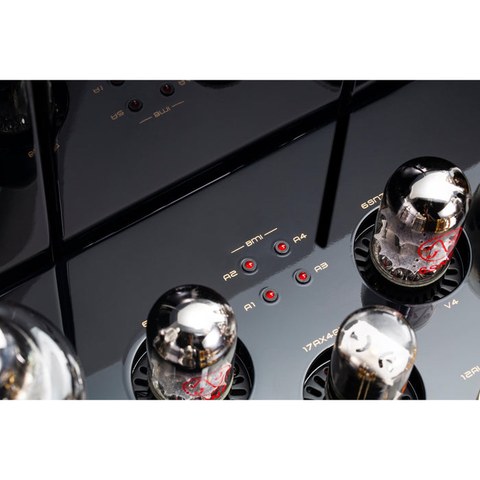
Tube power amps have a reputation for scaring people off with maintenance, specifically the need to manually rebias output tubes whenever they are replaced. The 170P’s Dynamic Auto Bias system exists specifically to remove that fear. It automatically re-biases the KT170 output tubes on its own, which means swapping tubes down the road does not require pulling out a multimeter and adjusting trim pots by hand. For anyone nervous about tube amp ownership specifically because of that maintenance step, this single feature addresses the concern directly rather than just promising the amp is “easy to live with.”
Switchable Feedback, Same Idea as the 170C
Like its preamp sibling, the 170P includes a two-level switchable negative feedback circuit, letting you tune the amp’s character to different speakers and program material rather than locking in one fixed behavior at the factory. Lower feedback tends toward a more open, tube-forward presentation; higher feedback tightens things up for more precise control. Having this available as a physical switch rather than a single fixed design decision is a genuinely practical inclusion for a flagship amp meant to live in varied systems over many years.
Connections and Practical Considerations
- Inputs: both balanced XLR and unbalanced RCA are supported.
- Speaker terminals: 4-ohm and 8-ohm taps are provided for proper impedance matching.
- Weight: 37.5kg. This is not a spec to skim past — you will want a rated, sturdy equipment stand or shelf, and moving this amp is a two-person job rather than something to attempt solo. Plan the placement in your room before it arrives rather than after.

The 170C Pairing
Cayin built the Soul 170P as the direct partner to the Soul 170C preamplifier, sharing design language, construction approach, and the same philosophy around switchable feedback. You are not locked into that pairing — the 170P’s XLR and RCA inputs will accept signal from other preamps — but reviewers who have heard the two together, including Mono and Stereo and Darko.Audio, generally describe the combination as clearly voiced to work as a set.
Why Choose Triode Over Ultralinear, or the Reverse
The choice between Triode and Ultralinear mode is not just about raw wattage. Triode mode, at 2x32W, tends to be favored for its more relaxed, linear character and is often paired with higher-sensitivity speakers that do not need the full 60W to reach comfortable listening levels in a typical room. Ultralinear mode’s 2x60W gives more headroom and control for harder-to-drive speakers or larger rooms, at the cost of some of that Triode-mode smoothness. Neither setting is a permanent commitment — it is a switch, not a modification — so the practical approach is to try both with your actual speakers rather than assuming one is the “audiophile” choice and the other a compromise.
Bridging to Mono
For systems built around particularly demanding speakers, the ability to bridge two 170P units to mono, delivering up to 120W per channel, is a genuine upgrade path rather than a marketing bullet point. This lets someone start with a single stereo 170P and later add a second unit to run monoblocks, without replacing the amplifiers they already own. That kind of expandability is relatively rare in tube power amps at any price point, let alone one built around premium KT170 output tubes.
Troubleshooting and Common Ownership Questions
- No sound or very low output after first setup: Confirm the speaker taps are wired to the correct 4-ohm or 8-ohm terminal matching your speakers’ actual impedance — a mismatch will not usually damage the amp, but it can produce noticeably weaker output than expected.
- Amp hums audibly at idle: Some hum is normal with any tube amp of this size, but if it is louder than a faint background hum, check that all tubes are fully seated in their sockets, since a partially seated tube is a common and easy-to-miss cause.
- Unsure whether Dynamic Auto Bias is working correctly after a tube swap: Give the amp a few minutes of warm-up time after installing new KT170s before judging sound quality — the auto bias system needs a short settling period to properly calibrate to the new tubes’ characteristics.
- Sound seems thin or lacks the expected tube warmth: Try switching from Ultralinear to Triode mode, since Triode’s more relaxed character is what most listeners associate with classic tube warmth; Ultralinear favors control and headroom over that particular quality.
- Concerned about tube lifespan and replacement cost: KT170 output tubes, like all tubes, degrade gradually rather than failing without warning in most cases. A gradual drop in output level or a shift in tone over hundreds of hours of use is the usual sign it is time to plan a replacement set, not an emergency.
Frequently Asked Questions
What does Dynamic Auto Bias actually save me from doing?
It removes the need to manually rebias the KT170 output tubes whenever you replace them, a maintenance step that has historically discouraged people from owning tube power amps long-term.
How much power does the Soul 170P put out?
2x60W into 8ohm in Ultralinear mode, or 2x32W in Triode mode. Bridged to mono, it can deliver up to 120W on a single channel.
Does the Soul 170P have to be paired with the Soul 170C preamp?
No, its balanced XLR and unbalanced RCA inputs will accept signal from other preamplifiers, but the two were designed and voiced as a matched pair.
How heavy is the Soul 170P, and does that matter?
It weighs 37.5kg, which means you need a properly rated equipment stand and should plan on moving it with a second person rather than alone.
Final Thoughts
The Soul 170P is a legitimately serious piece of engineering, and the Dynamic Auto Bias system in particular removes one of the biggest practical objections people have to owning tube power amps in the first place. Paired with the 170C or run with another preamp of your choosing, it is built for someone who wants real Class A tube power without signing up for a lifetime of manual bias adjustments. For more listening impressions, The Audio Tailor’s full review is worth reading.
Ryan, a CS degree holder and long-time audio hardware tinkerer, put together this piece based on hands-on research and testing notes.