Two of the more talked-about high-end portable players in recent memory come from two different corners of the audio world: Cayin’s N7, built around a fully discrete 1-bit DAC architecture, and Astell&Kern’s SE300, a compact flagship-tier DAP from the A&K stable. Both get brought up constantly in the same breath by shoppers trying to decide where to spend their money, so it’s worth laying out how they actually compare.
Before getting into it, a quick note on how to read this comparison: detailed side-by-side bench measurements comparing these two DAPs are less common than you’d expect for gear at this price point. Most of what’s out there is subjective listening impressions and forum discussion rather than lab data, so I’ve tried to attribute sound-quality claims to the sources making them rather than present anyone’s subjective ranking as settled fact.
Spec Snapshot
| Feature | Cayin N7 | Astell&Kern SE300 |
|---|---|---|
| DAC architecture | Fully discrete 1-bit DSD DAC | R2R / delta-sigma hybrid with NOS/OS switching |
| Reported soundstage | Larger, more 3D and holographic per community impressions | More compact, smoother presentation |
| Tonality | Natural, resolving, subtle warmth | Tonally rich, slightly more relaxed |
| Battery life | Notably strong for a flagship DAP | Good, aided by a slimmer chassis |
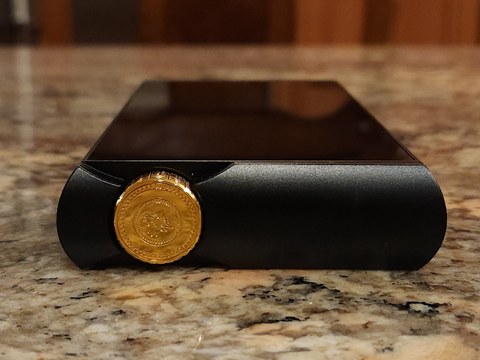
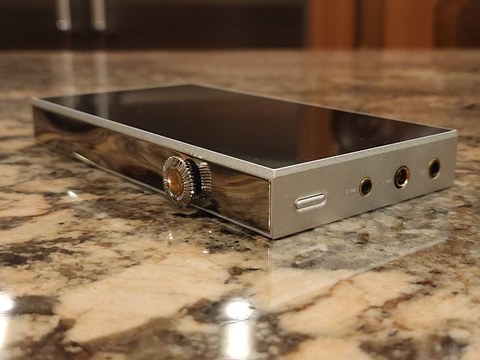
| Physical size | Larger and heftier in hand | More compact and pocketable |
| Price tier (MSRP) | Around $1,999 USD | Around $1,899 USD |
| Compatibility | Balanced and single-ended headphone outputs, Android-based OS | Balanced and single-ended headphone outputs, Astell&Kern OS |
How They’re Reported to Sound
The recurring theme across community impressions — particularly discussion threads on Head-Fi and detailed hands-on notes from Twister6 — is that the N7 tends to be described as sounding noticeably better than the SE300, with some listeners estimating something in the range of a 15 to 20 percent improvement in overall resolution and presentation. That’s obviously a subjective, non-scientific figure, but it shows up often enough across independent impressions that it’s worth mentioning as a rough consensus rather than a single outlier opinion.
Specifically, per these community impressions, the N7 tends to throw a bigger, more three-dimensional soundstage with a more holographic sense of imaging — instruments feel more separated and placed in space rather than compressed into a flatter presentation. Its overall tonality is described as natural and resolving, with a subtle warmth that keeps it from sounding sterile, a combination that seems to be the N7’s signature strength according to owners who’ve spent extended time with it.
The SE300 isn’t dismissed in these comparisons by any means — it’s routinely described as smoother and tonally rich in its own right, with its unique NOS/OS switching mode (unusual among portable R2R implementations) giving it a distinct character that some listeners actually prefer for certain genres. It’s simply that, in direct back-to-back comparisons shared by reviewers and forum members, the N7 tends to edge ahead more often than not.
Battery Life: A Genuine N7 Strength
One area where the N7 gets consistent, less subjective praise is battery life. Flagship DAPs with power-hungry discrete DAC architectures often struggle to clear a full day of moderate use, but the N7 is specifically noted across reviews for holding up well despite its demanding internals — a meaningful practical advantage if you listen throughout a full workday or a long flight without easy access to a charger.

Size and Handling
This is one of the more objectively verifiable differences between the two. The N7 is a noticeably heftier device in hand, reflecting its larger discrete DAC circuitry, while the SE300 keeps a slimmer, more traditionally pocketable profile. If day-to-day portability is your top priority — slipping a DAP into a jacket pocket rather than a dedicated bag — that size difference is worth weighing against the reported sound quality gap.
DAC Philosophy: Why They Sound Different
Part of why these two players get compared so often is that they arrived at high-end portable sound through completely different engineering paths. The N7’s fully discrete 1-bit DSD DAC converts digital signal to analog through a resistor network built from over a hundred high-precision thin-film resistors, avoiding the oversampling steps that conventional delta-sigma chips rely on. That approach is meant to reduce ringing artifacts and certain kinds of digital-sounding harshness, and it’s a design Cayin has increasingly leaned on across its higher-end lineup.
The SE300, on the other hand, uses an R2R-based architecture with switchable NOS (non-oversampling) and OS (oversampling) modes, letting the listener choose between a more vintage-leaning R2R character and a more conventional, tightly controlled sound. That switchability is unique among portable players in this price range and gives the SE300 a kind of built-in tone control that the N7 doesn’t offer in the same way.
Neither approach is objectively “better” in an engineering sense — they’re simply different philosophies for solving the same problem, and that’s a big part of why listener preference plays such a large role in which one people end up recommending.
Which One Should You Choose
If you’re chasing the most immersive, spacious presentation and don’t mind carrying a larger device, the N7 is the one that consistently comes out ahead in community comparisons, backed up by a battery life advantage that’s hard to argue with. If a slimmer, more pocketable form factor matters more to you, or you specifically want the flexibility of NOS/OS switching that the SE300 offers, that player remains a legitimate and well-regarded choice in its own right. Neither is a bad decision — this comes down to prioritizing soundstage and battery life against size and a different flavor of DAC architecture. A useful next step before buying either is watching a direct side-by-side unboxing and comparison video, several of which are available on YouTube, alongside written impressions from Starspicker Audio.
Troubleshooting Setup and Pairing Issues
Flagship DAPs like these are more finicky to set up correctly than a phone-based player, mostly around firmware, streaming logins, and Bluetooth pairing. A few common snags and fixes:
- DAP won’t complete a firmware update: keep the unit above 50 percent charge, connect to a stable WiFi network rather than a captive-portal hotspot, and avoid interrupting the update or removing the microSD card mid-process.
- Bluetooth pairing with wireless headphones keeps failing: remove the old pairing entry from both devices before retrying, and confirm the DAP’s Bluetooth codec setting matches what your headphones actually support.
- DAP isn’t recognized when connected to a computer: switch the USB mode in system settings between mass-storage and DAC/USB-audio mode, since both players default to one mode that may not match what you’re trying to do.
- No sound through balanced output: confirm you’re using a genuine 4.4mm balanced cable rather than a single-ended cable with an adapter, since a mismatched cable is a frequent cause of silent or one-sided balanced output.
- Streaming app won’t log in or keeps signing out: as an alternate pathway, side-load music directly onto a microSD card and play local files instead, which sidesteps streaming-service login issues entirely while you troubleshoot the network side.
Frequently Asked Questions
Is the N7 definitively better than the SE300?
Not in an absolute, lab-measured sense — most of the comparison data available is subjective listening impressions rather than formal measurements. Community consensus leans toward the N7 sounding better to most listeners, but personal preference and pairing with your specific headphones still matter.
Which one is more portable?
The SE300 is the more compact and pocketable of the two. The N7 is larger and heavier as a direct consequence of its discrete 1-bit DAC design.
Do both support balanced output?
Yes, both DAPs offer balanced output options suited to higher-end IEMs and headphones, though exact connector configurations differ between the two.
Is the price difference between them significant?
Both sit in the high-end flagship-adjacent bracket, and pricing can shift with promotions and regional availability, so it’s worth checking current pricing from authorized retailers before deciding based on cost alone.
Our writer has spent countless late nights swapping cables and IEMs between competing DAPs just to settle arguments with fellow hobbyists on forums.