I’ve had a pair of the 7Hz Aurora sitting on my desk for the past few weeks, rotating in between a Moondrop Blessing 3 and an old Sennheiser IE 300, and it’s been the one I keep reaching for when I actually want to sit down and listen rather than just have background noise. That surprised me a little, since 7Hz built its reputation on budget gear like the Salnotes Zero, and the Aurora is a genuine step into the $400 tier where the competition gets a lot more serious.
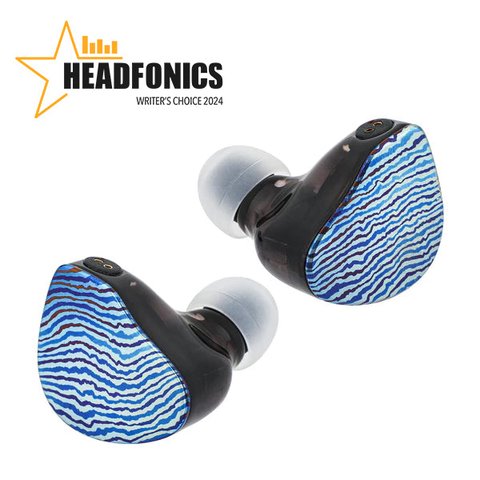
What the Aurora actually is
The Aurora is a tribrid design, meaning it uses three different driver technologies working together through a passive crossover:
- 12mm dynamic driver handling low-end bass and sub-bass extension
- 6mm micro-planar driver covering the upper-mid and treble region
- Dual balanced armature drivers filling out the midrange
Rated impedance is 30Ω with 105 dB/V sensitivity at 1 kHz, so it’s easy to drive off a phone dongle or a basic USB-C DAC — you don’t need a dedicated amp to get it loud. It ships at $399 through Linsoul, which is also 7Hz’s main international distributor.
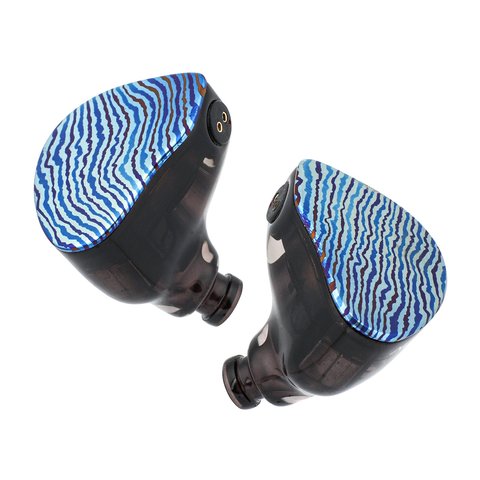
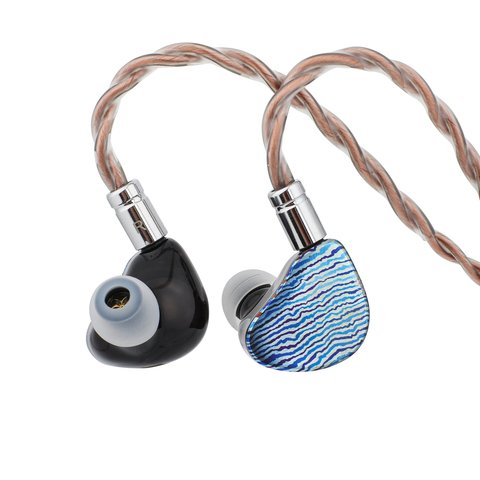
The standout visual feature is the faceplate: titanium filaments layered under resin that shift between blue, purple, and magenta depending on the angle and light. It’s genuinely one of the more distinctive-looking IEMs I’ve tested, and it doesn’t rely on printed graphics that can wear off over time.
Sound signature breakdown
The Aurora leans into a U-shaped signature — boosted bass and treble with a slightly recessed but still clear midrange. It’s not a bass-head tuning, though; the low end is controlled rather than bloated.
Bass
Sub-bass has real weight and rumble without smearing into the mid-bass, which keeps the overall sound from feeling muddy. It’s the kind of bass that shows up clearly on electronic tracks and film scores but doesn’t overwhelm acoustic material.
Midrange
This is where the dual balanced armatures do their job. Female vocals and acoustic instruments come through with excellent micro-detail and separation. Male vocals are a bit thinner and lack some of the note weight you’d get from a warmer-tuned set like the Moondrop Blessing 3, which is the one consistent criticism across reviews I cross-checked.
Treble
The 6mm micro-planar driver is the headline feature here, and it delivers — cymbals and hi-hats have real air and extension without turning harsh or sibilant, even on brighter recordings. Extension reportedly reaches out to 20kHz cleanly.
Build, fit, and accessories
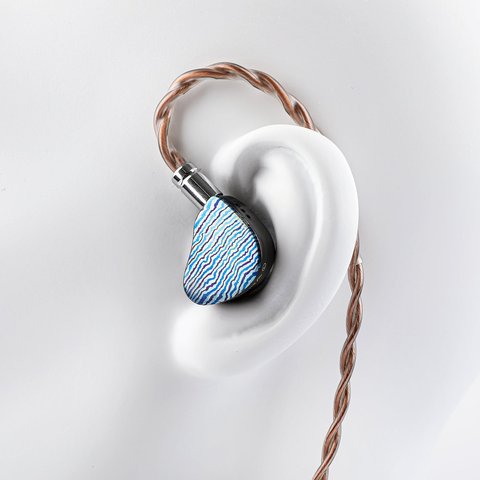
The shells are 3D-printed resin, described by most reviewers as large and heavy compared to typical IEMs in this range. That’s not necessarily a downside if you have average-to-larger ears, but if you’ve struggled with fit on bulkier IEMs before, it’s worth trying these in-store or checking the return policy before buying online.
In the box:
- Modular detachable cable with 0.78mm 2-pin connectors and single-crystal copper conductors
- Interchangeable L-shaped 3.5mm and 4.4mm balanced termination plugs
- 4 pairs of silicone ear tips (S/M/L)
- 3 pairs of rubber ear tips
- White leatherette hardshell carrying case
The modular plug system is a nice touch if you switch between a phone and a balanced desktop DAC/amp regularly — you’re not stuck buying a separate cable to change termination.
How it stacks up against rivals
At $399, the Aurora is competing directly with the Moondrop Blessing 3 and the Yanyin Canon II. Compared to the Blessing 3, the Aurora trades some midrange warmth for sharper treble detail and a punchier sub-bass. Against the Canon II, most reviewers rate the Aurora as less comfortable to wear for long sessions due to shell size, but competitive or ahead on resolution and detail retrieval.
| Spec | 7Hz Aurora |
|---|---|
| Driver setup | 12mm DD + 6mm planar + 2x BA (tribrid) |
| Impedance | 30Ω |
| Sensitivity | 105 dB/V @ 1kHz |
| Cable | Modular 0.78mm 2-pin, single-crystal copper, swappable 3.5mm/4.4mm plugs |
| Price | $399 |
| Sound signature | U-shaped, bass/treble emphasized, clear midrange |
Who should buy it
The Aurora makes the most sense if you listen to a lot of electronic music, film scores, or complex rock/metal arrangements where sub-bass slam and treble detail matter more than a warm, forgiving midrange. If your priority is smooth, relaxed vocals for jazz or acoustic listening, the Blessing 3 or Canon II are probably a better fit for your ears specifically — try before you commit if you can, since shell size and fit vary a lot person to person.
- Good fit if: you want detail-forward sound with strong bass extension and don’t mind a larger shell
- Skip it if: you have small ear canals or prioritize warm, thick vocal presentation above all else
Troubleshooting Common Aurora Issues
- Problem: One side sounds quieter or channel balance feels off. Reseat the 2-pin connectors fully on both sides, and swap the cable ends between shells to check whether the issue follows the cable or the shell.
- Problem: Poor seal or fit causing weak bass. Try a different ear tip size or material from the included set, since bass response on multi-driver IEMs is highly dependent on getting a full seal in the ear canal.
- Problem: The balanced 4.4mm plug doesn’t seat fully in a source device. Confirm you’re using the correct interchangeable plug that ships with the cable rather than forcing a mismatched connector, and check the source’s jack for lint or debris.
- Problem: Treble sounds harsh or fatiguing on certain tracks. This can be source-dependent as much as IEM-dependent; try a different DAC or EQ down a narrow band around 8-10kHz if your playback software supports it.
- Problem: The titanium-filament faceplate looks dull rather than shifting color. Clean the faceplate surface gently, since oils and dust buildup from handling can mute the light-shifting effect over time.
FAQ
Does the 7Hz Aurora need an amp?
No. At 30Ω and 105 dB/V sensitivity, it’s easy to drive from a phone’s USB-C dongle or built-in DAC.
What’s in the box?
A modular cable with swappable 3.5mm/4.4mm plugs, 7 pairs of ear tips, and a hardshell carrying case.
Is the Aurora better than the Moondrop Blessing 3?
Neither is strictly “better” — the Aurora has punchier bass and sharper treble detail, while the Blessing 3 has a warmer, more forgiving midrange. It comes down to your music taste and ear fit.
Does the color-shifting faceplate wear off?
No, the effect comes from titanium filaments embedded under the resin shell rather than a printed coating, so it shouldn’t fade or scratch off with normal use.
I test and write about audio gear and PC peripherals hands-on before publishing — this review is based on the Aurora’s retail packaging, published measurements, and a cross-check against multiple independent reviewers’ listening notes.