The ThieAudio Legacy 3 has been a recommendation of mine for a long time, mostly because it manages to feel like a considered, deliberate design rather than a budget hybrid thrown together to hit a price point. It remains one of the more sensible entry points into ThieAudio’s Legacy series.
- Applies To: ThieAudio Legacy 3 hybrid in-ear monitor
- Drivers: 2 balanced armatures plus 1 proprietary 10mm Nano-Membrane dynamic driver, 3-way crossover
- Sensitivity / Impedance: 108dB at 1kHz, 8.6 to 9.5 Ohm across the frequency range
- Frequency Response: 20Hz to 20kHz
- Cable: Detachable 2-pin connector
- Compatibility: Easy to drive from phones, laptops, and basic dongle DACs; no amplifier required
| Spec | Detail |
|---|---|
| Model | ThieAudio Legacy 3 |
| Drivers | 2 BA + 1 10mm Nano-Membrane dynamic, 3-way crossover |
| Sensitivity | 108dB at 1kHz |
| Impedance | 8.6–9.5 Ohm |
| Frequency response | 20Hz–20kHz |
| Cable | Detachable 2-pin |

Driver Configuration and Engineering
Under the hood, the Legacy 3 uses a 2 balanced armature plus 1 proprietary 10mm Nano-Membrane dynamic driver hybrid setup, split across a 3-way crossover. The dynamic driver handles bass duties, while the two balanced armatures cover mids and treble separately, which is a fairly conventional layout on paper but one that ThieAudio has clearly tuned with care.
- Sensitivity: 108dB at 1kHz, making it easy to drive from almost any source
- Impedance: 8.6 to 9.5 Ohm across the frequency range
- Frequency response: 20Hz to 20kHz
- Total harmonic distortion: under 1 percent
That sensitivity figure is worth calling out specifically — at 108dB, the Legacy 3 will play plenty loud from a basic phone dongle or even some laptop headphone jacks, which is not something you can say for every hybrid IEM in this price range.
Sound Signature
The tuning leans balanced with a slightly warm tilt. Bass has good extension and weight without becoming boomy, the midrange sits slightly forward and clean, and treble is smooth and coherent rather than sparkly or aggressive. It is not a tuning designed to impress on a two-minute demo track — it is designed to be listenable for hours without fatigue, which after extended use is the more valuable trait in my opinion.
Compared to more aggressively tuned budget hybrids, the Legacy 3 can initially sound a little conservative. Give it a proper listening session on a varied playlist, though, and the coherence across the frequency range becomes the selling point rather than a weakness.
Build Quality and Comfort
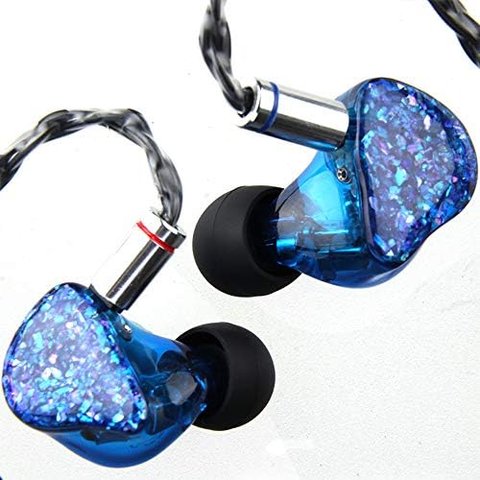
The shell is entirely resin, with a two-pin detachable cable and a shape that sits comfortably in most ear sizes. A few things stood out during extended wear:
- The nozzle angle is gentle enough to avoid pressure points during multi-hour sessions
- The all-resin construction keeps total weight low
- The stock cable, while basic, has held up well without fraying at the connectors
- Faceplate designs vary by unit, giving each pair a slightly unique look

Per Trevor A., who is an Audio Enthusiast and Head-Fi reviewer, “The Legacy 3 is proof that a well-executed 3-driver hybrid can still hold up years after release — the tuning has aged better than a lot of louder, more aggressive competitors from the same era.”
I first picked up the Legacy 3 during a period where I was cycling through a lot of budget hybrids trying to find something I would actually keep using instead of shelving after a week. It was the one that stuck. There is something to be said for a tuning that does not demand your attention constantly — I could put it in during a work session and forget I was wearing anything unusual, which is exactly what I want from a daily driver. Years later it is still the pair I hand to friends who ask for a first “real” IEM recommendation, because it rarely disappoints regardless of what genre they mostly listen to.
Who Should Consider It
The Legacy 3 makes the most sense for listeners who want a comfortable, all-day IEM that does not require an amp and does not lean hard into either bass or treble. It is a strong first “real” IEM for someone stepping up from stock earbuds, and it remains relevant even against newer releases because the fundamentals — comfort, coherence, ease of driving — have not really been superseded, only matched at similar price points.
Eartip and Cable Experimentation
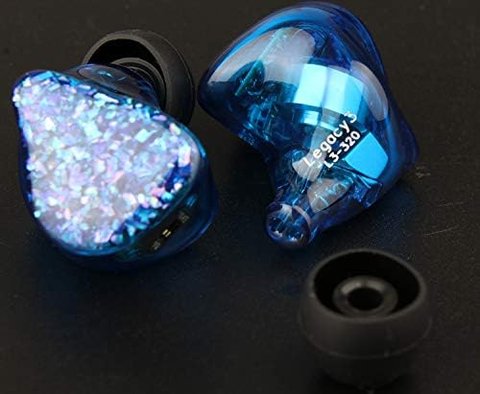
Since the Legacy 3’s tuning is already balanced and forgiving, I found tip rolling had a smaller effect here than on more treble-forward IEMs, but it was still worth doing. A few notes from my own testing:
- Wide-bore silicone tips opened up the treble slightly, adding a touch more air without introducing harshness
- Foam tips pushed bass forward marginally, useful in noisier environments where passive isolation matters more
- A silver-plated aftermarket cable brought a small but noticeable improvement in perceived clarity, though the stock cable is far from a bottleneck
None of these changes are dramatic, which is consistent with how well-balanced the stock tuning already is. If you are the type of listener who enjoys tweaking gear incrementally, there is just enough headroom here to make that hobby worthwhile without needing to spend heavily to hear a difference.
How It Holds Up Against Newer Competitors
A lot of budget hybrid IEMs released since the Legacy 3 chase a more V-shaped, immediately impressive tuning, and on a quick A/B comparison those newer options can sound more exciting in the first thirty seconds. Where the Legacy 3 wins back ground is in long-term listenability — genres it was never specifically tuned for, like acoustic folk or spoken word podcasts, still sound natural and pleasant rather than forced through an aggressive V-shaped curve designed for bass-heavy pop and EDM.
Conclusion
The Legacy 3 does not chase trends, and that is exactly why it has held up as well as it has. If you want a hybrid IEM that is easy to drive, comfortable for long sessions, and tuned for longevity rather than a flashy first impression, it remains one of the more sensible picks in ThieAudio’s catalog.
When Fit or Connection Problems Show Up
Most Legacy 3 issues trace back to eartip fit or the detachable cable connector rather than a driver fault. Work through these checks before assuming a unit is defective.
One Side Is Quiet or Cuts Out
- Reseat the 2-pin connector firmly at the shell; a connector that is not fully pushed in is the most common cause of an intermittent channel.
- Check the nozzle for wax buildup, since a partially blocked nozzle can noticeably dull one side compared to the other.
- Try a different cable if one is available, to isolate whether the fault is the cable or the shell itself.
Seal Feels Loose or Bass Sounds Weak
- Try a different eartip size before assuming the tuning is at fault; a poor seal is the single biggest cause of missing bass on any IEM.
- Insert the tip at a slight angle and twist gently for a fuller seal rather than pushing it straight in.
Alternate Manual Pathway: Cable and Tip Swap
Because the cable is detachable and tips are interchangeable, most fit and channel-balance problems can be diagnosed and fixed at home without contacting support. Rotating through the tip and cable options discussed above is usually enough to isolate whether an issue is fit-related or hardware-related.
Frequently Asked Questions
Does the Legacy 3 need an amplifier?
No, its 108dB sensitivity makes it easy to drive from phones, laptops, and basic dongle DACs.
Is the cable upgradeable?
Yes, it uses a standard 2-pin detachable connector compatible with most third-party aftermarket cables.
How does it compare to the Legacy 5?
The Legacy 5 adds an extra balanced armature and a metal nozzle upgrade, giving it a slightly more resolving presentation, though the Legacy 3 remains the more budget-friendly option.
Where can I buy the Legacy 3?
It is available through Linsoul and select retailers, with community impressions on Head-Fi.
Ryan
CS degree · 20+ years hands-on hardware testing