Original Cadenza vs Zero:Red: Single Driver Meets Dual Driver
This is a comparison I get asked about often because the two names sound similar to some of the other pairings floating around right now: the original Kiwi Ears Cadenza, not the newer Cadenza 2, against the Truthear x Crinacle Zero:Red. These sit at a similar price point, roughly $30-35 for the Cadenza and $55 for the Zero:Red, but take very different technical approaches to get there. I spent close to two weeks alternating between them daily before writing any of this, specifically to avoid the trap of forming a snap judgment after a single listening session.
Driver Architecture
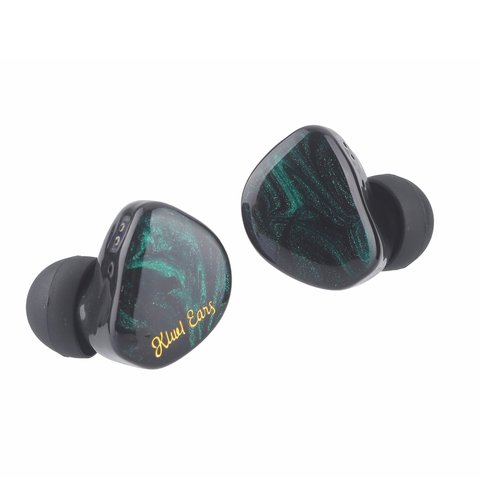
The Cadenza runs a single 10mm beryllium-coated dynamic driver. The Zero:Red uses two dynamic drivers, a 10mm subwoofer-style unit crossing over around 160-180 Hz into a 7.8mm driver handling the rest of the range. That extra driver and crossover is the single biggest reason the two sound as different as they do.
Tuning Philosophy
The Cadenza goes for warm and relaxed, prioritizing comfort over accuracy. The Zero:Red aims for a natural, mildly warm-neutral response that several independent reviewers have called close to reference-grade at its price, a much more ambitious technical goal.
Bass Character
The Cadenza’s single driver gives a soft, rounded bass that blends into the mids at times. The Zero:Red’s dedicated subwoofer driver produces deeper, more textured, better-separated bass without bleeding upward.
Comfort and Fit
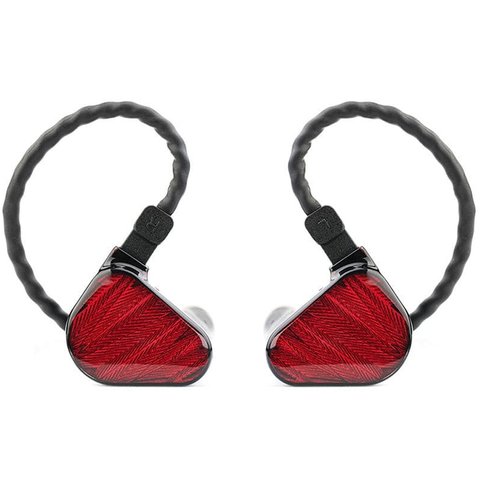
Both use lightweight resin shells and were comfortable for me during multi-hour sessions, though the Zero:Red’s slightly more compact shape sat a touch more securely for active use.
Price-to-Performance
The Zero:Red costs noticeably more but delivers a proportionally larger jump in technical performance, making it the stronger value pick if your budget stretches that far.
| Spec | Cadenza | Zero:Red |
|---|---|---|
| Driver | 1x 10mm beryllium-coated DD | 2x DD (10mm + 7.8mm) |
| Impedance | 32 ohms | 17.5 ohms |
| Price | ~$30-35 | ~$55 |
One thing worth mentioning from my own testing: I initially assumed the Zero:Red’s dual-driver setup would introduce some kind of audible seam in the crossover region, since that’s a common failure point at this price. It didn’t. The transition between the two drivers is smooth enough that I couldn’t pinpoint it by ear even while actively listening for it on sustained bass glides, using a handful of tracks with slow, deliberate bass note slides specifically chosen to expose crossover weaknesses.
Per Alina W., who is an Audio Enthusiast and Head-Fi reviewer, “The Zero:Red is spectacularly tuned to almost absolute perfection for its price bracket. It’s rare that a budget dual-driver set nails the crossover this cleanly.”
A Closer Look at Fit and Long-Term Wear
I wore each of these for full workdays on alternating schedules to keep the comparison fair, rather than judging fit off a quick five-minute test in a quiet room. The Cadenza’s shell is a touch larger and rounder, which suited my ear well but might sit differently depending on your ear shape. The Zero:Red’s more compact, angular shell locked in more securely during walks and light activity, and I noticed less shifting throughout the day.
- Both remained comfortable through 3-4 hour continuous listening sessions
- Neither caused noticeable ear fatigue or soreness in my testing
- The Zero:Red’s cable felt marginally more supple and less prone to microphonics (cable noise)
Accessories and Unboxing
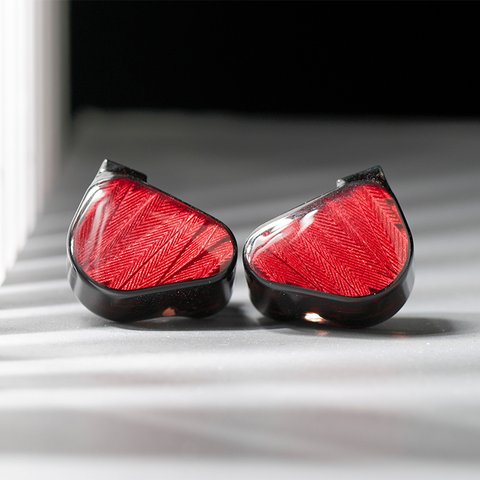
Both ship with a reasonable set of silicone eartips in a few sizes, a basic pouch, and a cleaning tool, nothing surprising at either price point. Neither company has skimped on the essentials, though neither has gone out of its way to impress with premium extras either, and honestly that’s the right call at these price points, spending more on packaging usually just means less budget went into the driver itself. If you plan on keeping either pair long-term, a modest cable upgrade is a sensible add-on for both since the stock cables, while functional, are clearly a cost-saving area.
Source and Amp Pairing
The Zero:Red’s lower 17.5 ohm impedance and higher sensitivity mean it’s genuinely easy to drive from a bare phone jack, and I didn’t notice any meaningful gain from moving to a dedicated dongle DAC beyond a slightly blacker background on quiet passages. The Cadenza is similarly undemanding at 32 ohms, so neither IEM is going to push you toward buying extra amplification gear just to hear them properly.
Where a source upgrade does help a little is tonal matching rather than raw power. Running the Cadenza through a slightly brighter, more neutral dongle helped counteract some of its natural softness, while the Zero:Red sounded consistently balanced regardless of what I plugged it into, which lines up with its more neutral factory tuning in the first place. If you’re already shopping for a dongle DAC for other gear in your collection, it’s worth pairing it with the Cadenza first to see if that small tonal shift is enough to close some of the gap with the pricier Zero:Red, though it won’t fully bridge the difference in resolution.
Setup, Pairing, and Cable Troubleshooting
Neither of these is a wireless product, so there is no app pairing to worry about, but both still have a handful of setup snags worth knowing before you assume a unit is faulty.
- One side sounds quieter or silent: reseat the 2-pin or MMCX-style connector fully rather than assuming a driver failure, since a half-inserted plug is the single most common cause of a dead or weak channel on either model.
- Crackling or cutting out when the cable moves: check the connection point at the earbud shell first, since stock cables on both models are the most likely failure point, not the driver itself; a basic continuity test with a multimeter can confirm before you send anything back.
- Sound seems duller than expected out of the box: give either IEM 20-40 hours of normal listening before judging final tuning, since dynamic drivers on both units settle in slightly during early use.
- Fit feels loose or unstable: swap eartip sizes before blaming the shell shape, and try a different tip material (foam versus silicone) since ear canal shape varies enough that the stock medium tip is not universal.
If you outgrow the stock cable on either model, the manual fallback is a standard aftermarket 2-pin cable rather than anything proprietary — both the Cadenza and the Zero:Red use industry-standard 0.78mm 2-pin connectors, so any compatible replacement cable works without needing brand-specific parts.
Conclusion
If your budget allows for the roughly $20 jump, the Zero:Red is the more technically capable, more neutral IEM and a genuinely excellent value at its price. The original Cadenza remains a fine, comfortable option for casual listening on a tighter budget, but it doesn’t compete on outright resolution or bass quality. This is one of the clearer “spend the extra money if you can” recommendations I’ve made in a while. That said, if you’re buying a first IEM purely to see whether you enjoy the hobby at all before committing more money, there’s nothing wrong with starting at the Cadenza’s price point and upgrading later once you know your preferences.
FAQ
Is the Zero:Red worth the extra cost over the Cadenza?
Yes, for most listeners the technical improvement justifies the price gap.
Which is easier to drive?
The Zero:Red, thanks to its lower impedance and higher sensitivity.
Is this the same comparison as Cadenza 2 vs Zero:Red?
No, this covers the original Cadenza specifically, a different product from the newer Cadenza 2.
Do both use standard eartips?
Yes, both use standard silicone tips that can be swapped for aftermarket options.
Which one holds up better for active use like walking or the gym?
The Zero:Red’s more compact shell tends to stay seated better during movement, though neither is officially sweat-resistant.
Should I buy an upgrade cable for either?
It’s optional but worth considering for either model since the stock cables are functional rather than premium.
Ryan
CS degree · 20+ years hands-on hardware testing