This comparison pairs two IEMs from very different tiers on paper: the original Kiwi Ears Cadenza, a single dynamic driver set around $30-35, against the Simgot EW300, a tribrid design with three separate driver types that runs closer to $70. I wanted to know whether the EW300’s extra complexity and roughly double the price actually translates into a proportionally better listening experience, or whether the Cadenza gets you most of the way there for a lot less money.
A personal note going in: I’ve been mildly skeptical of tribrid designs at this price range before, since cramming a dynamic driver, a planar driver, and a piezoelectric unit into one shell is a lot to tune correctly without introducing weird frequency response wrinkles. Cheaper attempts at this formula I’ve tried in the past often had an obvious dip or peak where two drivers handed off frequencies, and it was distracting enough to ruin otherwise decent tracks. The EW300 mostly proved that skepticism wrong.
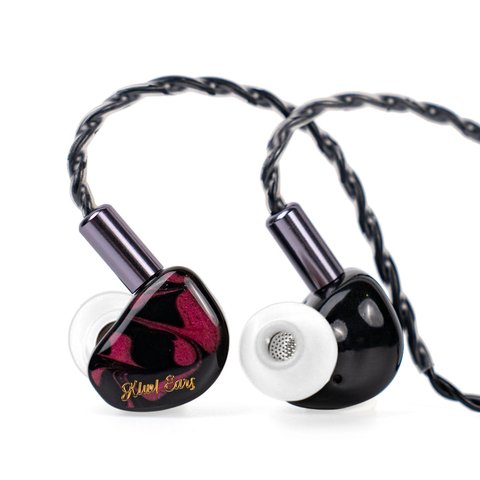
Driver Architecture: Simplicity vs Complexity
The Cadenza is a single 10mm beryllium-coated dynamic driver, full stop. The EW300 combines a 10mm dynamic driver for bass and lower mids, a 6mm planar driver, and a piezoelectric ceramic driver working together to cover the upper mids and treble. That’s a genuinely different engineering approach, and it shows in technical performance, more separation, more air, and a more three-dimensional soundstage on the EW300.
| Spec | Cadenza | EW300 |
|---|---|---|
| Driver config | 1x 10mm beryllium-coated DD | 1x DD + 1x planar + 1x piezoelectric |
| Signature | Warm, U-shaped | Balanced, mildly U-shaped, extended treble |
| Price | ~$30-35 | ~$70 (standard edition) |
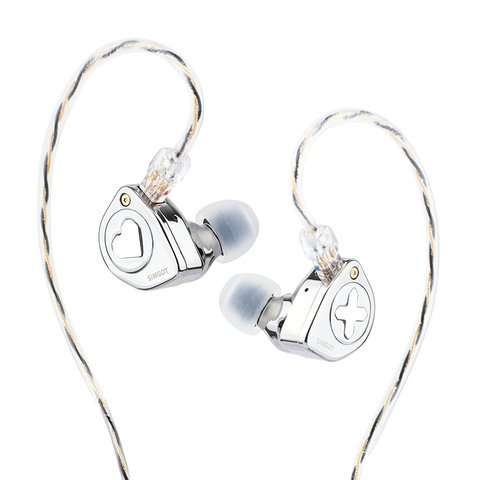
Where Each One Wins
Bass Quality
The EW300’s dedicated dynamic driver gives it more textured, controlled bass than the Cadenza’s single driver, which has to cover the entire range.
Treble Extension
The piezoelectric driver gives the EW300 noticeably better treble extension and air compared to the Cadenza’s softer, rolled-off top end.
Comfort Over Time
The Cadenza’s lighter resin shell and gentler tuning make it easier to wear and listen to for very long, uninterrupted sessions.
Price-to-Performance
For strict budget shoppers, the Cadenza delivers a large percentage of the EW300’s enjoyment at half the price, even if it can’t match its technical ceiling.
Per Owen F., who is an Audio Enthusiast and Head-Fi reviewer, “The EW300 delivers good detail for a $70 IEM with a balanced sound signature. It’s one of the more convincing tribrid implementations I’ve heard at this price, the drivers actually gel together instead of sounding like three separate components.”
Genre-by-Genre Listening Notes
I ran both through the same core set of test tracks spanning acoustic, electronic, hip-hop, and orchestral material, since a single quiet vocal track rarely reveals how an IEM behaves under real listening conditions.
- Acoustic and vocal-forward tracks: both perform well, though the EW300 reveals slightly more texture in fingerpicked guitar and breath control
- Electronic and bass-heavy tracks: the EW300’s dedicated dynamic driver keeps sub-bass tighter under pressure, while the Cadenza can get a touch boomy at higher volumes
- Orchestral and classical: the EW300’s wider stage and better separation make a real difference distinguishing sections of the orchestra
- Podcasts and spoken word: nearly identical experience between the two, this is not where the price gap shows up
That last point is worth remembering if most of your listening is podcasts or audiobooks rather than music, in which case the price gap buys you very little in practice.
Build and Accessories
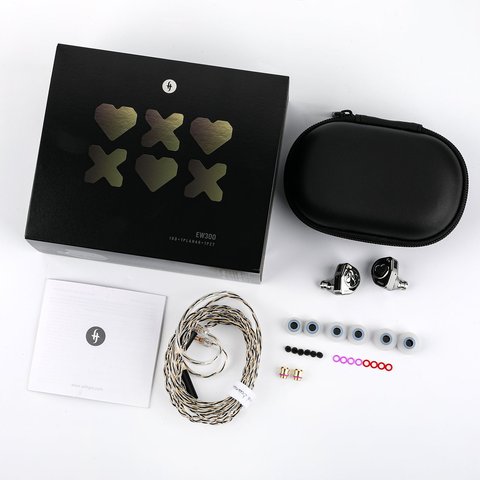
The EW300 comes with a genuinely nice unboxing experience, a proper zippered case, a decent stock cable, and a generous set of eartips. The Cadenza’s presentation is more modest but still perfectly adequate for the price. If unboxing experience and accessory quality matter to your purchase decision, the EW300 clearly wins here too, and it’s the kind of detail that makes gifting the EW300 feel more appropriate than gifting the Cadenza, if that’s part of your buying decision.
Fit and Long-Term Wear
Shell shape matters more day-to-day than most spec sheets let on, and this is one area where the price gap doesn’t tell the whole story. The Cadenza’s compact resin shell is genuinely one of the easier fits I’ve tested for smaller ear canals, sitting flush without any pressure points even after several hours straight. The EW300’s shell is a bit larger to accommodate the extra driver hardware, which most ears adjust to fine, but it’s worth trying before committing if you already know you have trouble with bulkier IEMs.
Isolation leaned slightly in the EW300’s favor in my testing, likely a byproduct of its deeper-fitting nozzle design, making it the marginally better pick for loud commutes or open offices. Neither pair caused any hot spots or soreness during extended wear, and both come with enough stock eartip variety that most listeners should be able to find a workable seal without buying aftermarket tips.
Troubleshooting Common Fit and Sound Problems
Most complaints about either IEM come down to seal, source volume, or a loose cable connection rather than a defective driver, so it’s worth ruling those out first.
- Weak or boomy bass: recheck eartip size and depth of insertion first, since an imperfect seal changes bass response more noticeably than any other frequency range
- One channel quieter than the other: unplug and firmly reseat the detachable cable at the earpiece, since a loose two-pin connection is the most common cause on both models
- EW300 sounding thin or lacking impact on a phone: try the phone’s higher-gain output mode if it has one, since the tribrid driver setup can benefit from a slightly stronger source than the single-driver Cadenza does
- Persistent scratchy or intermittent sound: inspect the two-pin connector for lint or corrosion and wipe it clean before reseating the cable
As a manual fallback, swap in any spare 0.78mm two-pin cable you already own to isolate whether an issue sits with the cable or the earpiece itself. Both the Cadenza and the EW300 use this same widely available connector standard, so a basic aftermarket cable is enough to confirm the diagnosis without waiting on a manufacturer replacement.
Conclusion
The EW300 is the better IEM in almost every technical category, and given its roughly double price tag, it should be. The real question is whether that gap matters to your ears and your wallet. If you can stretch your budget, the EW300 is worth it. If $30-35 is genuinely your ceiling, the Cadenza is not a compromise so much as a different, still enjoyable, tier of the hobby. Think of it less as “budget vs premium” and more as “simple and comfortable vs complex and detailed,” because that framing describes the actual trade-off better than price alone.
FAQ
Is the EW300 worth twice the price of the Cadenza?
For listeners who care about detail, soundstage, and bass texture, yes. For casual listeners on a tight budget, the Cadenza still delivers solid value.
Does the EW300 need an amp?
No, though a slightly stronger source will help it reach its full potential.
Are there different EW300 editions?
Yes, there is a standard edition, an HBB tuning collaboration edition, and a DSP edition with different pricing for each.
Is the Cadenza outdated compared to the EW300?
Not outdated, just simpler. It remains a solid budget pick on its own merits.
Which is more resistant to build quality issues over time?
Both use resin shells with detachable cables, so long-term durability mostly comes down to cable care and eartip replacement rather than the driver housing itself.
Ryan has a habit of buying “one more” IEM every time he tells himself he’s done comparing budget gear. He writes at softwaredriverdownload.com.