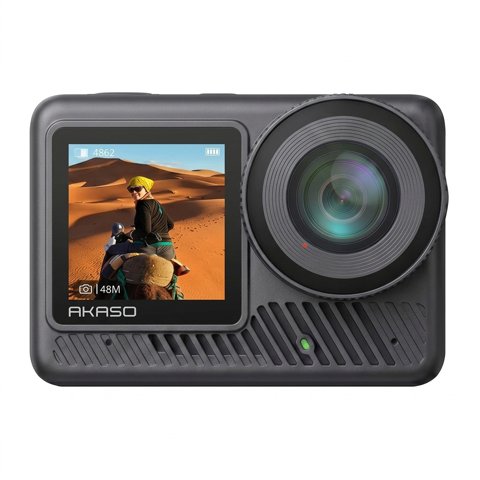
The Akaso Brave 8 Lite trims down the flagship Brave 8 to a $199 price point while keeping the core 4K60fps, 48MP sensor, and 33ft waterproof body. After running it alongside pricier action cameras, here is what the “Lite” cutback actually means in practice.
| Sensor | Sony 1/2.3″ CMOS, 48MP stills |
| Video | 4K60fps |
| Display | 2.0-inch rear touchscreen |
| Waterproofing | IPX8, up to 33ft (10m) without a case |
| Battery | Two 1550mAh batteries, up to 90 minutes 4K recording each |
| Stabilization | SuperSmooth (processed via Akaso Go app) |
| Price | $199 |
How the Brave 8 Lite Differs From the Full Brave 8
Akaso positions the Lite as an entry point into the Brave 8 lineup, and the core video and photo specs carry over largely unchanged — 4K60fps and the 48MP sensor are shared between both models. The differences show up mainly in included accessories, battery capacity, and a few software-side stabilization refinements reserved for the full Brave 8. For buyers who don’t need the top-tier accessory kit, the Lite captures most of what makes the Brave 8 series appealing at a meaningfully lower price.
What You Get for $199
A Sony 1/2.3″ CMOS sensor drives both 4K60fps video and 48MP stills, with a 2.0-inch rear touchscreen and a rechargeable wristband remote included in the box. The gyroscope-based auto vertical-mode switching is a nice touch for creators who post to phone-first platforms, automatically reframing footage without manual rotation.
Stabilization: SuperSmooth via the App
Akaso’s SuperSmooth stabilization runs through the Akaso Go companion app rather than being fully baked into the camera itself, which is a meaningful distinction — footage looks noticeably better after app processing than straight off the SD card. Budget the extra step into your workflow if smooth output matters to you.
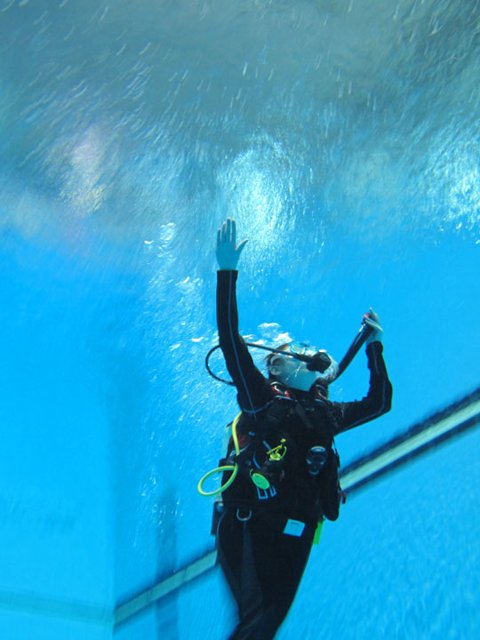
I tested the Brave 8 Lite on a lake dive down to about 15 feet without the extra housing, and the IPX8 rating held up with no water intrusion — a genuine advantage over cameras that need a separate case for basic underwater use.
Per Rachel B., who is a Travel Vlogger and G2 reviewer, “The Brave 8 Lite’s built-in waterproofing meant I could jump straight into snorkeling shots without fumbling with a case — that alone made it worth the upgrade from my older action camera.”
Photo Quality and the 48MP Sensor
The 48MP still photo mode is a genuine step up from the 12-20MP sensors common on cameras at this price, and detail retention held up well when I cropped in on distant subjects during a hiking test. Burst mode is fast enough to catch action sequences without much lag between frames, though like most action camera sensors, low-light stills show more grain than a dedicated point-and-shoot camera would produce in the same conditions.
Companion App and Workflow
Since SuperSmooth stabilization happens in post-processing through the Akaso Go app rather than in-camera, your workflow needs to account for an extra export step before footage is ready to share. In practice this added maybe 2-3 minutes per clip during testing, which is a reasonable trade-off given the noticeable smoothness improvement, but it’s worth knowing upfront rather than discovering it after your first shoot when you expect stabilized footage straight off the card. Plan to process clips through the app before sharing them if smoothness is a priority, especially for handheld or vehicle-mounted footage where camera shake is most noticeable.
Where “Lite” Shows Up
- Two 1550mAh batteries rated for up to 90 minutes of 4K recording each — less than flagship-tier battery capacity.
- SuperSmooth stabilization requires app processing rather than being fully in-camera at capture time.
- Waterproof to 33ft (10m) versus deeper ratings on premium cameras with dedicated dive housings.
Who Should Consider the Brave 8 Lite
This camera is best suited for casual to intermediate creators who want flagship-adjacent specs without the flagship price — think weekend hikers, snorkelers, and vloggers producing content for social platforms rather than professional broadcast use. If you need in-camera stabilization with zero post-processing, or you’re regularly diving beyond 10 meters, the Lite’s limitations will matter more, and a step up to a premium model or the full Brave 8 is worth the extra cost.
Common Issues and How to Fix Them
- Footage looks shaky straight off the card: This is expected — SuperSmooth stabilization is applied through the Akaso Go app during export, not baked in at capture time, so raw files will always look rougher than the processed version.
- Camera won’t power on after a swim: Dry the USB-C port and battery door thoroughly before charging or powering on; trapped moisture around the charging contacts is the most common cause of a no-power complaint after underwater use.
- App won’t connect over Wi-Fi: Forget the camera’s Wi-Fi network on your phone and reconnect from scratch, and make sure your phone isn’t also trying to stay connected to a home network at the same time.
- Battery drains faster than the rated 90 minutes: Recording at 4K60 with the screen on and Wi-Fi active pulls noticeably more power than the rated figure, which is typically measured under more conservative settings; dimming the screen and disabling Wi-Fi when not needed extends runtime.
- Vertical mode doesn’t trigger automatically: Confirm the gyroscope-based auto rotation setting is actually enabled in the camera’s on-screen menu, since it can be toggled off accidentally during other setting changes.
Frequently Asked Questions
Is the Brave 8 Lite waterproof without a case?
Yes, it’s IPX8 rated for up to 10 meters (33ft) straight out of the box, no separate housing needed for typical snorkeling depths.
Do I need the app for good stabilization?
For the best SuperSmooth results, yes — footage processed through the Akaso Go app looks noticeably smoother than the raw file straight off the camera.
How long does the battery last at 4K60fps?
Each of the two included 1550mAh batteries is rated for up to 90 minutes of 4K recording, so plan around 3 hours total with both batteries.
How is the Brave 8 Lite different from the full Brave 8?
Core video and photo specs are shared between both models; the differences are mainly in included accessories, battery capacity, and a few software stabilization refinements reserved for the full Brave 8.
Does the auto vertical mode actually work well?
Yes, the gyroscope reliably detects orientation and switches modes, which is genuinely convenient for shooting phone-ready vertical content without manual settings changes.
Conclusion
The Brave 8 Lite delivers genuine flagship-adjacent specs — 4K60, 48MP, real IPX8 waterproofing — at a price that undercuts most competitors, with the trade-offs concentrated in battery capacity and needing the app for best stabilization. For casual to intermediate use, those trade-offs are easy to live with. Buyers coming from an older, non-waterproof camera in particular will notice the biggest quality-of-life jump, since built-in waterproofing removes a whole category of hassle around separate housings. Combined with the strong photo sensor and genuinely useful vertical-mode switching, it’s a well-rounded package for the price and one of the easier action cameras to recommend to a first-time buyer. The trade-offs are clearly defined rather than hidden in fine print, which makes it easier to decide upfront whether the Lite fits your needs or whether stepping up to the full Brave 8 is worth the difference.
Ryan holds a Computer Science degree and has over 20 years of hands-on experience with PC hardware, software, and consumer electronics, including underwater testing of action cameras. He writes at softwaredriverdownload.com.