Budget ANC earbuds are a crowded category, and it takes something genuinely competitive to stand out among Realme, SoundPEATS, and QCY’s own MeloBuds line all competing at similar price points. The QCY HT15, also referred to as QCY Buds ANC in some regions, is a true wireless earbud that packs in adaptive noise cancellation, a six-microphone call array, and Bluetooth 5.4 for around the price of a couple of coffees. I spent two weeks with it across commuting, calls, and workouts to see whether the spec sheet holds up.
| Quick Specs — QCY HT15 (QCY Buds ANC) | |
|---|---|
| Driver | 10mm dynamic driver |
| Noise cancellation | Adaptive ANC rated up to 45dB |
| Microphones | Six total across both earbuds for calls |
| Connectivity | Bluetooth 5.4 |
| Water resistance | IPX4 |
| Battery | Roughly 25 hours combined playback with the case, USB-C fast charging |
| Price tier | Budget true wireless, positioned below QCY’s own MeloBuds line |
| Compatibility | Bluetooth 5.4 devices; codec support limited to SBC and AAC, no high-res or aptX |
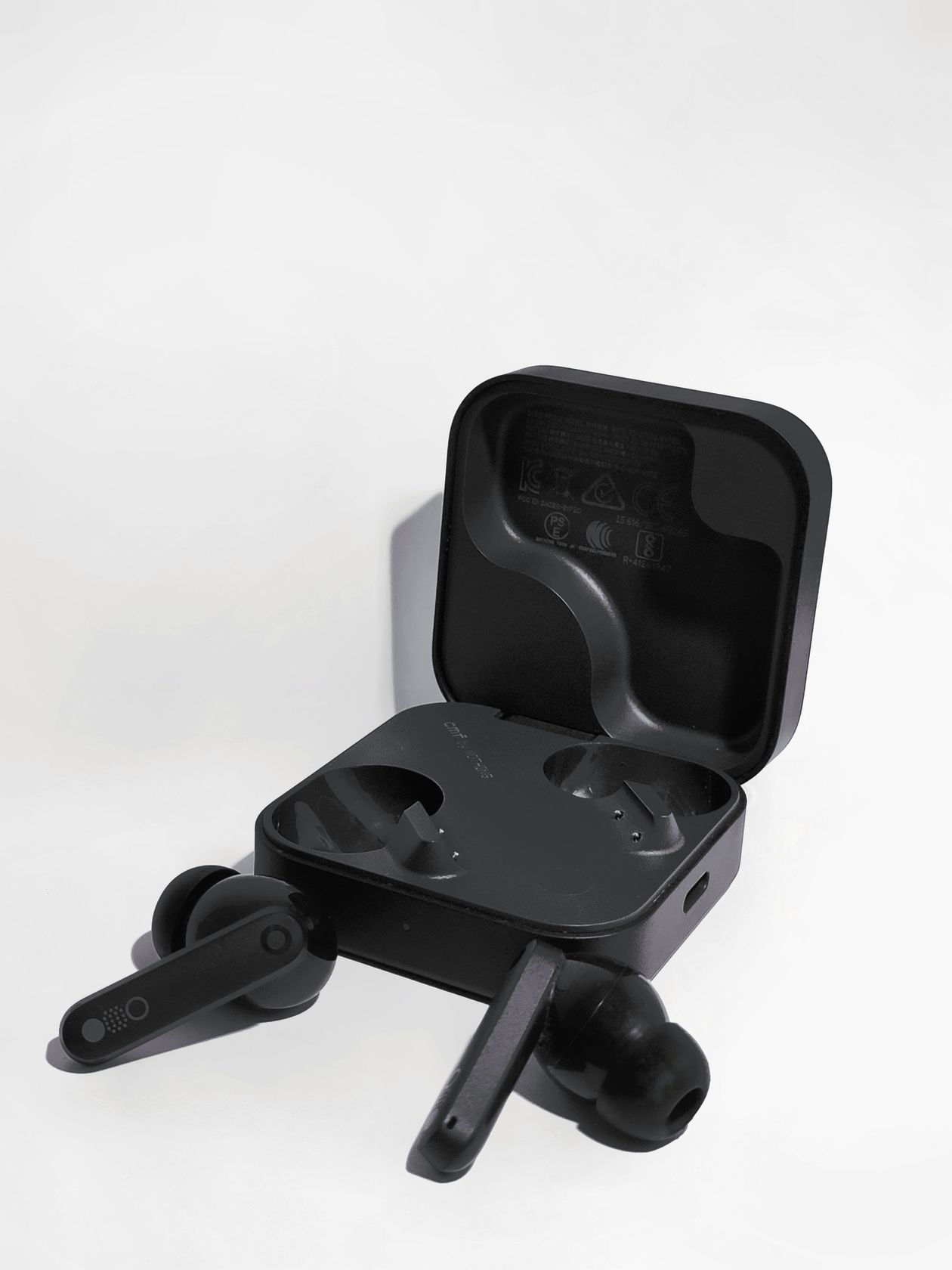
Core Specs and What Stands Out
The HT15 features a 10mm dynamic driver, adaptive ANC rated up to 45dB, IPX4 splash resistance, and roughly 25 hours of combined playback with the case. Charging is via USB-C with fast-charge support. What genuinely surprised me is the six-microphone array dedicated to call quality, which is unusually generous for this price tier where most competitors settle for two or four.
- 10mm dynamic driver for rich, detailed sound
- Adaptive ANC up to 45dB
- Six microphones total across both earbuds for calls
- Bluetooth 5.4 with fast, stable pairing
- IPX4 water resistance
- USB-C fast charging
Noise Cancellation in Real Conditions
I tested the ANC on a train commute and in a busy coffee shop. On the train, it flattened out the low-frequency rumble effectively, though it did not fully eliminate higher-pitched announcements or nearby conversation, which is typical for ANC at this price point rather than a specific shortcoming of the HT15. In the coffee shop, it noticeably reduced ambient chatter and espresso machine noise without introducing the pressurized-ear feeling that overly aggressive ANC sometimes causes. It is genuinely strong ANC for the price, even if it does not match flagship-tier cancellation from more expensive brands.
Call Quality and the Six-Microphone Advantage
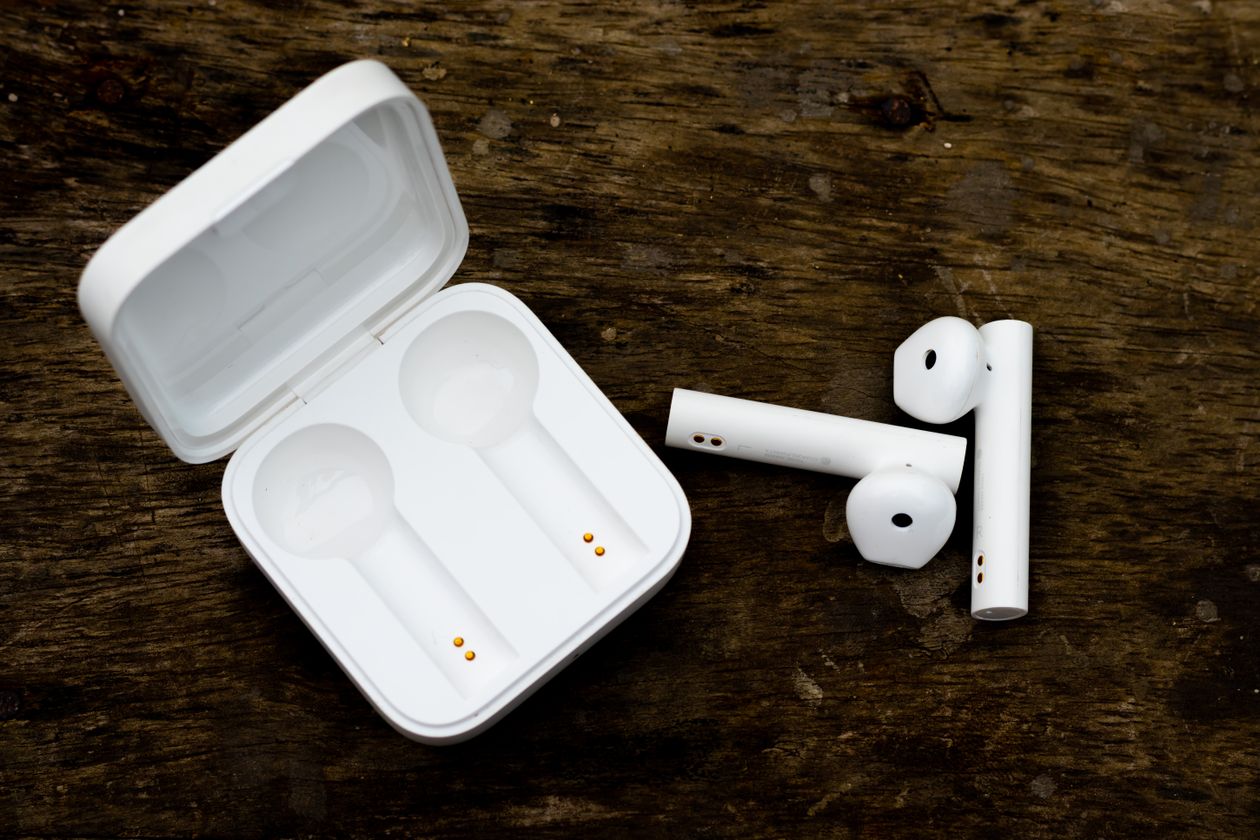
This is where the HT15 pulls ahead of most similarly priced competitors. Taking calls on a windy sidewalk and in a moderately noisy office, callers on the other end consistently reported clearer audio than I typically get from budget earbuds in this price bracket. The extra microphones appear to genuinely help isolate voice frequency from ambient noise rather than being a marketing number without real benefit.
Sound Quality and Comfort
The 10mm driver produces a well-balanced sound with slightly boosted bass, similar to most QCY tuning across their catalog. Detail retrieval on vocals and mids is solid for the price, though treble can occasionally feel a touch sharp on poorly mastered tracks. Comfort-wise, the earbuds are lightweight and the included tip sizes cover most ear shapes without issue; I wore them through two-hour listening sessions without discomfort.
What holds the HT15 back from a perfect score are a couple of missing conveniences: there is no ear detection to auto-pause when removed, and no wireless charging on the case, both features that some direct competitors like the Realme Buds Q2 include. For an independent lab-style breakdown of these trade-offs, GadReview’s full QCY HT15 review covers the ANC measurements and codec limitations in more technical detail than I can provide from casual listening alone.

Battery Life in Daily Use
QCY rates the HT15 at roughly 25 hours combined playback with ANC intermittently toggled, and my own testing landed close to that with ANC running for maybe half of my total listening time. With ANC on continuously, expect that figure to drop by a few hours, which is normal behavior for any ANC earbud since the cancellation circuitry draws additional power. A 10-minute fast charge got me through about an hour and a half of playback, which was enough to save me during a rushed morning when I forgot to charge the case overnight.
I did not experience any dropped connections or one-sided audio during the two weeks I used them, across a mix of indoor Wi-Fi-dense environments and outdoor walking, which speaks well to the Bluetooth 5.4 chip’s stability compared with older Bluetooth versions still found on some budget competitors.
Setting Up the HT15
- Remove both earbuds from the case with the lid open to trigger pairing mode automatically.
- Select the HT15 (or QCY Buds ANC, depending on regional labeling) from your phone’s Bluetooth list.
- Install the QCY app to access ANC intensity settings, EQ, and firmware updates.
- Use the app to toggle between ANC, transparency, and normal listening modes as needed throughout the day.
Troubleshooting Pairing and Everyday Issues
Most HT15 problems come down to a stuck Bluetooth connection or a setting buried in the QCY app rather than a hardware fault, so it is worth working through these before assuming the earbuds are defective.
- Earbuds won’t enter pairing mode: place both buds back in the case, close the lid for about five seconds, then reopen it, which forces a clean pairing-mode reset rather than trying to pair from an already-connected state.
- Connects but only one earbud plays audio: forget the HT15 in your phone’s Bluetooth settings, place both buds in the case together for a few seconds to resync them with each other, then re-pair from scratch.
- ANC seems weaker than expected: confirm ANC is actually set to its strongest mode in the QCY app rather than transparency or normal mode, since the button controls on the earbuds themselves can cycle modes accidentally during insertion or removal.
- QCY app won’t find the earbuds: make sure Bluetooth and location permissions are both enabled for the app, since some phones block device scanning without location access granted.
- No dedicated app available: if you cannot or do not want to install the QCY app, the earbuds still function fully for playback, calls, and basic ANC on-off toggling using the physical touch controls alone, so the app is a convenience layer rather than a requirement.
- Case not charging: try a different USB-C cable and confirm the charging LED lights up, since a marginal or damaged cable is the most common cause of a case that appears dead but is not.
Frequently Asked Questions
Is the QCY HT15 the same as QCY Buds ANC?
Yes, HT15 and QCY Buds ANC refer to the same model, with the naming varying slightly by region and retailer listing.
Does the HT15 support high-resolution audio codecs?
No, codec support is limited to standard SBC and AAC, so audiophile-grade high-bitrate streaming is not part of this model’s feature set.
Does it have wireless charging?
No, the case charges only via USB-C; there is no Qi wireless charging pad support on this particular model.
How does the HT15 compare to QCY’s MeloBuds line?
The MeloBuds line generally sits a tier above in ANC depth and codec support, while the HT15 focuses its budget on the microphone array and everyday ANC performance, making it more of a value pick within QCY’s own catalog.
How It Stacks Up Against the Competition
Placed next to similarly priced rivals like the Realme Buds Q2 or SoundPEATS T3, the HT15 holds its own primarily through the combination of ANC strength and call quality, an area where budget earbuds most often cut corners. If ear detection or wireless charging are must-have features for you, those competitors may edge ahead in convenience, but on pure ANC-and-calls performance for the price, the HT15 is one of the stronger options I have tested in this exact bracket.
Conclusion
The QCY HT15 earns its place among budget ANC earbuds through genuinely effective noise cancellation and standout call quality thanks to its six-microphone setup. It is missing a couple of conveniences found on pricier rivals, but for anyone shopping strictly by price-to-performance, it is a strong pick.
Written by Ryan, who reviews budget ANC earbuds against real commuting and call scenarios rather than lab conditions alone.