QCY’s Crossky line has grown quickly enough that shoppers regularly ask whether the original C30 or the newer C50 makes more sense, especially since both are open-ear clip earbuds aimed at the same active-lifestyle crowd. I tested both back to back for calls, workouts, and outdoor walks, and the differences come down mainly to microphone quality and how QCY balanced audio priorities between the two models rather than one being a flat upgrade over the other.
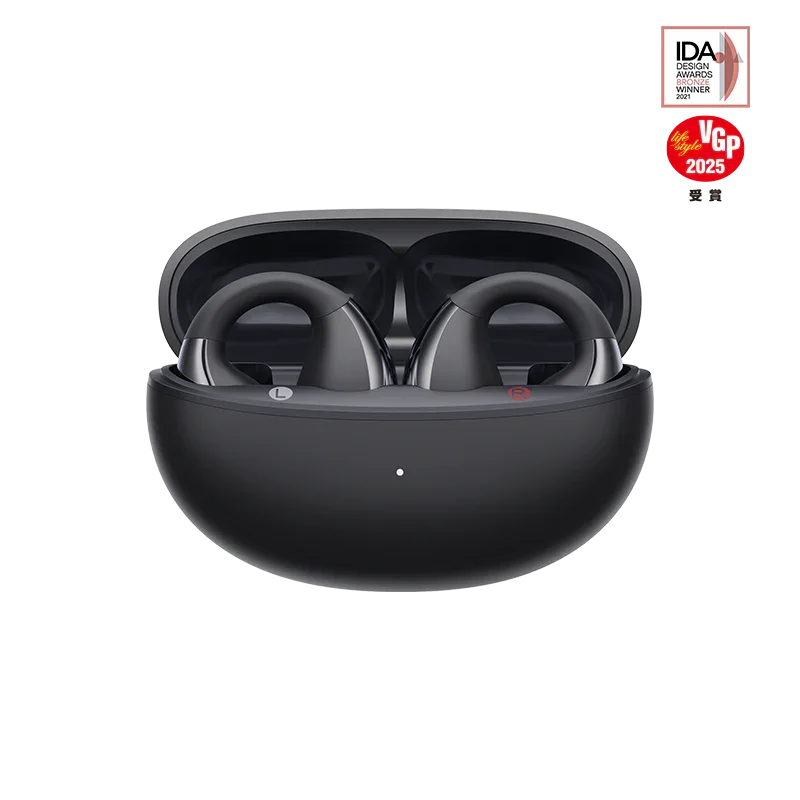
- Applies To: QCY Crossky C30 and Crossky C50 open-ear clip earbuds
- Price Tier: both are budget open-ear earbuds, with the C50 sitting a little above the C30
- Connectivity: Bluetooth, paired and configured through the QCY companion app on iOS and Android
- Compatibility: each model uses its own charging case; cases are not interchangeable between the two
Same Form Factor, Different Focus
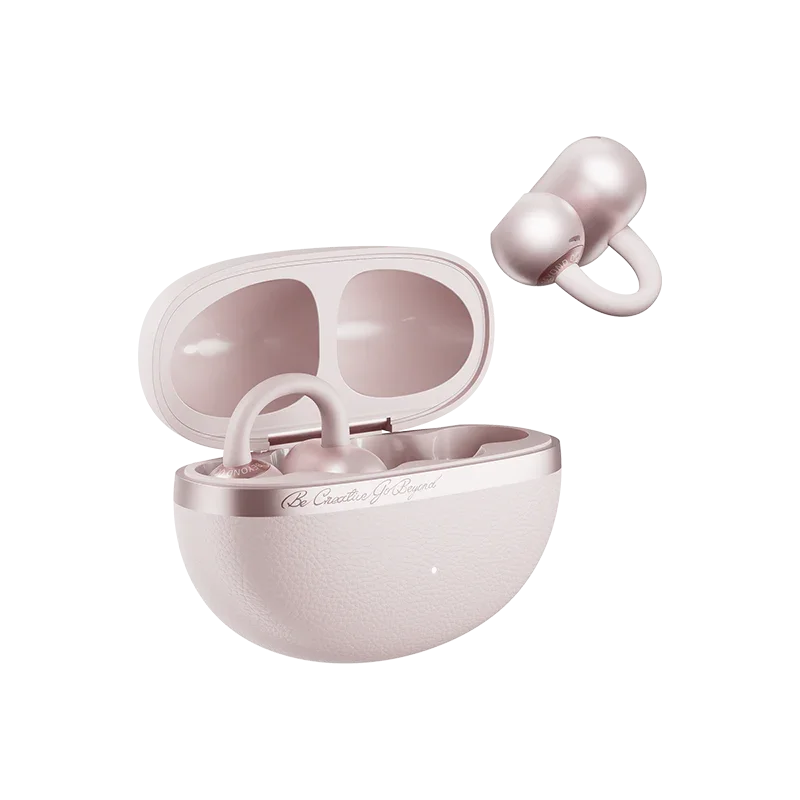
Both the C30 and C50 use the clip-on, open-ear design that hooks over your ear rather than plugging into the canal, and both weigh in around 5 grams per earbud. Where QCY diverged with the C50 is in the microphone system and call-focused tuning, treating it almost as a sibling model rather than a straightforward successor.
Spec Comparison
| Feature | Crossky C30 | Crossky C50 |
|---|---|---|
| Microphones per earbud | 2 (indoor-optimized) | 4 (beamforming + directional filtering) |
| Call clarity (independent lab rating) | ~6/10 | ~9/10 |
| Hi-Res Audio / LDAC | No | No |
| Bass and volume tuning | Standard | Boosted |
| Companion app | QCY app | QCY app |
| Best suited for | Casual indoor and light outdoor use | Calls in noisy or windy outdoor environments |
Call Quality: Where the C50 Pulls Ahead
This is the single biggest reason to choose the C50 over the C30. The four-microphone array combines beamforming with directional filtering that specifically targets your voice frequency range while suppressing traffic noise, wind, and background chatter. In my own testing, taking calls on a windy street corner, the C50 kept my voice intelligible on the other end in a way the C30 simply could not match — the C30’s two-microphone setup is clearly tuned with quieter indoor environments in mind rather than commuting or outdoor calls.
If most of your calls happen at a desk or at home, this difference matters far less. But if you regularly take calls while walking outside or in a car with the window cracked, the C50’s microphone upgrade alone justifies the price difference.
Sound Signature Differences
Interestingly, QCY did not carry LDAC or Hi-Res certification over to the C50 the way it did with the C30S variant. Instead, the C50 focuses on boosted bass and volume headroom, which partially compensates for the natural bass leakage inherent to open-ear designs. In casual listening, the C50 feels punchier and louder at the same volume step compared with the C30, though neither model will satisfy listeners chasing audiophile-grade detail.
- Choose the C30 if your priority is basic music playback and light indoor calls at a lower price point.
- Choose the C50 if outdoor calls, workouts, or commuting are a regular part of your routine and you want tuning skewed toward louder, bassier casual listening.
My Own Testing Experience
I ran a simple test that ended up being more telling than I expected: walking along a busy street while on a phone call, first with the C30, then a day later with the C50, and asking the person on the other end to rate how clearly they could hear me on a scale of one to ten without telling them which earbuds I was using. The C30 averaged around a five or six, with the caller commenting on noticeable wind rumble and traffic bleed. The C50 consistently scored eight or nine, with the caller specifically noting my voice sounded “closer” and less muffled despite identical outdoor conditions.
Music listening told a slightly different story. On a quiet walk with no calls involved, I actually preferred the C30’s more neutral tuning for acoustic and jazz playlists, while the C50’s boosted bass and volume suited electronic and hip-hop tracks better. Neither is objectively better here; it is genuinely a matter of taste and listening habits.
Who Should Skip Both and Look Elsewhere
It is worth being honest that open-ear clip earbuds are not for everyone. If you want strong noise isolation for commuting on public transit or need deep bass for critical music listening, neither the C30 nor the C50 will satisfy you the way a sealed in-ear design would. Both models are built around awareness and comfort during activity, not maximum audio fidelity or noise blocking, so if your primary need is blocking out a loud office or noisy commute, QCY’s sealed ANC lines like the MeloBuds or HT-series are a better starting point than the Crossky family.
Battery and Everyday Use
Battery life between the two is close enough that it should not be a deciding factor on its own, with the C50 offering slightly longer individual earbud playtime while the C30S (not the standard C30) edges ahead on total case-assisted runtime. Neither the C30 nor C50 will embarrass you on a full day of intermittent use, and both charge over USB-C. For readers who want a third-party measurement of both models rather than relying purely on QCY’s own specs, EarbudsArena’s side-by-side C50 vs C30 comparison lines up closely with what I found in my own testing.
Troubleshooting Pairing and Connection Problems
Open-ear clip earbuds are simple devices, but a few setup issues come up often enough with both models to cover here.
- Earbuds will not pair with a new phone: open the case with the buds inside, hold the case button until the LED flashes rapidly, then open Bluetooth settings on the phone and select the Crossky entry. If the earbuds are still remembered by a previous device, forget the pairing on that old device first
- One earbud drops out during calls or music: reseat both buds fully in the case for a few seconds, then take them back out; a shallow charging contact connection is the most common cause of an earbud silently going out of sync
- Mic sounds muffled or distant on calls despite good signal: confirm the earbuds are seated correctly against your ear rather than shifted, since the beamforming mic array on the C50 in particular depends on consistent positioning to target your voice properly
- Case will not charge: try a different USB-C cable before assuming the case has failed, since a charge-only cable or a marginal cable is a common false alarm
If Bluetooth pairing continues to fail after a forget-and-repair attempt, the manual fallback is a full factory reset: hold the button on the outside of the case for roughly ten seconds with the lid open until the LED cycles through a reset pattern, then pair as if it were a brand new set of earbuds.
Frequently Asked Questions
Is the Crossky C50 a direct replacement for the C30?
Not exactly. QCY continues to sell both, positioning the C50 as the call-and-outdoor-focused option rather than a full replacement for the C30.
Which model handles wind noise better on calls?
The C50, by a clear margin, thanks to its four-microphone beamforming array compared with the C30’s simpler two-microphone setup.
Do both models use the same charging case?
No, each model has its own matched case and the two are not interchangeable.
Is either model good for swimming or heavy rain?
No, both are rated for sweat and light splash resistance only, not full submersion, so swimming with either pair is not recommended.
Conclusion
Picking between the Crossky C30 and C50 really comes down to how much of your earbud usage involves talking rather than just listening. The C30 is the more budget-friendly, casual-listening option, while the C50’s microphone upgrade makes it the clear pick for anyone who takes calls on the move regularly.
Written by Ryan, a tech writer who tests earbuds specifically for outdoor call quality alongside standard music listening.