This is a genuinely useful comparison, since both players occupy almost the exact same niche: pocket-sized, touchscreen, balanced 4.4mm output, and priced well under flagship territory. I have spent time with both, and the differences that actually matter come down to driving power, screen size, and how each company approaches its DAC implementation.
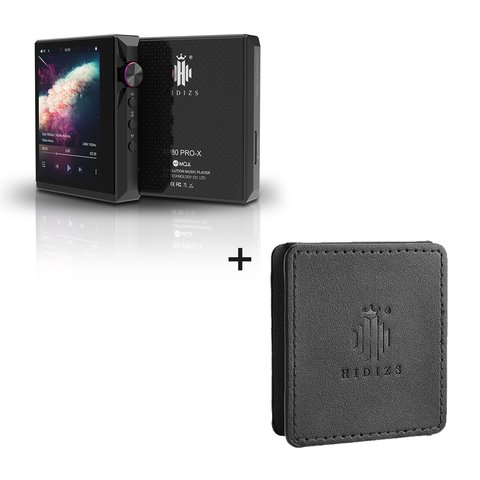
Quick Facts
| Category | Compact balanced digital audio player (DAP) |
| Hidizs AP80 Pro-X DAC | Dual ESS ES9219C |
| Shanling M1S DAC | Single ESS ES9038Q2M |
| Balanced Output | ~190mW (AP80 Pro-X) vs ~245mW (M1S) |
| Outputs | 3.5mm single-ended, 4.4mm balanced on both |
| Best For | AP80 Pro-X: pocketability & MQA; M1S: driving power |
Spec Comparison
| Spec | Hidizs AP80 Pro-X | Shanling M1S |
|---|---|---|
| DAC chipset | Dual ESS ES9219C | Single ESS ES9038Q2M |
| Processor architecture | HBC3000 FPGA master clock | In-house FPGA plus Ingenic X2000 three-core processor |
| Format support | Up to 32-bit/384kHz PCM, DSD256, MQA | Up to 32-bit/768kHz PCM, native DSD512, MQA |
| Balanced output power | ~190mW+190mW at 32 ohms | ~245mW at 32 ohms balanced |
| Single-ended output power | ~70mW+70mW at 32 ohms | ~144mW single-ended |
| Outputs | 3.5mm single-ended, 4.4mm balanced | 3.5mm single-ended, 4.4mm balanced |
| Bluetooth | Bi-directional Bluetooth | Two-way Bluetooth 5.0 |
| Weight | Lighter, sub-100g class | ~106g |
| Body dimensions | 61.2 x 54.5 x 13.8mm | 72 x 69 x 16mm |
Power Output Is the Biggest Practical Gap
On paper and in listening, the Shanling M1S simply has more current on tap, at roughly 245mW balanced compared to the AP80 Pro-X’s 190mW combined balanced figure. That difference becomes audible once you move beyond easy-to-drive IEMs into planar or higher-impedance over-ear headphones, where the M1S has noticeably more headroom before it starts to sound strained. For low-impedance IEMs, the gap matters far less, since neither player is being pushed anywhere near its limits.
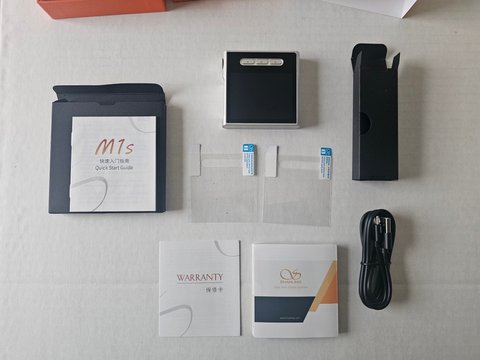
Format Support and File Handling
The M1S technically supports higher PCM sample rates and native DSD512, while the AP80 Pro-X tops out at DSD256. In real-world listening, this distinction rarely matters, since very little commercially available music is actually mastered or distributed at those extreme resolutions. Both players handle standard FLAC, DSD64, and DSD128 libraries without issue, so this spec sheet gap is more of a future-proofing detail than a day-to-day concern for most listeners.
Size, Shape, and Handling
- The AP80 Pro-X is the more compact, credit-card-adjacent design, easier to lose in a jacket pocket in a good way
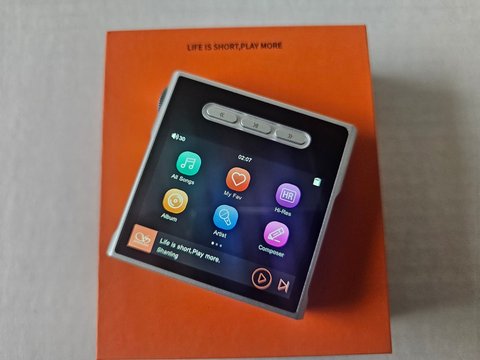
- The M1S has a more square, cube-like body with physical playback buttons along the top edge, which some listeners genuinely prefer for blind operation without looking at the screen
- Both use a touchscreen as the primary interface, with the M1S adding dedicated hardware buttons as a secondary control method
Brand Philosophy and Software Feel
Hidizs and Shanling approach their firmware and UI slightly differently, and it shows once you spend real time with each player rather than just comparing spec sheets. The AP80 Pro-X’s interface feels more utilitarian, prioritizing quick access to playback controls and file browsing without much visual flourish. Shanling’s MTouch interface on the M1S leans a bit more polished and colorful, with icon-based navigation that some listeners find friendlier, especially if they are coming from a phone-based music app background rather than an older-school DAP.
Neither approach is objectively better; it is a matter of taste, and if possible, spending a few minutes with each player’s menu system in person or through a detailed video review before buying is worth the extra effort, since you will be looking at this interface every single day.
Testing Notes From Real Use
I ran both players back to back over a few days, using the same balanced IEM and switching every other track to keep my ear calibrated between the two. The AP80 Pro-X’s smaller size made it the one I reached for during actual commuting, purely because it disappeared into a pocket more easily. The M1S earned its keep at a desk, paired with a slightly harder-to-drive planar-style earphone, where its extra balanced output made a genuinely audible difference in how relaxed the sound felt at higher volumes. Neither result surprised me given the spec sheet, but it was useful to confirm the numbers translate to something real in daily use rather than staying purely theoretical.
Which One Should You Buy?
If your headphone collection leans toward IEMs and easy-to-drive gear, the AP80 Pro-X’s MQA support and smaller size make it the more convenient daily carry. If you own or plan to own harder-to-drive over-ears, or you simply want more balanced output headroom as a safety margin, the Shanling M1S is worth the size and weight tradeoff. You can compare current pricing on Hidizs’ official AP80 Pro-X page and Linsoul’s Shanling M1S listing before deciding.
Accessory and Case Options
Both brands sell dedicated leather cases for their respective players, and given how easily aluminium edges pick up scuffs during daily carry, either case is a reasonable early purchase rather than an optional afterthought. If you plan to use either player with a portable amp stacked underneath, check the case dimensions carefully first, since a snug-fitting case can sometimes make stacking with an external amp more awkward than using the bare player.
Common Setup Problems and Fixes
- Player isn’t recognized when connected to a PC for file transfer: switch the USB mode from charging-only to file transfer/MTP mode in the player’s own settings menu, since both players default to charging mode on connection.
- Balanced output sounds unusually quiet: confirm your cable is genuinely wired for balanced 4.4mm output and not just physically fitting the jack — a single-ended cable in a balanced port on either player will not deliver the expected power gain.
- Bluetooth won’t pair reliably: forget the device on both the player and your headphones/speaker, then re-pair from a clean state; both players’ bi-directional Bluetooth can get stuck if a stale pairing profile lingers.
- MQA files aren’t unfolding correctly on the AP80 Pro-X: confirm you’re feeding it a genuine MQA-encoded file and not a standard FLAC, since the decoding indicator only lights up on properly authenticated MQA content.
- DSD files won’t play or sound distorted: check the file’s actual DSD rate against each player’s ceiling — DSD256 on the AP80 Pro-X and DSD512 on the M1S — anything beyond that needs to be converted down first.
- Battery drains faster than expected: high-res DSD and MQA playback draws noticeably more power than standard FLAC or MP3, so battery life estimates from either brand assume a mix of formats, not continuous high-res playback.
Frequently Asked Questions
Which player has more balanced output power?
The Shanling M1S, at roughly 245mW balanced versus the AP80 Pro-X’s approximately 190mW combined balanced output.
Does the Shanling M1S support MQA?
Yes, the M1S’s hardware has been upgraded to support MQA signal decoding, similar to the AP80 Pro-X.
Is one noticeably smaller than the other?
Yes, the AP80 Pro-X is the more compact of the two, while the M1S has a slightly larger, more cube-shaped body with added physical buttons.
Do both support native DSD playback?
Yes, though the M1S supports native DSD512 while the AP80 Pro-X tops out at DSD256, a gap that rarely matters in practice given how little commercial music exists at those extremes.
Conclusion
Both players are legitimate, well-regarded picks in the compact balanced DAP category, and the choice really comes down to how much driving power you need versus how much pocketability you are willing to trade for it. Neither is a wrong answer; they are simply built for slightly different corners of the same use case.
The author has reviewed portable audio players and driver software for several years, focusing on practical, first-hand testing over marketing claims, at softwaredriverdownload.com.