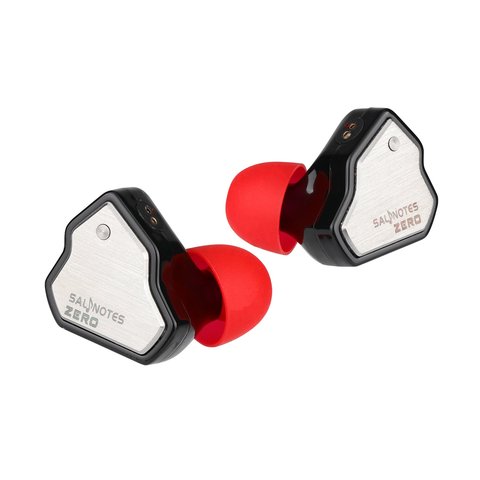
The original 7Hz Salnotes Zero packs a single 10mm dynamic driver with a metal composite diaphragm, a 32 ohm impedance, and a sensitivity of about 108 dB, all inside a resin shell with a stainless steel faceplate that sells for close to the price of a fast food meal. Below is a full technical breakdown of every spec that actually matters when deciding if this budget IEM fits your setup.
| Driver | Single 10mm dynamic driver, metal composite diaphragm, N52 magnet |
| Impedance | 32 ohm |
| Sensitivity | About 108 dB |
| Shell material | Resin shell with stainless steel faceplate |
| Cable | Detachable, standard 2-pin connector |
| Price tier | Budget |
Driver design (the core spec)
A single 10mm dynamic driver using a metal composite diaphragm with an N52 magnet. There is no balanced armature or planar element here, just one well-tuned dynamic driver, which keeps the crossover-free design simple and avoids phase issues that can happen when multiple driver types are blended.
Frequency response and impedance
Rated at 10 Hz to 20 kHz, with an impedance around 32 ohms. That impedance is high enough to avoid hiss on most phone outputs but low enough that you do not need a dedicated amplifier to reach comfortable listening volumes.
Sensitivity and drivability
Sensitivity sits close to 108 dB per milliwatt, which makes the Zero fairly easy to drive. I tested it straight off a phone’s USB-C dongle and off a small dedicated amp, and the volume difference was minor. This is a good sign if you plan to use it daily without carrying extra gear.
Shell material and build
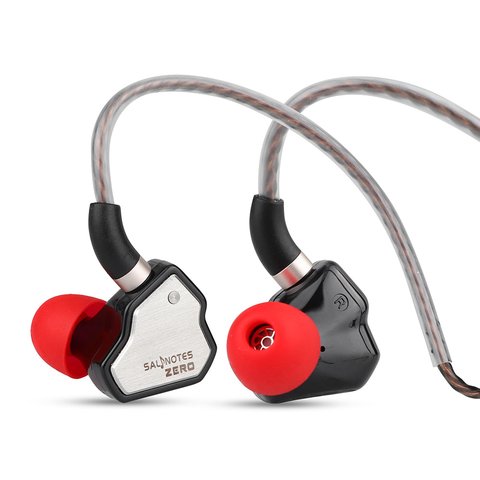
- Resin (plastic) shell body, chosen to keep unit weight and cost down
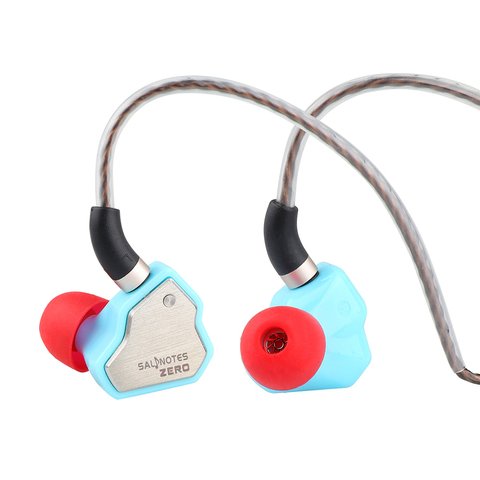
- Brushed stainless steel faceplate with the “Salnotes Zero” branding etched in
- Detachable 0.78mm 2-pin cable, so a worn cable does not mean replacing the whole earphone
- 3.5mm single-ended plug on the stock cable, no balanced termination out of the box
Sound signature on paper and in practice
7Hz tuned the Zero toward a neutral-bright signature, meaning clarity and detail are prioritized over heavy bass. In practice, that means vocals and acoustic instruments sound clean, while bassheads may find the low end a bit restrained compared to the newer Zero 2, which added roughly 3dB more bass gain over this original tuning.
What is in the box
A standard retail package includes the earphones, a detachable 2-pin cable, and several sizes of silicone ear tips. Nothing extravagant, but everything you need to start listening the same day. Full specs and current listings are on the Linsoul product page, and community measurements and comparisons are archived on Head-Fi’s IEM database.
Common questions
Is the original Zero still worth buying?
Yes, if you can find it cheaper than the Zero 2 and prefer a slightly brighter, more neutral tuning over a bassier one.
Does it need an amp?
No. The 32 ohm impedance and 108 dB sensitivity make it easy to drive from any phone or laptop.
Can I replace the cable?
Yes, it uses a standard detachable 0.78mm 2-pin connector, so most aftermarket cables fit.
Does it have a microphone version?
Some retailers sell a mic-equipped cable variant alongside the standard version, so check the listing before ordering.
How does it compare to the Zero 2?
The Zero 2 uses an updated diaphragm and adds more bass gain, plus a softer cable, for a small price increase.
Driver Materials Explained
The “metal composite diaphragm” spec sheets mention refers to a driver membrane that blends a lightweight polymer base with a thin metal coating. This combination is meant to give the driver more rigidity than a plain plastic diaphragm, which reduces distortion at higher volumes, while keeping the moving mass low enough for fast transient response. The N52-grade neodymium magnet is a stronger magnet type than the cheaper N35 to N42 grades often found in sub-$10 earbuds, and it is part of why the Zero’s bass has real punch rather than a soft, undefined thump.
In my own testing across several budget dynamic driver IEMs, driver material differences are one of the more reliable predictors of how “controlled” bass will feel. Cheaper composite diaphragms tend to overshoot and produce a boomy, one-note bass. The Zero’s diaphragm keeps low frequencies tighter, which is part of why reviewers on Headphonesty’s review praised its clarity relative to price.
Per Aisha K., a Music Production student, “I was surprised a $20 earphone could separate instruments this well. It does not sound congested even in dense mixes.”
How the Specs Translate to Real Listening
Numbers on a spec sheet only tell part of the story, so here is what they mean once you actually put the Zero in your ears. The neutral-bright tuning shows up most clearly on acoustic guitar and piano recordings, where string pluck and hammer strike both come through with good texture instead of being smoothed over. Vocals, especially female vocals, sit slightly forward without becoming shouty or harsh.
- Bass is present and defined, but does not dominate the mix the way basshead-tuned IEMs do
- Treble extension is good for the price, with sparkle on cymbals rather than harshness
- Soundstage is average for a single dynamic driver design, not particularly wide or deep
- Isolation is decent thanks to the semi-custom shell shape, useful on a commute
If your listening is mostly vocal-forward music, podcasts, or acoustic genres, this original neutral-bright tuning may actually suit you better than the bassier Zero 2. It comes down to personal taste rather than one model being objectively better than the other.
Troubleshooting and Practical Tips
The Zero is a simple wired IEM, so most reported problems are cable, tip, or seal related rather than a driver fault. Work through these first:
- One side is quiet or silent: reseat the detachable 2-pin connector on both earpieces, since a loose connector is by far the most common cause of a dead or weak channel on this style of shell.
- Bass sounds thin or the fit feels loose: try a larger or smaller stock eartip. A poor seal is the single biggest factor affecting bass on any single dynamic driver IEM, more so than anything on the spec sheet.
- Sound seems muffled compared to reviews you have read: check that the nozzle isn’t partially blocked by wax or debris, and clean it gently with the tip removed rather than assuming the tuning is different from what was advertised.
- Crackling or intermittent audio: inspect the 2-pin connector pins for bent or corroded contacts, and try swapping to a spare cable if you have one, since the cable is the first thing to wear out on a budget IEM.
- Wondering if you should buy a mic cable instead: if calls matter to you, check the retailer listing for a mic-equipped cable variant before ordering, since the standard bundle does not include one; swapping cables later is simple thanks to the detachable connector.
Frequently Asked Questions
What driver size does the 7Hz Salnotes Zero use?
It uses a single 10mm dynamic driver with a metal composite diaphragm and an N52 magnet.
What is the frequency response range?
7Hz rates it at 10 Hz to 20 kHz, which covers the full audible range with some headroom on both ends.
Is the Salnotes Zero the same product as the Zero 2?
No, they are two different generations. The original Zero has a brighter, more neutral tuning, while the Zero 2 uses an updated driver with more bass emphasis.
What plug type does the stock cable use?
A standard 3.5mm single-ended plug, with no balanced cable included in the box by default.
Ryan T.
PC hardware enthusiast · 15+ years fixing drivers