The WOLFBOX MegaFlow MF100 steps up from the MF50 with a 150,000 RPM motor and higher airflow speed, aimed at users who need more cleaning power for heavier debris than a basic keyboard duster can handle. It sits in the middle of WOLFBOX’s air duster lineup, between the compact MF50 and the swappable-battery MF200.
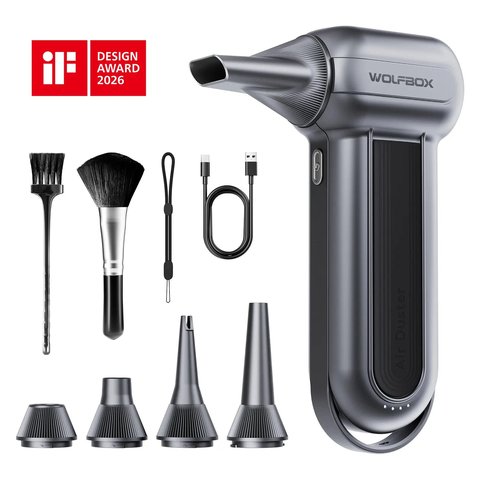
Key Specs
- Up to 150,000 RPM with a maximum airflow speed of 45 m/s
- 3 adjustable speed settings for light to heavy-duty cleaning
- Weighs 0.66 lb, still compact enough for one-handed use
- Comes with 5 nozzles and 2 brushes for different surfaces
- USB-C charging, full charge in about 2.5 hours
- Up to 100 minutes of runtime on the first speed setting
MF100 vs the Smaller MF50
The MF100 trades a bit of runtime for meaningfully more RPM and airflow speed, which matters if you’re clearing heavier debris like sawdust, pet hair from car interiors, or a genuinely dusty PC case rather than light desk cleaning. If your use case is mostly keyboards and camera lenses, the smaller MF50 is arguably the better fit and lasts longer per charge. The MF100 also runs noticeably louder at its top speed setting, which is worth factoring in if you’re cleaning in a shared space.
The bundled brushes are worth actually using rather than skipping straight to the air nozzle — a quick brush pass loosens caked-on dust first, so the air duster clears it in one pass instead of just scattering it around the same surface.
Where It’s Most Useful
- Clearing dust from PC case fans, heatsinks, and power supply vents
- Blowing debris out of mechanical keyboards and camera gear
- Quick cleanup of car interior vents, seat crevices, and floor mats
- Light outdoor use, like clearing leaves from small gaps and window tracks
- Clearing wood shavings and light sawdust from small workshop projects
Charging and Battery Care
The MF100 charges via USB-C in roughly 2.5 hours, which is faster than the smaller MF50’s 3.5-hour charge time despite having a bit less total runtime per charge. Like most rechargeable lithium tools, it’s worth avoiding letting the battery sit fully depleted for long stretches, and periodic full charge cycles help maintain long-term capacity rather than frequent partial top-ups alone.
For full specs, see WOLFBOX’s official MF100 product page.
Comparing It to a Corded Shop Vacuum Blower
Unlike a corded shop vacuum’s blower attachment, the MF100 is genuinely portable and doesn’t require finding an outlet or dragging a cord across a workshop. The tradeoff is total sustained airflow volume — a shop vacuum blower moves more air over a longer continuous period, so for truly heavy-duty, prolonged cleanup like a garage floor covered in sawdust, a corded option may still outperform it. For spot cleaning and targeted debris removal, the MF100’s portability wins out.
Maintaining the Tool Itself Over Time
Like any motorized cleaning tool, the MF100 benefits from occasional maintenance beyond just charging it. Wiping down the exterior after dusty jobs prevents buildup from working its way into the intake, and periodically checking that nozzles seat securely avoids air leaks that reduce effective cleaning power at the tip. None of this requires special tools or expertise — a few seconds of basic care after heavier cleaning sessions keeps it performing consistently over years of use.
Frequently Asked Questions
Is “MegaFlow MF100” a different product from the “MF100 Compressed Air Duster”?
No, both names refer to the same WOLFBOX model; “MegaFlow” is the product line name.
Is it suitable for cleaning out a car’s air vents?
Yes, the narrow nozzle attachments work well for clearing dust and debris from tight vent slats and console gaps.
Can it be used to inflate small items like pool floats?
It’s designed for dust removal rather than inflation, so results will vary and it’s not the primary intended use.
Is it loud on the highest speed setting?
It’s noticeably louder than the lowest setting, similar to a small handheld vacuum, so factor that in for shared spaces.
Does the battery degrade with frequent charging?
Like most rechargeable lithium batteries, capacity will gradually decline over hundreds of charge cycles, though this is normal wear rather than a defect.
Is the MF100 too powerful for delicate electronics?
Not on the lowest speed setting, though for very delicate items like camera sensors, the smaller MF50 offers finer low-end control.
Does it come with instructions in multiple languages?
Most retail packaging includes multilingual quick-start instructions, though it’s worth checking your specific listing if this matters to you.
Is there a version with a longer nozzle for reaching tight spaces?
The included nozzle set covers most common gaps and crevices; specialized extra-long nozzles aren’t typically part of the standard bundle.
Does using it near open windows reduce its effectiveness?
Airflow works the same regardless of nearby windows, though a draft can scatter loosened dust back toward you, so closing windows during cleaning helps keep debris contained.
Can I buy replacement nozzles separately if I lose one?
Availability varies by retailer; check current listings or contact WOLFBOX directly for replacement accessory options.
Can it clear standing water or is it only for dust?
It’s designed for dust and light debris removal rather than moving water, so it’s not the right tool for drying wet surfaces.
Is it safe to use on painted car surfaces?
Yes, airflow alone won’t damage paint; just keep the nozzle a reasonable distance from the surface to avoid blowing debris into the paint at close range.
Conclusion
The MF100 is worth the step up from the MF50 if you regularly deal with heavier dust and debris, particularly around PC hardware or car interiors. If your cleaning needs are lighter and less frequent, the smaller MF50 will likely cover it with better runtime per charge and a quieter operating volume, so match the model to how often and how heavy your actual cleaning tasks tend to be.
Ryan T. is a PC hardware enthusiast with 15+ years of experience fixing drivers and testing consumer tech. He writes for softwaredriverdownload.com.