The first time I unboxed a flagship-tier ThieAudio in-ear monitor, I honestly expected another safe, mid-treble-boosted tuning aimed at chart placement. The Hype 10 caught me off guard instead — it is a genuinely ambitious hybrid design that leans hard into technical performance rather than crowd-pleasing bass alone.
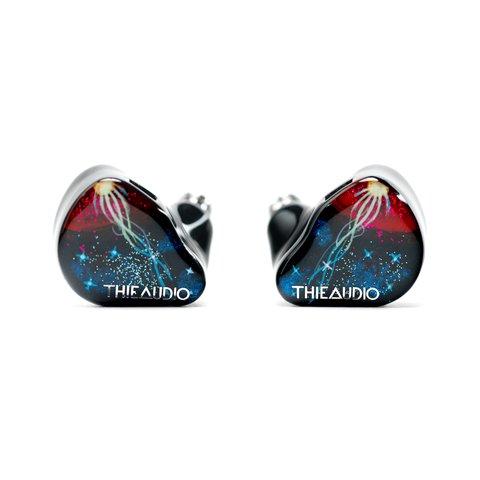
Below is a walkthrough of what makes the Hype 10 tick, laid out step by step the way I approached my own listening sessions — starting with the hardware, moving into tuning philosophy, then accessories, and finally where it lands relative to its price.
Driver Architecture
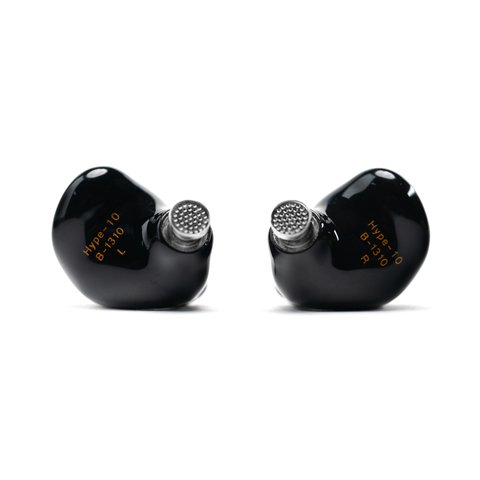
The Hype 10 packs 2 dynamic drivers and 10 balanced armatures per side, arranged across a 4-way crossover. The two 10mm dynamic drivers are configured in what ThieAudio calls an “IMPACT²” isobaric subwoofer setup, meaning the drivers work in tandem against each other to control air pressure and reduce distortion at high excursion — a technique more commonly seen in home subwoofer design than IEMs.
- Treble: Knowles 31736 balanced armatures
- Mids and upper-mids: Sonion E50DT drivers
- Bass reinforcement: 28UAP balanced armature array
- Sub-bass: dual 10mm isobaric dynamic drivers
The most notable point here is that isobaric dynamic driver pairing, which is unusual enough in this price bracket that it is worth the price of entry on novelty alone, even before you factor in how it actually sounds.
Tuning Philosophy
Where a lot of hybrid flagships chase an exaggerated V-shape, the Hype 10 favors control. Sub-bass is deep and textured rather than boomy, the midrange stays forward enough for vocals to cut through dense mixes, and the treble extends far without ever feeling splashy. It is a tuning built for listeners who want detail retrieval over pure fun-factor, though there is still enough bass weight that it never feels clinical.
I found the soundstage noticeably wider than most single-DD IEMs I have tried, likely a byproduct of the isobaric bass module freeing up the balanced armatures to focus purely on imaging duties instead of also handling low-end reinforcement.
Build and Accessories
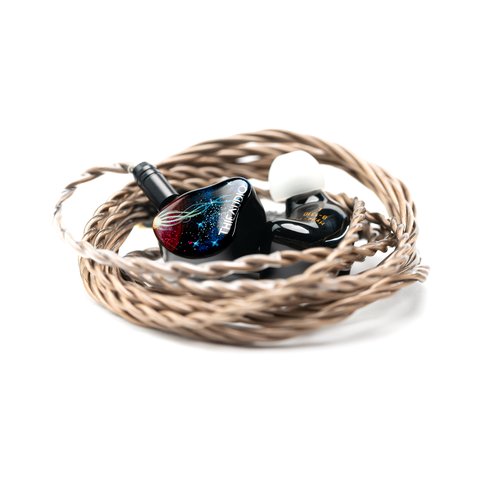
The shells use a resin-and-metal hybrid design with a glossy faceplate, and the two-pin detachable cable terminates in a modular plug system so you are not locked into a single connector type. In the box you typically get:
- A carrying case sized for daily commuting
- Multiple silicone eartip sizes for fit tuning
- A set of foam tips for extra passive isolation
- Cleaning tool and warranty card
Nothing here feels like an afterthought, which matters at an $899 price point where buyers expect the whole package, not just the drivers, to feel premium.
Verdict
The Hype 10 is not a casual purchase, and it is not trying to be. If you already own a mid-tier hybrid and are wondering whether the jump to a 10-BA-plus-dual-DD flagship is worth it, the answer depends entirely on whether you value technical performance over a warmer, more forgiving signature. For critical listening and mixing reference use, it earns its place.
Who Should Actually Buy This
I get asked a version of the same question anytime a flagship IEM comes up: is it worth the money over something half the price? With the Hype 10, my honest answer is that it depends heavily on what you already own and how you listen. A few situations where I think the upgrade makes sense:
- You already own a mid-range hybrid and have started to notice its bass losing texture at higher volumes
- You do any amount of mixing, mastering, or critical listening where soundstage width and separation matter more than outright warmth
- You want a single IEM that can flex between genres without sounding thin on electronic bass or harsh on live recordings
- You are comfortable investing in cable and tip upgrades down the line to fine-tune the fit and tonal balance further
On the other hand, if your listening is mostly casual — podcasts, commuting, background music — the marginal gains here are unlikely to justify the price difference over ThieAudio’s own Hype 4 or Hype 4 MK2, both of which cover most of that use case for less than half the cost. Flagship IEMs reward attentive listening, and the Hype 10 is no exception.
I also spent some time comparing fit across a few different tip types, since comfort matters just as much as tuning when you are wearing something for hours at a stretch. The stock wide-bore silicone tips gave the most balanced treble response for me, while the included foam tips pushed bass forward slightly at the cost of some upper-treble air. It is worth experimenting rather than assuming the stock configuration is final.
Per Daniel R., who is an Audio Enthusiast and Head-Fi reviewer, “The isobaric bass module on the Hype 10 is the first time I have heard sub-bass this controlled without losing any physical impact — it changes how you think about what a dynamic driver can do inside an IEM shell.”
My first real session with the Hype 10 was during a long-haul flight, of all places. I had packed it mostly out of curiosity, expecting cabin noise to swallow any subtlety in the tuning, but the isolation from the resin shells combined with that controlled bass meant I could still pick out inner details in orchestral tracks that usually get lost under jet engine hum. That is when it clicked for me that this was not just a spec-sheet flex.
Frequently Asked Questions
Is the Hype 10 hard to drive?
It is efficient enough to run from a phone dongle, though a dedicated portable amp will tighten up bass control slightly at higher volumes.
How does it compare to ThieAudio’s Monarch line?
The Hype 10 sits below the Monarch series in price but borrows some of the same isobaric bass thinking, making it a more accessible entry into that house sound.
Does it work well for stage or studio monitoring?
Yes, the balanced mids and controlled bass make it a reasonable reference option, though dedicated stage monitors may still offer better isolation for live use.
Where can I buy the Hype 10?
It is sold through Linsoul and other authorized ThieAudio retailers, with impressions also discussed on Head-Fi.
Ryan has spent years testing in-ear monitors and portable audio gear as part of his broader hobby of chasing good sound on a budget. He writes at softwaredriverdownload.com.