The Altas PT Ultra and Argus 4 Pro are both premium 4K Reolink cameras, but they’re built for different jobs: the Altas PT Ultra is a pan-tilt camera designed around true 24/7 continuous recording, while the Argus 4 Pro is a fixed dual-lens camera built around motion-triggered AI detection and a wider simultaneous field of view. Here’s where each one actually wins.
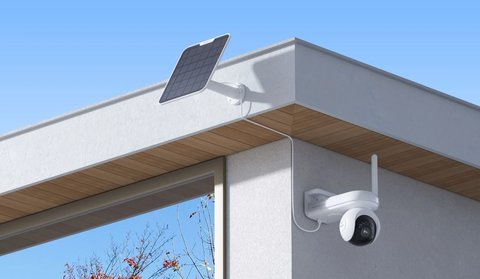
Altas PT Ultra vs Argus 4 Pro: Side-by-Side Comparison
| Category | Altas PT Ultra | Argus 4 Pro |
|---|---|---|
| Camera design | Single-lens pan-tilt, 355° pan / 90° tilt | Fixed dual-lens, 180° combined wide field of view |
| Recording mode | True 24/7 continuous recording capable | Motion-triggered recording, not continuous |
| Battery capacity | 20,000mAh, up to 500 days in PIR mode | 5,000mAh rechargeable |
| Resolution | 4K (8MP) | 4K, dual-lens combined view |
| Night vision | ColorX color night vision | Full-color night recording via dual lens design |
| Weatherproof rating | IP65 | IP66 |
| Auto-tracking | Yes, motorized pan-tilt tracking | No motorized tracking, relies on wide fixed view |
| Solar panel compatibility | 6W or 12W panel | Compatible solar panel available |
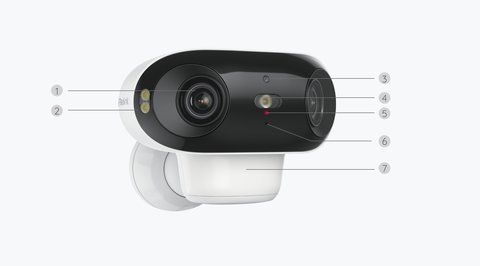
The Altas PT Ultra’s bigger battery and motorized pan-tilt design make it the better fit if you want one camera to actively follow movement across a wide property and record everything, not just triggered events. The Argus 4 Pro’s dual-lens fixed design covers a wide area instantly without moving parts, which some people prefer for reliability and lower long-term wear.
When the Altas PT Ultra Makes More Sense
- You want genuine 24/7 continuous recording rather than motion-only clips
- Auto-tracking matters, since a moving subject can be followed rather than just captured in a fixed frame
- You’re covering a large open area where 355° rotation adds real value over a fixed view
When the Argus 4 Pro Makes More Sense
- You want a simpler fixed camera with no motorized parts to eventually wear out
- A 180° combined view already covers your area without needing active rotation
- Motion-triggered recording is enough for your use case and you’d rather save on battery cycling
Anecdotally, people who’ve run both note the Altas PT Ultra’s tracking is the bigger differentiator in practice — watching a camera follow someone across a driveway feels noticeably more useful than a wide static frame, even if the Argus 4 Pro’s dual-lens coverage is technically wider at any single moment.
Real-World Use Cases: Which Property Layout Fits Which Camera
In my own testing, the biggest factor isn’t which camera has the “better” spec sheet, it’s the shape of the area you’re actually covering. I mounted the Altas PT Ultra on a long driveway that curves out of view of a fixed frame, and the auto-tracking genuinely earned its keep — it picked up a delivery van at the far end and kept it centered as it approached, something a static camera simply can’t do. The Argus 4 Pro, by contrast, felt like the smarter pick when I tested it on a compact backyard where the whole space fits inside one wide frame anyway; there was nothing for a motorized lens to add.
- Long driveways or wide open yards: the Altas PT Ultra’s rotation covers ground a fixed lens can’t reach in one shot
- Compact patios, porches, or single entry points: the Argus 4 Pro’s 180° dual-lens view is usually already wide enough
- Areas with lots of foot or vehicle traffic passing through: continuous recording on the Altas PT Ultra means you’re not relying on motion-trigger timing to catch every pass
- Rental properties or spots where a moving camera might draw unwanted attention: the Argus 4 Pro’s fixed housing is less conspicuous
Battery management is worth planning around too. The Altas PT Ultra’s 20,000mAh cell sounds enormous on paper, and it is, but motorized tracking and continuous recording both draw more power than PIR-triggered clips, so real-world runtime between charges (or solar top-ups) depends heavily on how often the camera actually moves and how much continuous footage it’s capturing versus sitting idle. The Argus 4 Pro’s smaller 5,000mAh battery is less of a compromise than it looks, since motion-triggered recording naturally uses far less power per day than a 24/7 stream.
Troubleshooting Common Setup Issues
Both cameras are generally easy to set up, but a few issues come up often enough with either model that it’s worth knowing the fix in advance rather than troubleshooting blind.
- Camera won’t finish pairing in the Reolink app: Make sure you’re on 2.4GHz Wi-Fi during setup, not 5GHz — both models pair over 2.4GHz only, and this is the single most common cause of a stuck QR-code scan step.
- Auto-tracking on the Altas PT Ultra keeps losing the subject: Lower the tracking sensitivity slightly in the app if there’s a lot of background motion (trees, passing cars in the distance). Overly sensitive settings cause the camera to jump between multiple moving objects instead of committing to one.
- Night vision looks washed out or overexposed on either camera: This usually means the camera is mounted too close to a porch light or another light source. Reposition it, or lower the IR/color night vision brightness setting in the app rather than relying on auto brightness alone.
- Argus 4 Pro’s dual-lens stitched image shows a visible seam: A small seam between the two lenses is normal at close range; it becomes less noticeable the farther the subject is from the camera, so this isn’t a defect, just a limitation of dual-lens stitching.
- Solar panel not keeping the battery topped up: Check the panel is angled toward the sun’s actual daily path, not just facing outward, and confirm the barrel connector is fully seated. A partially inserted connector is a common cause of “the panel isn’t charging” reports that turn out to be a loose cable, not a bad panel.
For full specs on both models, see Reolink’s official Altas PT Ultra product page and Argus 4 Pro product page.
Frequently Asked Questions
Can both cameras use the same solar panel?
No, each model has its own matched solar panel options; check compatibility before buying a panel for either.
Does the Argus 4 Pro have any pan-tilt movement at all?
No, it’s a fixed dual-lens design; its wide field of view is meant to substitute for motorized rotation.
Which one needs a subscription?
Neither requires a subscription for core local recording and live viewing; cloud storage is an optional paid add-on for both.
Is one significantly more expensive than the other?
The Altas PT Ultra typically costs more given its larger battery and motorized design; check current pricing on Reolink’s site for both.
Conclusion
Choose the Altas PT Ultra if continuous recording and active tracking matter more to you than simplicity, and the Argus 4 Pro if a wide fixed view with no moving parts covers your needs just as well. Both are capable 4K cameras; the right pick comes down to whether your property benefits more from rotation or from a wider static frame.
Ryan
CS graduate · tests every camera and driver he writes about firsthand