QCY has a habit of releasing an “S” refresh a little while after the original model lands, and the Crossky line is no exception. The Crossky C30S sits right next to the original C30 on QCY’s site, and the naming makes it easy to assume it is a minor firmware refresh. It is not. Having spent time with both open-ear clip earbuds side by side, the differences go deeper than the name suggests, and the right pick depends heavily on how you plan to use them.
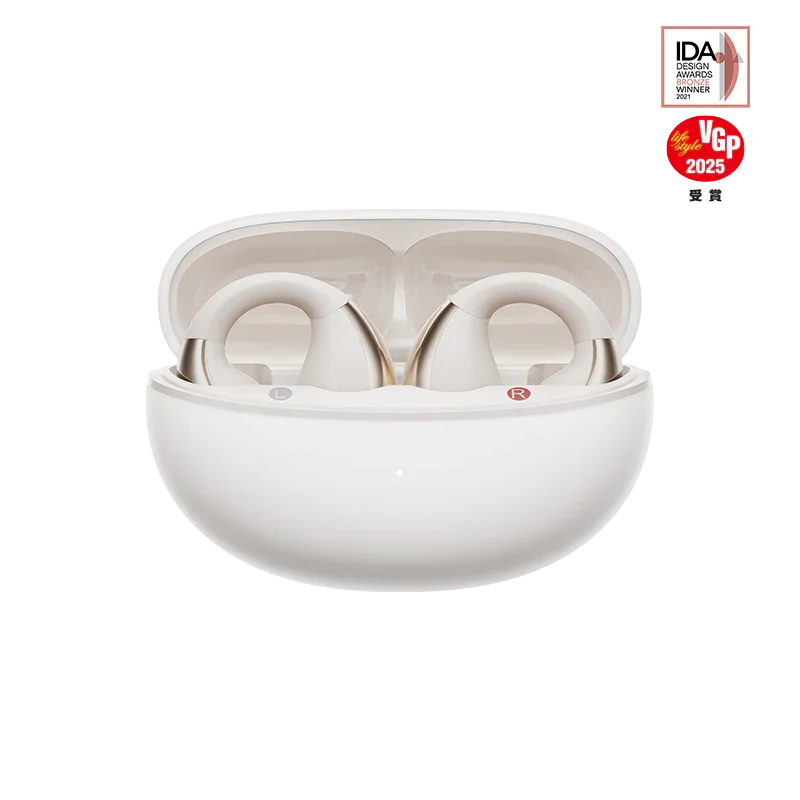
Shared Design, Different Priorities
Both earbuds use the same open-ear clip form factor that hooks over the top of your ear rather than sealing the canal, and both weigh close to 5 grams per earbud, so day-to-day comfort is essentially identical. Where they diverge is in the internals QCY chose to upgrade for the S revision, and it is a more substantial jump than most model refreshes in this price bracket.
Spec Comparison
| Feature | Crossky C30 | Crossky C30S |
|---|---|---|
| Playtime per charge | ~5.5 hours | ~6 hours |
| Total playtime with case | Up to 25 hours | Up to 40 hours |
| Water resistance | IPX4 | IPX5 |
| Hi-Res / LDAC audio support | No | Yes (Hi-Res Audio Wireless, LDAC) |
| Charging case build | Standard finish | Sturdier, more scratch-resistant finish |
| Companion app | QCY app | QCY app |
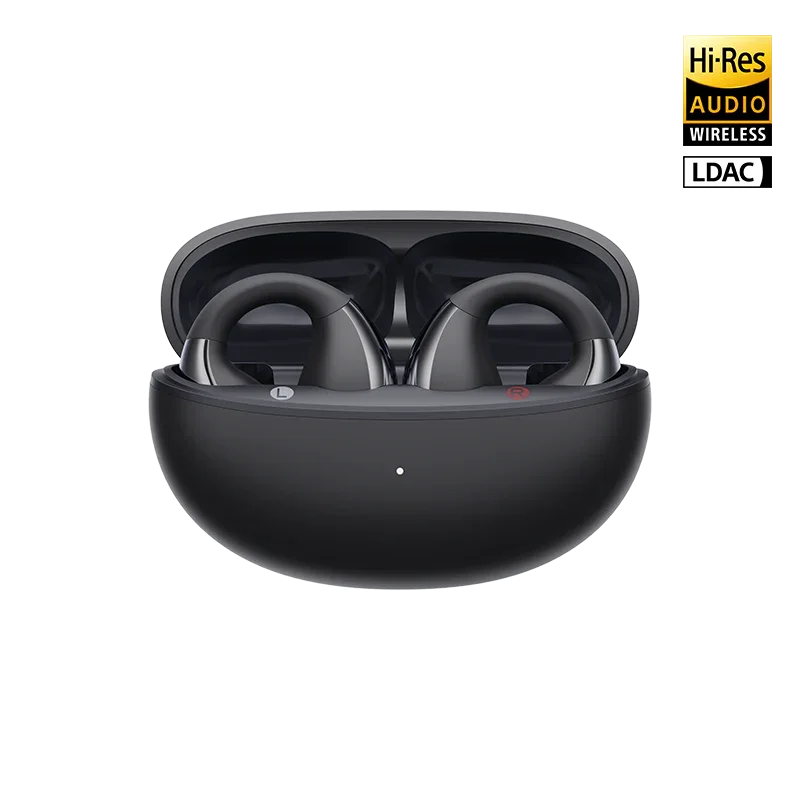
Battery Life: The Biggest Practical Difference
On paper the per-charge gap looks small, half an hour at most, but the total playtime with the case tells a very different story. The C30S nearly doubles the C30’s total runtime once the charging case is factored in, which matters a lot for anyone who wants to leave the earbuds in the case for a few days between charges rather than topping up nightly. If you travel frequently or simply forget to charge cases as often as you should, this alone is reason enough to spend the extra money on the S model.
Audio Quality and Codec Support
The C30S adds LDAC support, a high-bitrate Bluetooth codec that matters mainly if your phone also supports it (most recent Android phones do; iPhones do not support LDAC at the OS level). With a compatible source, the difference in clarity and detail is noticeable, particularly on more complex or layered music. On the standard C30, you are limited to SBC and AAC, which is perfectly serviceable for podcasts, calls, and casual listening but leaves some headroom on the table for critical listening.
Both earbuds share the same fundamental open-ear acoustic design, so neither delivers the bass depth of a sealed earbud — the C30S’s codec advantage improves clarity and detail rather than fundamentally changing the sound signature.
Build Quality and Durability
- The C30S case feels noticeably sturdier in hand, with a finish that resists scuffing better over pocket carry.
- The jump from IPX4 to IPX5 water resistance means the C30S tolerates a harder rain shower or a sweatier workout with more margin for error, though neither model is meant for swimming.
- Both earbuds use the same touch control layout and QCY app support, so day-to-day operation feels identical between the two once paired.
My Own Side-by-Side Testing Notes
I wore the standard C30 for a week of morning walks and kitchen chores, then switched to the C30S for the following week under the same routine to keep the comparison as fair as possible. The battery difference was the first thing I noticed in practice rather than on paper: with the C30 I found myself topping up the case every two to three days, while the C30S comfortably stretched past four days of the same usage pattern before needing a charge. That gap compounds if you are the type of person who forgets to charge a case sitting in a bag.
The audio difference was more subtle during casual listening but became obvious once I switched to a playlist with denser instrumentation on my LDAC-capable Android phone. Cymbals and overlapping vocal harmonies held together with noticeably less smearing on the C30S. On simpler content like podcasts or talk radio, I genuinely could not tell the two apart, which reinforces that the LDAC advantage is content-dependent rather than a blanket improvement.
Which One Should You Buy
If your budget is tight and you mainly want open-ear earbuds for background music during chores or light walks, the standard C30 covers that use case fine and costs less. If you exercise regularly, travel with your earbuds, or care about squeezing out better audio quality on a compatible Android phone, the C30S earns its price premium through battery life alone, before even factoring in LDAC support. For a deeper technical breakdown of both models’ measured performance, Cerebral-Overload’s independent Crossky comparison is worth reading alongside this guide.
Frequently Asked Questions
Can I use C30 earbuds with a C30S charging case, or vice versa?
No, the two are not designed to be cross-compatible. Always keep each earbud pair with its original matching case.
Is the C30S worth it if my phone does not support LDAC?
Even without LDAC, the C30S still wins on total battery life and water resistance, so it remains the better pick for most active users regardless of codec support.
Do both models support the same touch gestures?
Yes, both use the same tap-based control scheme and can be remapped identically through the QCY app.
Does the C30S cost significantly more than the C30?
The premium is modest relative to the battery life and codec gains, and it is usually the smaller of the two purchase decisions compared with choosing between open-ear and sealed-earbud designs in the first place.
Conclusion
The Crossky C30S is not a cosmetic refresh of the C30, it is a genuine upgrade in battery life, durability, and audio codec support, and the price difference reflects that. Budget shoppers who just want basic open-ear earbuds are still well served by the original C30, but anyone leaning toward regular outdoor use should spend the extra amount on the S model.
Written by Ryan, who tracks QCY’s model refreshes closely to help readers figure out which version is actually worth the upgrade price.