Gaming headsets under thirty dollars usually make some kind of compromise — thin bass, a microphone that sounds like a phone call from underwater, or a headband that pinches after an hour. The Mpow EG10 is one of the few budget sets I’ve used that gets the basics right without any of those trade-offs feeling obvious right away. I ran it through a few weeks of evening sessions on PC and a PS4 borrowed from a friend, and here’s what stood out.
Card: What’s in the Box
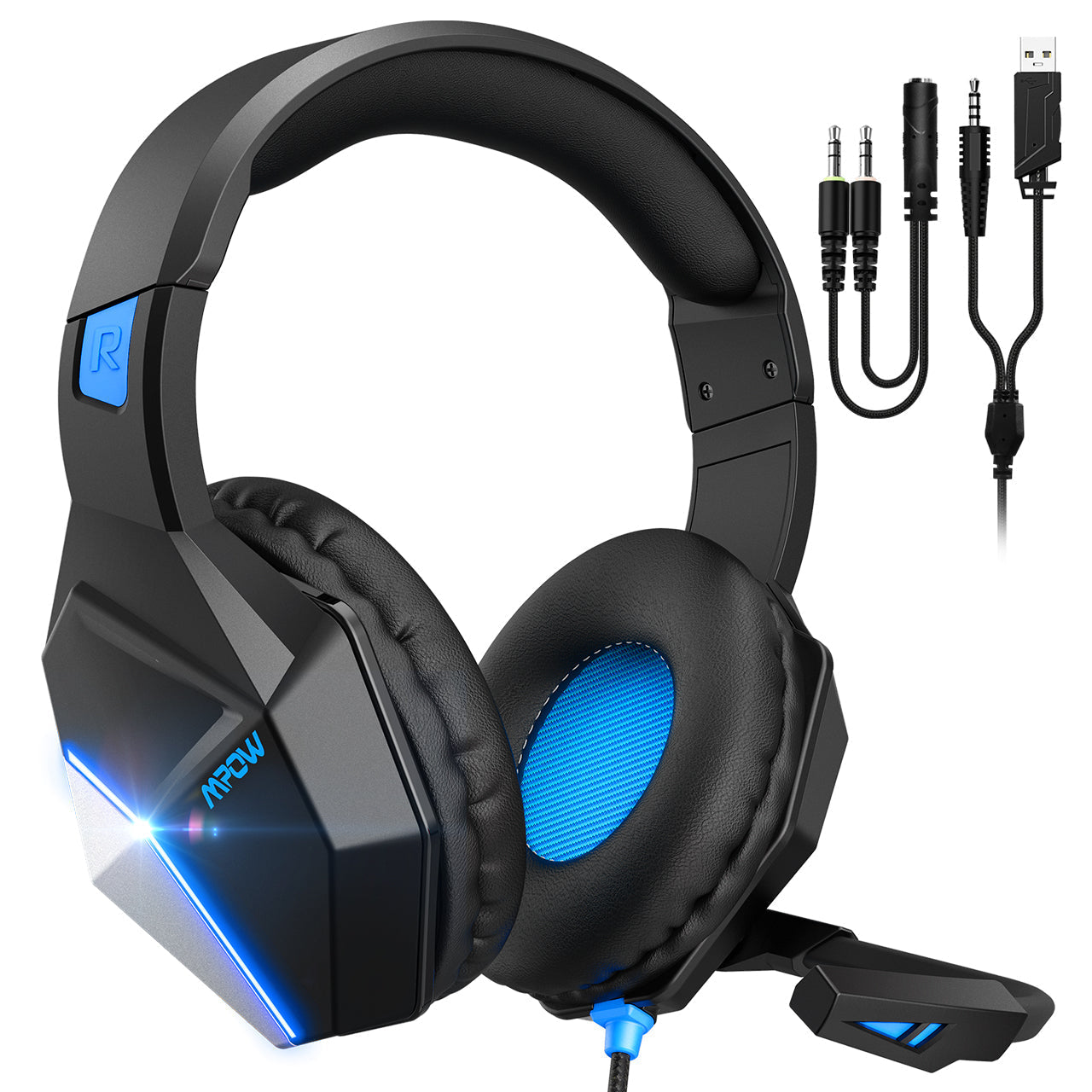
The EG10 ships as a wired headset with two 3.5mm connectors (mic and audio) plus a USB adapter cable for consoles or PCs with a single combined audio jack. That flexibility matters — it means the same headset moves between a gaming PC, a PS4/PS5, and an Xbox One without needing a separate adapter purchase.
- EG10 headset with flip-up noise-isolating boom microphone
- Braided 2.2m cable, long enough to reach a PC tower under a desk
- USB-to-dual-3.5mm splitter for single-jack devices
- In-line volume wheel and mic mute switch
Card: Sound Quality
The 50mm drivers lean bass-forward, which suits shooters and action games where footsteps and explosions carry more of the experience than dialogue nuance. Competitive players who need precise directional audio for footstep tracking may find the bass slightly overpowers positional cues compared to a more neutral-tuned set, but for casual and story-driven games, the sound signature is genuinely enjoyable rather than muddy.
Comparing it side by side with a headset roughly double the price, the EG10 gives up some clarity in the upper mids but holds its own on bass depth and overall loudness headroom.
Card: Microphone Performance
The flip-up boom mic includes basic noise isolation, and in practice it handles a quiet room well — teammates on Discord reported clear voice with a bit of digital thinness at the edges, typical for headsets in this price bracket. Background noise like a fan or keyboard clatter does bleed through more than a dedicated USB microphone would allow, so it’s not a great pick for streaming, but for casual squad chat it’s more than adequate.
Card: Comfort and Build
At 254 grams, the EG10 sits noticeably lighter than many gaming headsets in its class, and the memory-foam ear pads keep pressure low during multi-hour sessions. The plastic headband and hinges feel appropriate for the price rather than premium — not flimsy, but not something I’d want to sit on or toss in a bag without a case.
The LED accent lighting on the ear cups (available in blue or red) is a nice touch for anyone gaming in a dark room, though it does draw a small amount of extra power through the USB connection when active.
Card: Setup on PC and Console
- For PC: plug the two 3.5mm connectors into the corresponding mic and headphone jacks, or use the USB adapter for a single-port connection
- For PS4/PS5: connect via the controller’s 3.5mm jack directly, no adapter needed for audio, though the controller’s own settings may need audio output switched to “headset” in the system menu
- For Xbox One: requires a compatible controller with a 3.5mm jack, or the USB adapter depending on controller generation
- Adjust in-game audio balance and mic levels through the console or PC’s sound settings after the initial connection, since the headset itself has no software equalizer
A Quick Note on Cable Management
The 2.2m braided cable is generous enough to reach most desk setups, but it’s also long enough to become a tangle risk if you’re not careful. I ended up running a cheap cable clip along the desk edge to keep the mic and audio cables from catching on my chair every time I stood up, a small addition that made a bigger difference to daily comfort than I expected from something so minor.
Where It Falls Short
No wireless option exists in this line, so anyone who specifically wants to roam away from the desk or console should look elsewhere. There’s also no companion software for EQ presets or surround sound customization — what you hear out of the box is what you get, for better or worse. Mpow’s gaming headset lineup page lists the EG10 alongside pricier siblings if surround features matter more to you.
How the EG10 Stacks Up Against the Competition
In the sub-thirty-dollar gaming headset category, the usual competitors lean even more heavily on flashy LED lighting than actual audio performance, and quite a few skip the USB console adapter entirely, forcing a separate purchase. The EG10 avoids both traps by bundling the adapter and keeping the lighting as an optional accent rather than the main selling point.
Where it loses ground to headsets a tier up in price is customization: no software EQ, no per-game audio profiles, and no swappable ear cushion materials. If you’re the kind of player who tweaks audio settings extensively per title, that absence will be more noticeable than it would be to a casual weekend gamer.
- Strengths: bundled adapter, comfortable weight, usable mic for casual chat, bass-forward sound that suits action games
- Weaknesses: no wireless option, no companion software, mic not suited for streaming or content creation
Frequently Asked Questions
Does the EG10 work with Nintendo Switch?
Yes, through the console’s 3.5mm jack on the top of the unit or the Joy-Con grip, using the standard 3.5mm audio connector.
Is the microphone detachable?
No, it’s a fixed flip-up boom rather than a removable mic, so it can be tucked out of the way but not fully disconnected.
Does it support 7.1 surround sound?
No, the EG10 is stereo only. Mpow’s higher-tier gaming headsets offer virtual surround through USB, but this model keeps things simple with a standard 3.5mm connection.
How long is the warranty?
Mpow generally offers a standard limited warranty on headset hardware; specific terms and registration steps are listed on their official support pages.
Conclusion
The Mpow EG10 does not try to compete with premium gaming audio brands, and it doesn’t need to. For the price, it delivers comfortable, bass-forward sound and a usable microphone across PC and most consoles, with the flexibility of a wired connection that never needs charging mid-match. If your budget for a first or backup gaming headset is tight, it’s a reasonable place to land.
Reviewed by Ryan, who has been building and troubleshooting gaming PCs as a hobby for over fifteen years and tests budget peripherals against pricier alternatives whenever possible.