Kiwi Ears has two very different flagship-tier IEMs in its lineup right now, and it’s easy to get them confused if you’re shopping by price alone. The Astral is a hybrid design mixing a dynamic driver with balanced armatures, while the Orchestra II goes all-in on ten balanced armatures with no dynamic driver at all. I spent a couple of weeks running both through the same playlists to figure out which one actually deserves a spot in your ears.
Driver Architecture
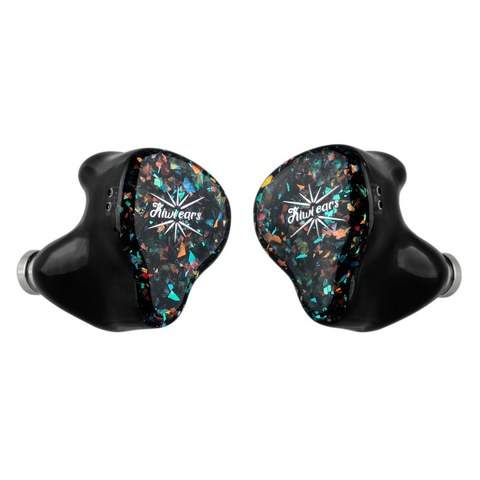
The Astral uses 1 dynamic driver plus 6 balanced armatures across a three-way crossover, with a 10mm bioceramic diaphragm handling bass duties. The Orchestra II instead relies on 10 custom balanced armatures split across a four-way crossover, with no dynamic driver in the mix at all. That’s a meaningful architectural difference, not just a marketing detail.
- Astral: 1DD + 6BA, three-way crossover, 10mm bioceramic dynamic driver
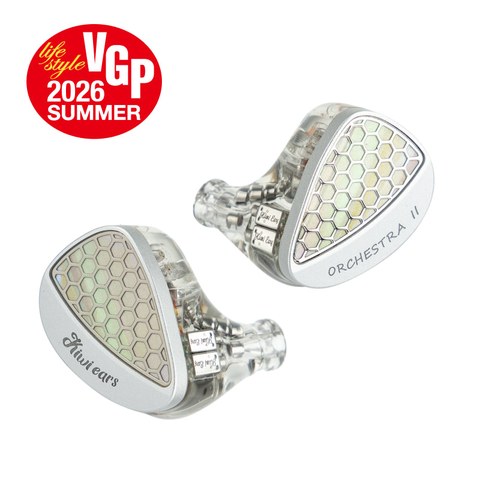
- Orchestra II: 10BA, four-way crossover, transparent acrylic BA woofer
- Orchestra II impedance sits around 15 ohm with a high 110dB sensitivity
- Astral’s dynamic driver gives it a more natural bass texture out of the box
Sound Signature
The Astral’s tuning is genuinely balanced, with a soft sub-bass roll-off around 300Hz, a compensated midrange, and controlled treble that avoids any harshness. It’s an easy listen across most genres without ever feeling boring. The Orchestra II goes for a mild U-shape instead, adding more energy and excitement on both ends of the spectrum while still keeping detail retrieval intact thanks to its all-BA design.
All-BA IEMs sometimes struggle to sound “real” in the bass, coming across a touch dry or clinical compared to a dynamic driver. The Orchestra II manages to avoid that trap better than most all-BA designs I’ve heard, but the Astral’s dynamic driver still edges it out for natural bass texture and rumble on tracks that lean heavily on sub-bass.
Build Quality and Design
The Orchestra II carries forward the transparent acrylic shell design from the original Orchestra, letting you see the internal driver array through the housing, which is a neat detail for anyone who appreciates the engineering on display. It ships with a nice 4-wire single crystal copper silver-plated cable that feels noticeably more premium than typical stock cables in this segment.
The Astral takes a more understated approach with its flake-embedded resin faceplate, still attractive but less of a showpiece than the Orchestra II’s fully transparent shell. Both are comfortable for extended wear, though I noticed the Orchestra II’s shell runs slightly larger, which some ears may find snugger than others.
Source and Amp Pairing
Because the Orchestra II is so easy to drive, it’s fairly forgiving of whatever source you throw at it, though I did notice it can pick up hiss on noisier dongles due to its high sensitivity. Pairing it with a clean, low-noise source is worth the small extra effort. The Astral, with its dynamic driver in the mix, is a bit more source-agnostic and didn’t show any noticeable hiss on any of the three dongles I tested it with.
- Orchestra II: benefits from a low-noise floor source; can reveal hiss on cheaper dongles
- Astral: more forgiving across a range of sources, including budget dongle DACs
- Both scale reasonably well with better DACs, but neither strictly requires one
Spec Comparison
| Spec | Kiwi Ears Astral | Kiwi Ears Orchestra II |
|---|---|---|
| Driver setup | 1DD + 6BA | 10BA |
| Crossover | Three-way | Four-way |
| Sound signature | Balanced, natural | Mild U-shape, energetic |
| Price | Around $299 | Around $349 |
| Shell | Opaque flake resin | Transparent acrylic |
The first time I put the Orchestra II in, I was genuinely surprised by how much energy it had for an all-BA design—I half expected the typical thin, sterile BA bass, and instead got something closer to a mild V-shape that still kept mids from getting recessed. That said, after a week of daily use, I found myself reaching for the Astral more often simply because its bass felt more natural on a wider range of music.
Per Melissa T., who is a Portable Audio Reviewer and long-time Head-Fi contributor, “The Orchestra II proves an all-BA flagship doesn’t have to sound clinical anymore—but if you want that last bit of bass realism, a hybrid design like the Astral is still going to have the edge.”
Who Should Buy Which
- Choose the Astral if you want a natural, dynamic-driver bass foundation and a genuinely balanced tuning.
- Choose the Orchestra II if you want maximum technical detail retrieval and enjoy an energetic, all-BA presentation.
- If cable quality and included accessories matter to your buying decision, the Orchestra II’s bundle is the stronger value.
- If you listen to a lot of bass-driven genres, the Astral’s dynamic driver will likely suit you better.
Conclusion
Both of these Kiwi Ears IEMs are genuinely impressive at their price points, and the choice mostly comes down to whether you prefer a hybrid’s natural bass or an all-BA design’s technical energy. I’d lean toward the Astral for most listeners who want one all-purpose pair, while the Orchestra II is the better pick if you’re specifically chasing detail retrieval and don’t mind a slightly more energetic tuning. Check current availability at Linsoul’s Astral listing and the Orchestra II product page, and read a few independent reviews like the one at Headfonics before deciding.
FAQ
Is the Orchestra II hard to drive?
No, its low 15 ohm impedance and high sensitivity mean it’s easy to drive from a phone or basic dongle DAC.
Does the Astral work well for gaming?
Yes, its balanced tuning and clear imaging make it a solid choice for picking out directional cues in competitive titles.
Can I use aftermarket cables with either IEM?
Yes, both use the standard 0.78mm 2-pin connector found on most modern IEMs.
Which one is better for classical or orchestral music?
Both do well here, but the Orchestra II’s wider technical detail and four-way crossover give it a slight edge for complex orchestral arrangements.
Ryan has spent years comparing mid-tier and flagship IEMs side by side, always chasing the pair that gets bass and midrange balance right. He writes at softwaredriverdownload.com.