The IMAX B6 is one of the most recognizable names in RC hobby charging, and it is also one of the most confusing to set up the first time you open the box. There is no printed manual worth the paper it is on in most retail packages, and searching for an IMAX B6 manual PDF online turns up a mix of genuine SkyRC documentation and clone-charger reprints that do not always match your unit. This guide walks through the specs, the setup steps, and the menu logic so you can get charging safely without hunting down a scanned manual.
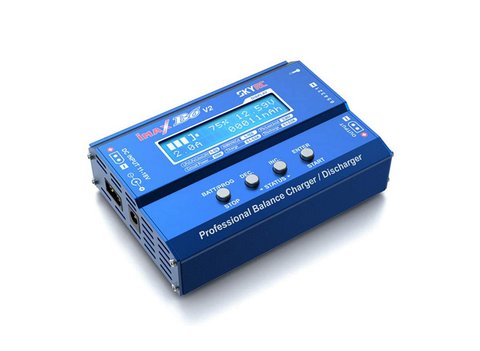
Key Specs
- DC input only: 11-18V (car battery, bench power supply, or dedicated AC/DC adapter required)
- Charge current: 0.1-5.0A, maximum charge power 50W
- Discharge current: 0.1-1.0A, maximum discharge power 5W
- Battery chemistries: NiCd/NiMH 1-15 cells, LiPo/LiIon/LiFe 1-6S, Pb (lead-acid) 2-20V
- Built-in balance port drawing roughly 300mA per cell
- Dimensions approximately 133 x 87 x 33mm, weight about 277g
The Biggest Setup Gotcha: It Needs a Separate DC Power Source
Unlike its sibling the B6AC, the plain IMAX B6 has no built-in AC-to-DC power supply. It only accepts 11-18V DC input, which means you cannot plug it directly into a wall outlet. New owners are often caught off guard by this and assume the charger is defective when it does nothing when plugged into mains power.
- A 12V car battery (with clips) works in a pinch
- A regulated 12V-15V DC power supply rated for at least 5A is the more common bench solution
- Never connect the DC input directly to a wall socket – it will not work and could damage the unit
Reading the IMAX B6 Manual PDF Correctly
Most PDF copies floating around forums describe the same menu structure, but small firmware revisions and clone-board differences mean button labels sometimes shift by one menu level. Rather than following a PDF line by line, it helps to understand the logic of the four-button interface:
- BATT/PROG selects the battery chemistry (LiPo, LiFe, LiIon, NiMH, NiCd, Pb)
- DEC/INC arrows step through cell count, current, and voltage settings
- ENTER/START confirms a setting and begins the charge or discharge cycle
- STOP halts any operation immediately, which is worth memorizing before your first charge
Genuine vs Clone Units
Because the IMAX B6 design has been around for so long, the market is full of both genuine SkyRC units and inexpensive clones assembled by third-party factories. Both usually work fine for casual LiPo charging, but accuracy and long-term reliability vary noticeably:
- Genuine SkyRC boards tend to hold balance voltage more precisely across cells
- Clone units are often a few dollars cheaper but may drift on displayed capacity over time
- Check the PCB silkscreen and seller reputation before buying if authenticity matters to you
Charging LiPo, NiMH, and Lead-Acid Packs
The B6 covers a wide spread of chemistries, which is part of why it remains popular for mixed RC fleets that include planes, cars, and drones:
- LiPo/LiIon/LiFe: 1-6S, up to 5A charge current and 50W charge power
- NiCd/NiMH: 1-15 cells, useful for older transmitter packs and receiver batteries
- Pb (sealed lead-acid): 2-20V, handy for backup or starter batteries
Balance charging LiPo packs draws through the JST-XH balance port, and the charger automatically detects cell count once you plug in the balance lead, though you should still confirm it matches your pack.
Maintenance and Safety Tips
A few habits keep any IMAX B6, genuine or clone, running reliably for years:
- Charge on a fireproof surface or inside a LiPo-safe charging bag
- Never leave a charging pack unattended, especially with clone-board units
- Check the balance connector pins periodically for corrosion or looseness
- Keep the cooling vents clear of dust, since the internal fan is small and easily restricted
Choosing Between the B6 and Newer Alternatives
The IMAX B6 design dates back many years at this point, and while it still works well for casual use, it is worth weighing against newer options if you are buying for the first time:
- If you want simplicity and do not mind sourcing a separate DC supply, the B6 remains a solid budget pick
- If you want to skip the DC power step entirely, the B6AC is worth the small price difference
- If you need more than 50W or more than 6S support, a higher-power charger like the ISDT D2 or SC-608 is a better fit
I set up an IMAX B6 on my workbench using an old 12V, 8A power supply I had left over from a different project, and the first thing I learned the hard way is that the charger will simply sit there dark if you forget the DC input step. Once I had a proper power source feeding it, dialing in a 3S LiPo balance charge took less than a minute, and the display was easy enough to read even without the manual open next to me.
“Once you accept it needs its own power brick, the B6 is honestly one of the easiest chargers to live with day to day.”
— Marcus D., RC Car Hobbyist, RCGroups Forum
Frequently Asked Questions
Why won’t my IMAX B6 turn on when plugged into the wall?
Because the standard IMAX B6 has no internal AC power supply. It only accepts 11-18V DC, so you need a separate DC power adapter or a 12V battery to run it.
Is there an official IMAX B6 manual PDF?
SkyRC’s official documentation exists but is often out of date compared to firmware revisions on newer boards. The menu logic described above applies to nearly all versions, genuine or clone.
Can the IMAX B6 charge lead-acid batteries?
Yes, it supports 2-20V lead-acid (Pb) batteries in addition to lithium and nickel-based chemistries, making it useful beyond just RC packs.
How do I know if my balance port is wired correctly?
Plug in the balance lead before starting a charge and check that the displayed cell count matches your battery. A mismatch usually means a bad connection or the wrong balance tap.
Conclusion
The IMAX B6 remains a workhorse charger mainly because it is simple once you understand its one real quirk: it needs an external DC power source to run at all. Skip the search for a perfect manual PDF and instead focus on the four-button menu logic, confirm your chemistry and cell count before every charge, and keep an eye on whether your particular unit is a genuine SkyRC board or a clone, since that affects long-term accuracy more than anything printed in a manual.
Ryan earned a computer science degree and now spends much of his free time bench-testing chargers, analyzers, and other bench gear, including setting up bench chargers like the IMAX B6 and troubleshooting DC power supply compatibility issues. He writes at softwaredriverdownload.com.