If you’re building a small racing quad or a lightweight FPV wing, the FrSky XM+ is one of the receivers you’ll run into constantly, and for good reason — it’s tiny, cheap, and reliable enough that it’s become close to a default choice for micro builds. This covers what the XM+ actually is, its specs, and where it fits compared to FrSky’s other receiver options.
Key Specs
- Type: micro receiver (not a transmitter)
- Protocol: FrSky ACCESS, D16 compatible
- Channels: up to 16 via SBUS (channels 1-15 for PWM, channel 16 for RSSI)
- Dimensions: approximately 21.5 x 12 x 3.5mm
- Weight: approximately 1.6g
- Operating voltage: 3.7V to 10V, roughly 30mA current draw at 5V
- Telemetry: RSSI only, no full S.Port smart telemetry
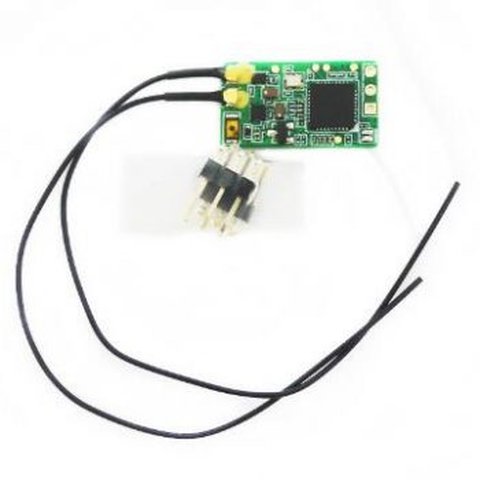
The first time I held an XM+ next to a coin for scale, it genuinely surprised me how little weight it adds to a build. On a 2-inch whoop-style quad, every gram matters for flight time, and the XM+ barely registers on a scale while still delivering the full 16 channels most flight controllers can use.
Why the XM+ Is So Common in Small Builds
A few reasons this receiver shows up in so many racing and micro FPV setups:
- At 1.6g, it’s light enough to have almost no impact on flight performance even on the smallest whoop-class quads.
- ACCESS protocol support means it pairs with modern transmitters like the Taranis Q X7 and X9D Plus (when running ACCESS-capable internal modules) and supports firmware updates over the air.
- The compact size (21.5 x 12 x 3.5mm) fits into builds where space around the flight controller stack is extremely tight.
- Price point is low enough that most racers keep several on hand as spares, since receivers occasionally get damaged in crashes before the rest of the quad does.
What the XM+ Doesn’t Do
It’s worth being clear about the tradeoffs that come with such a compact, affordable receiver:
- No full S.Port smart telemetry — you get RSSI on a dedicated pad and on channel 16, but not the rich sensor data (voltage, current, GPS, and so on) that FrSky’s Smart Port-equipped receivers provide.
- No built-in voltage sensor, so if you want battery telemetry on your radio’s screen, you’ll need a separate sensor module wired into the flight controller.
- Range is solid for typical racing and freestyle distances but isn’t intended for long-range cross-country flying, where FrSky’s dedicated long-range receivers are the better choice.
For most 3-inch and smaller racing or freestyle builds, none of these limitations matter much. It’s when pilots start pushing into long-range or telemetry-heavy setups that a different receiver in FrSky’s lineup makes more sense.
“I keep a stack of XM+ receivers in my flight box because they’re cheap enough to not think twice about swapping one after a hard crash.” — Alex Novak, freestyle FPV pilot
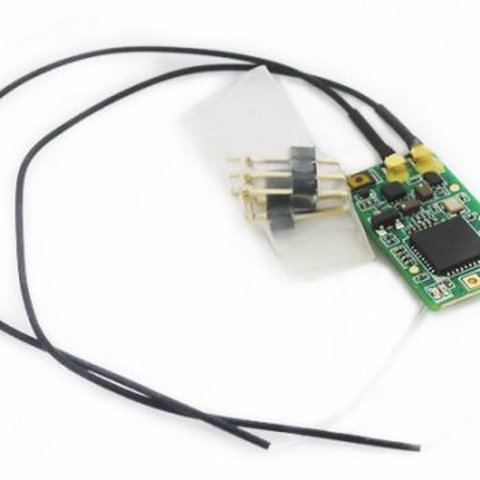
Setting Up the XM+
Getting one running in a new build is straightforward:
- Wire the receiver’s SBUS output to your flight controller’s dedicated receiver UART, following your flight controller’s specific pinout.
- Bind the receiver to your transmitter using standard FrSky ACCESS or D16 bind procedures, depending on which mode you’re running.
- Configure failsafe behavior in your flight controller software (Betaflight, INAV, or similar) rather than relying solely on receiver-side failsafe.
- Mount the receiver antennas away from carbon fiber frame components and at an angle to the flight controller’s own antennas to minimize interference.
XM+ vs Other FrSky Micro Receivers
FrSky’s receiver lineup has a few options that overlap with the XM+ on paper, and it’s worth knowing where each fits:
- XM (non-plus): the predecessor, generally similar in size and function, with the Plus version refining range and reliability over the original.
- R-XSR: a step up that adds full Smart Port telemetry support in a still-compact package, aimed at pilots who want sensor data without going to a full-size receiver.
- Archer series: FrSky’s newer receiver line, built around updated hardware and firmware with better range and telemetry options, at a higher price point and slightly larger footprint.
For a straightforward micro or 3-inch racing build where telemetry isn’t a priority, the XM+ remains hard to beat on price and simplicity. Once you start wanting voltage alarms or GPS data on your radio screen, it’s worth budgeting for something like the R-XSR instead.
Frequently Asked Questions
Is the FrSky XM+ a transmitter or a receiver?
It’s a receiver. It has to be paired with a compatible FrSky transmitter, such as a Taranis Q X7 or X9D Plus, to function.
Does the XM+ support telemetry?
It provides RSSI telemetry only. Full sensor telemetry (voltage, current, GPS, and similar data) requires a receiver with Smart Port support or an add-on telemetry sensor.
How many channels can the XM+ handle?
Up to 16 channels through SBUS, with channels 1 through 15 available for PWM-style control and channel 16 carrying RSSI data.
Is the XM+ good for long-range flying?
Not really its strength. It performs well for typical racing and freestyle ranges, but pilots doing long-range flights generally choose a receiver designed specifically for extended range.
Conclusion
The FrSky XM+ earns its popularity in small FPV builds by being tiny, light, and cheap enough to keep several as spares, while still delivering full 16-channel SBUS control through the ACCESS protocol. It’s not the receiver to reach for if you need rich telemetry or long-range performance, but for racing quads and freestyle builds where every gram counts, it remains one of the most sensible defaults available.
Ryan has soldered more micro receivers into tiny FPV stacks than he can count, and the XM+ has been a reliable staple in most of those builds. He writes at softwaredriverdownload.com.