DDPAI and Viofo target a slightly different audience than budget-focused brands like 70mai, both leaning into higher-end image quality and enthusiast-friendly features. Here’s how the two compare at their respective flagship tiers.
| Spec | DDPAI (X5 Pro / Z90 Master) | Viofo (A329S / A229) |
|---|---|---|
| Front Sensor | 8MP Sony IMX415 | Sony sensor, full-quality 4K |
| 3-Channel 4K Quality | Reduced on additional channels | Full-quality 4K on all 3 channels |
| Parking Mode Draw | 200-450mA (Time-Lapse mode) | 20-30mA (LPID mode) |
| Backup Storage | Built-in eMMC fail-safe | SD card only |
| WiFi | WiFi 6 (newer models) | 5GHz, up to 8MB/s transfer |
| Community / Firmware Support | Mainstream retail, less enthusiast forum activity | Active enthusiast community, DashcamTalk |
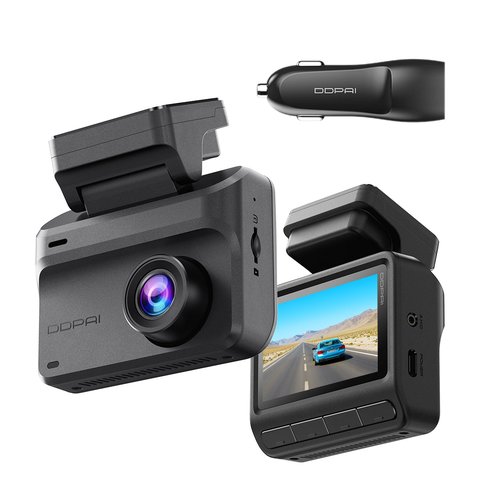
Image Quality and Sensor Choices
DDPAI’s flagship X5 Pro uses an 8MP Sony IMX415 sensor with a 7-element lens and Realcube image processing, delivering sharp, ultra-crisp 4K footage. Viofo’s A329S counters with genuinely full-quality 4K recording maintained even in a 3-channel configuration, which is a notable strength since many competing 3-channel setups compromise front camera quality to support the additional channels. Both brands use high-quality Sony sensors across their lineups, so the practical difference tends to come down to processing algorithms and specific model tuning rather than a clear sensor-quality gap.
Power Efficiency: Viofo’s Notable Advantage
Viofo’s newer LPID (Low Power Impact Detection) mode on models like the A329S reduces parking-mode power draw to roughly 20-30mA, a genuinely impressive figure for continuous parking surveillance. DDPAI’s Z90 Master, by comparison, draws anywhere from 200-450mA during Time-Lapse parking mode — a significant gap that matters if you’re relying on your car’s battery for extended parking coverage without a dedicated battery pack.
If long-duration parking mode without battery drain anxiety is your top priority, Viofo’s power efficiency engineering is currently the stronger argument in this comparison — it’s not a minor spec difference, it’s the kind of gap that determines whether your car battery is dead or fine after a week away.
Storage Reliability: Different Philosophies
DDPAI’s approach leans on built-in eMMC storage as a fail-safe backup layer if the primary SD card corrupts, which is a genuinely useful safety net given how often SD card issues are the root cause of “lost my dash cam footage” complaints. Viofo, by contrast, has a reputation for being notoriously particular about SD card compatibility, occasionally rejecting cards that work fine in other devices. If you’ve been burned by SD card issues before, DDPAI’s dual-storage approach offers more peace of mind out of the box.
WiFi and Connectivity
Viofo’s upgraded 5GHz WiFi on models like the A229 supports transfer speeds up to 8MB/s, roughly four times faster than standard 2.4GHz connections. DDPAI’s WiFi 6 support on newer models like the N5 Dual and Z-series pushes similarly fast transfer speeds, so this category is essentially a wash between the two brands’ current top-tier offerings, with older or entry-level models from either brand lagging behind on connectivity speed.
For full specs, see a detailed VIOFO A229 vs DDPAI X5 Pro comparison from BlackboxMyCar.
Community Support and Firmware Transparency
Viofo has built a notably active enthusiast community, particularly on forums like DashcamTalk, where users regularly discuss firmware beta releases and detailed troubleshooting. DDPAI’s user base leans more toward mainstream retail buyers through Amazon reviews and general tech forums rather than a dedicated enthusiast community in the same way. If you like being able to research detailed community troubleshooting before buying, Viofo’s more transparent enthusiast following is a genuine practical advantage, even outside of pure hardware specs.
Price-to-Feature Value at the Flagship Tier
At the top of each brand’s lineup, pricing tends to land in a similar range, so the decision really comes down to which specific engineering tradeoffs matter more to you: DDPAI’s dual built-in storage reliability versus Viofo’s superior parking-mode power efficiency. Neither flagship is a clear value winner over the other; they’re simply optimized for slightly different priorities.
Troubleshooting Common Issues With Either Brand
Enthusiast-tier dash cams from both brands share a handful of recurring setup issues, most of which are quick to resolve once you know where to look.
- SD card not recognized (Viofo especially): Format the card in the camera itself rather than a computer, and stick to cards from the manufacturer’s officially recommended list rather than assuming any high-capacity card will work.
- Parking mode drains the battery faster than expected: Confirm which parking mode is active — DDPAI’s Time-Lapse mode draws considerably more current than Viofo’s LPID mode, so switching modes or adding a dedicated battery pack may be necessary for extended coverage.
- WiFi app won’t connect to the camera: Forget the camera’s network in your phone’s WiFi settings and reconnect fresh, since a stale saved connection is a common cause of app pairing failures on both brands.
- Footage looks softer than expected in low light: Clean the lens first, then check that HDR or night mode settings are enabled, as both brands ship with these settings configurable rather than always on by default.
- Firmware update fails or camera won’t boot after update: Re-download the firmware file directly from the official brand site rather than a third-party mirror, and follow the exact update procedure for your specific model rather than a generic guide.
Frequently Asked Questions
Is Viofo generally more expensive than DDPAI?
Pricing varies by specific model and promotion; compare the exact models you’re considering rather than assuming a fixed brand premium.
Does DDPAI have anything comparable to Viofo’s LPID mode?
DDPAI’s radar-based parking monitoring on models like the N5 Dual takes a different approach to efficient parking coverage, though the underlying power draw figures differ.
Which brand has better third-party accessory support?
Both have reasonably broad accessory catalogs; check current compatibility lists for your specific model before assuming universal support.
Is Viofo’s SD card pickiness a common complaint?
It’s a recurring theme in user reports, though using a card from Viofo’s officially recommended list generally avoids the issue.
Do both brands offer cloud-connected models?
Check each brand’s current lineup, as cloud and 4G connectivity availability varies by specific model.
Which is better for a true 3-channel setup?
Viofo’s A329S maintains full-quality 4K across all three channels, which is a specific strength worth checking against DDPAI’s 3-channel πLink setup if that’s your priority.
Is Viofo harder to find in retail stores than DDPAI?
Both are primarily sold online through official stores and major retailers like Amazon rather than physical retail chains.
Do either brands offer a trade-in or upgrade program?
Check each brand’s current promotions, as trade-in offers tend to be limited-time rather than standing programs.
Which brand ships faster to most regions?
Shipping speed depends heavily on your specific location and current stock; compare estimated delivery times on each listing directly.
Does either brand offer a dedicated fleet management solution?
Both offer cloud-connected models suited to fleet use with the right accessories; check current fleet-specific product pages for details.
Who Each Brand Tends to Attract
Viofo has historically attracted a more technically engaged buyer base willing to dig into firmware settings and community-recommended configurations for optimal performance. DDPAI leans slightly more toward buyers who want strong out-of-box performance without needing to tune settings extensively. Neither approach is objectively better, but it’s worth being honest with yourself about how much you want to tinker with settings versus just installing and forgetting about it.
A Final Consideration: Total Cost With Accessories
Enthusiast-tier dash cams from either brand often get built out over time with additional accessories — larger cards, hardwire kits, extra rear or interior cameras. Before committing to either ecosystem, browse each brand’s full accessory catalog to get a realistic sense of what a fully built-out system would cost, since the base unit price alone doesn’t tell the whole story for buyers planning to expand their setup later.
Conclusion
Choose Viofo if parking-mode power efficiency and true multi-channel 4K quality are priorities, or DDPAI if you want the reassurance of dual built-in storage and a slightly more consistent app experience. Both are solid enthusiast-tier brands, so the decision comes down to which specific tradeoffs matter most to you.
Ryan holds a Computer Science degree and has over 20 years of hands-on experience with PC hardware, software, and smart home devices.