The DDPAI N3 Pro and N5 Dual sit at different tiers of DDPAI’s N-series lineup, with the N5 Dual adding 4K resolution and radar-based parking monitoring the N3 Pro doesn’t offer. Here’s a full comparison to help you decide if the upgrade is worth it.
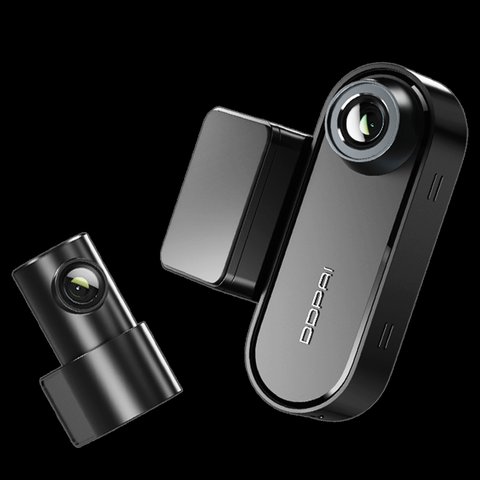
Spec Comparison
| Spec | N3 Pro | N5 Dual |
|---|---|---|
| Front resolution | 1600P | 4K HDR |
| Rear resolution | 1080P | 1080P |
| Storage | Up to 512GB microSD only | 32GB eMMC + up to 512GB TF card |
| Parking monitoring | Standard motion detection | 72H radar-based monitoring |
| WiFi | 2.4GHz | 5GHz WiFi 6 |
| Voice control | No | Yes |
Resolution Jump: 1600P to True 4K
The N5 Dual’s true 4K front resolution is a substantial step up from the N3 Pro’s 1600P, capturing significantly more detail per frame. This matters most for reading fine details after the fact — distant license plates, small road signs, or text on other vehicles — where the extra resolution genuinely changes whether a detail is legible or just a blur. For general incident documentation where you just need to show what happened rather than read fine text, the N3 Pro’s 1600P is still perfectly serviceable.
Radar Parking Monitoring vs Standard Motion Detection
This is arguably the bigger practical difference between the two models. The N3 Pro relies on standard camera-based motion detection for parking mode, which can miss slow, careful damage or trigger unnecessarily from irrelevant nearby movement. The N5 Dual’s millimeter-wave radar detects actual physical proximity and movement more precisely, extending reliable parking coverage to 72 hours without the false-trigger issues that plague camera-only systems.
If you’ve ever come back to your car with an unexplained scrape and no footage to show for it, that’s specifically the gap radar-based parking monitoring is designed to close — it’s the single feature most worth paying the price difference for if street or shared-lot parking is a regular part of your routine.
Storage Architecture and Reliability
The N5 Dual’s dual-storage setup, combining 32GB of built-in eMMC with a swappable TF card, gives you a backup layer the N3 Pro’s SD-card-only design lacks. If your microSD card fails or corrupts on the N3 Pro, you simply lose access to recent footage; on the N5 Dual, the eMMC storage can preserve at least some recent recordings as a failsafe. This isn’t a dramatic difference day-to-day, but it’s a meaningful reliability advantage if you’ve ever dealt with a corrupted SD card losing footage you actually needed.
For full specs, see DDPAI’s official N3 Pro product page and DDPAI’s official N5 Dual product page.
Weighing the Full Feature Gap
Stacking every difference together — resolution, radar parking, storage redundancy, and WiFi speed — the N5 Dual represents a genuinely comprehensive upgrade rather than a single headline feature bump. This makes it easier to justify the price gap if you plan to keep the camera for several years, since you’re paying once for a meaningfully more capable device rather than a marginal spec refresh.
Frequently Asked Questions
Is the N5 Dual worth the extra cost over the N3 Pro?
If radar-based parking protection or true 4K resolution matter to you, yes; otherwise the N3 Pro covers most everyday needs for less money.
Does the N3 Pro support 5GHz WiFi at all?
No, it’s limited to 2.4GHz, which is noticeably slower for footage transfer than the N5 Dual’s WiFi 6 support.
Can I add radar monitoring to the N3 Pro later?
No, radar hardware is built into the N5 Dual specifically and can’t be retrofitted onto the N3 Pro.
Is voice control a significant feature to lose on the N3 Pro?
It’s a convenience feature rather than essential; most core functionality is available through the app or physical controls regardless.
Do both support the same rear camera cable length?
Cable lengths are generally similar across DDPAI’s N-series lineup, designed to reach standard vehicle sizes.
Which is easier to install for a first-time buyer?
Both follow a similar dual-channel installation process; neither is meaningfully harder to install than the other.
Does the N3 Pro support the same app features as the N5 Dual?
Core functionality is shared, though radar-specific settings and voice control are exclusive to the N5 Dual’s app menu.
Which one has a larger included storage card?
The N5 Dual includes built-in eMMC storage as standard; check current bundles for included TF card sizes on both.
Is the N3 Pro still a current model or being phased out?
Check DDPAI’s current lineup page, as product availability can shift over time as newer models launch.
Does either support cloud backup of footage?
Neither includes built-in cloud backup; footage stays local to the SD card or eMMC storage until manually downloaded.
Is a car charger included with both models?
Yes, a standard 12V car charger ships with both as part of the base package.
Thinking About This as a Multi-Year Purchase
Dash cams typically stay installed for several years without replacement, so it’s worth weighing the N5 Dual’s extra cost against how long you expect to keep whichever camera you buy. If you tend to upgrade tech every year or two, the N3 Pro’s lower price makes more sense since you won’t have as much time to benefit from the N5 Dual’s added capabilities. If you plan to keep the same camera for four or five years, the N5 Dual’s more comprehensive feature set ages better over that timeframe.
Checking Current Availability Before Deciding
Since DDPAI periodically refreshes its lineup, confirm both models are still actively sold and supported before finalizing your decision. An older model nearing end-of-life might be discounted attractively but could also see reduced firmware support going forward, so weigh any price advantage against how long you expect ongoing software support to matter to you.
Conclusion
The N5 Dual is the clear upgrade if radar parking protection, 4K resolution, or faster WiFi transfer matter to you. The N3 Pro remains a solid, more affordable choice for drivers who mainly want reliable dual-channel documentation without paying for the top-tier feature set.
Ryan T. is a PC hardware enthusiast with 15+ years of experience fixing drivers and testing consumer tech. He writes for softwaredriverdownload.com.